

Saudi Arabia launches 80 factories worth $1.1bn in February

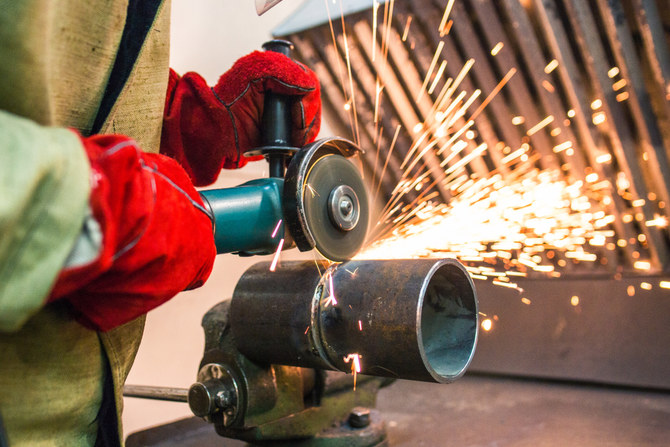
The new factories included 30 in the non-metallic minerals industry, 12 in the food business, eight in the formed minerals sector and five in the rubber and plastics trade (Shutterstock)
Short Url
Updated 05 April 2023
Follow

Saudi Arabia launches 80 factories worth $1.1bn in February

RIYADH: As many as 80 new factories in Saudi Arabia started operations in February, with total investments accumulating to SR4.3 billion ($1.1 billion), according to the Ministry of Industry and Mineral Resources.

It marks a 51 percent decline compared to 164 factories that started operation in January.

The February launch include 30 in the non-metallic minerals industry, 12 in the food business, eight in the formed minerals sector, five in the rubber and plastics trade and four in the production of chemicals.

The Kingdom acquired 86.2 percent of the total factories that started production, followed by foreign firms with 11.2 percent and joint ventures with 2.5 percent.

During the same month, the ministry issued up to 85 industrial licenses, a 31 percent drop compared to the 124 issued in January.

Out of the 85 licenses, domestic plants held 82.3 percent of the issuance, followed by foreigners at 12.9 percent and joint investment at 4.7 percent.

The volume of investments in new licenses amounted to SR1.9 billion. Moreover, small enterprises were in the lead as they acquired most of the licenses at 85.8 percent, followed by medium enterprises at 11.7 percent and ultra-small ones at 2.3 percent.

The new industrial licenses were distributed among nine administrative regions, topped by Riyadh with 37 factories, followed by Eastern Province with 21 factories, Makkah Al-Mukarramah with eight factories, Madinah and Qassim with five factories each, Asir with four factories, Al-Jouf with three factories, and one factory for Tabuk and Hail.

The new ministry also issued 18 licenses for manufacturing shaped metal products other than equipment and machinery, 14 licenses for food production and 10 for making rubber and plastic products.

Last month, the Deputy Minister of Industry and Mineral resources Osama bin Abdulaziz Al-Zamil announced that the number of factories in Saudi Arabia has increased by 50 percent since the launch of Vision 2030 in 2016.

His comments come after figures released last year showed there are more than 10,000 industrial facilities in the Kingdom, with 1,023 factories starting operations in 2022 alone.

During the first day of the annual Saudi Industrial Renaissance Forum at the Kingdom’s Al-Yamamah University, Al-Zamil affirmed reliance on the industrial and mining sectors as economic tributaries.


PIF steps up private sector push to drive sustainable growth: Al-Rumayyan  

Updated 21 sec ago
Follow

PIF steps up private sector push to drive sustainable growth: Al-Rumayyan  

RIYADH: Saudi Arabia’s Public Investment Fund is deepening efforts to strengthen the private sector as part of its strategy to drive long-term economic growth and sustainable development, said a top official. 

Speaking at the fourth edition of the PIF Private Sector Forum, Yasir Al-Rumayyan, governor of the sovereign wealth fund, said the fund’s efforts to strengthen the private sector will help increase spending on local content and accelerate the localization of supply chains. 

The push aligns with Saudi Arabia’s Vision 2030 program, which aims to diversify the economy away from oil and increase the private sector’s contribution to gross domestic product, with PIF positioned as a central investment engine behind the strategy. 

Al-Rumayyan said: “We affirm our commitment at PIF to empowering the private sector to contribute to leading the Kingdom’s economic growth and transformation. PIF is working alongside the private sector to build a greater economic ecosystem that drives sustainable growth.”  

He added: “We try to build strategic sectors, establish leading companies and launch initiatives. In turn, these efforts stimulate spending on local content, localization of supply chains and development of local capabilities and industries, as well as the expansion of infrastructure.” 

The event is designed to support PIF’s Private Sector Engagement Strategic Initiative and highlight business opportunities across the fund’s portfolio companies. 

The PIF official added that the forum has become the largest of its kind globally for forging partnerships with the private sector. 

“Since 2023, participation has reached 25,000 leaders from the public and private sectors, as well as investors from Saudi Arabia and around the world,” Al-Rumayyan said. 

He added: “In previous editions, we succeeded in translating dialogues into tangible opportunities for the private sector through specialized programs and initiatives that supported the growth of the business ecosystem, resulting in the signing of over 140 agreements with a total value exceeding SR15 billion ($4 billion).” 

This year’s event will feature over 200 speakers across more than 100 sessions covering themes including artificial intelligence and industry, capital market evolution, sovereign wealth collaboration, and business listing strategies.