

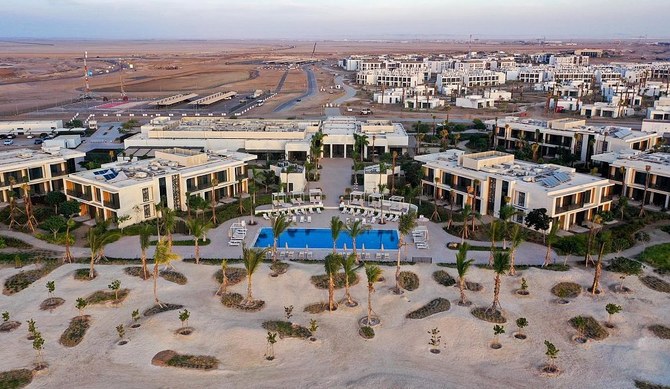
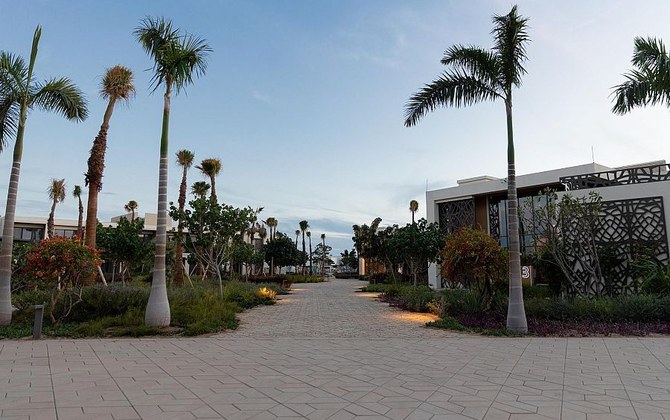
Saudi Arabia’s Red Sea Global achieves Green Key certification for Turtle Bay Hotel

1 / 3
(SPA)
2 / 3
(SPA)
3 / 3
(SPA)
Short Url
Updated 05 April 2023
Follow

Saudi Arabia’s Red Sea Global achieves Green Key certification for Turtle Bay Hotel

  • Evaluation holds ‘us to account,’ says RSG CEO John Pagano
  • Renewable power, cutting waste, water rationing are key elements

RIYADH: Red Sea Global, the multi-project developer behind the world’s most ambitious regenerative tourism destinations, The Red Sea and Amaala, has become the first Saudi hospitality entity to achieve the prestigious Green Key certification for its Turtle Bay Hotel at The Red Sea, the company said on Tuesday.

Turtle Bay Hotel is a self-operated property with 90 employees — 50 percent of whom are Saudi nationals from the local community, and 30 percent Saudi females. The hotel was officially opened in September 2021 and is an advocate for training young Saudi talent entering the hospitality sector.

The world’s leading independent certification for excellence in sustainable tourism was awarded to the hotel in recognition of its exceptional efforts toward environmental protection, conservation, and regeneration, as driven by RSG’s pioneering approach to responsible development, the company added.

“As we shape the blueprints for regenerative, responsible tourism, we continue to root our efforts in transparency and accountability,” said John Pagano, Group CEO of RSG. “The Green Key certification demonstrates we are being true to our word and living up to the expectations we set ourselves for sustainable growth.”

He added: “Such critical evaluations are key to holding us to account, while galvanizing the sector toward a collective journey into a new era of regeneration.”

The hotel was independently assessed by Green Key Global, a leading international environmental certification body, which conducted a rigorous audit that tracked against 77 criteria across 13 categories.

The hotel is powered by RSG’s wider vision to run all operations using 100 percent renewable energy and deliver a 30 percent net conservation benefit by 2040 through the protection and enhancement of key habitats crucial to biodiversity.

Turtle Bay Hotel makes use of all natural resources and strategies are in place to ensure zero waste is sent to landfill, while it also eliminated single-use plastics, replaced non-recyclable packaging work in parallel with circular processes to prioritize recycling and reuse, and minimizes water consumption.

Measures have been implemented toward a procurement structure for goods and services that prioritize eco-labelled and fairtrade sources, where high standards for the protection of workers and the environment are followed, the company said. For example, all seafood served at Turtle Bay Hotel is locally sourced and independently certified as responsibly farmed without negative impacts on the environment.

The use of toxic chemicals is also prevented to protect the health and safety of employees and guests, particularly with housekeeping products, which are locally produced and completely eco-friendly.

Three resorts at The Red Sea will open this year along with the first phase of the Red Sea International airport to offer domestic flights.

Another 13 hotels will open in 2024, and upon full completion in 2030, the destination will comprise 50 resorts, offering up to 8,000 hotel rooms and more than 1,000 residential properties across 22 islands and six inland sites.

The destination will also include luxury marinas, championship golf courses, entertainment, food and beverage, and leisure facilities.



Saudi Arabia, Estonia strengthen cyber defense cooperation

Updated 09 February 2026
Follow

Saudi Arabia, Estonia strengthen cyber defense cooperation

  • Renowned for its leadership in digital governance, Estonia sees cybersecurity as central to its partnership potential with Saudi Arabia, building on years of regional engagement through its technology firms

RIYADH: Estonia aims to deepen defense, cybersecurity, and artificial intelligence cooperation with Saudi Arabia as both nations look to advance technology‑driven defense and cybersecurity capabilities.

Hanno Pevkur, Estonia’s minister of defense, told Arab News at the World Defense Show in Riyadh on Monday that Estonia’s defense industry is eager to contribute to the Kingdom’s fast‑growing defense ecosystem.

“In the modern world, cooperation built on trust and technology is the best defense,” he said. “It is important for us to be here because we clearly see there is a possibility to increase cooperation, not only bilaterally between Saudi Arabia and Estonia, but across the region.”

At Estonia’s pavilion, a cooperation agreement was signed between an Estonian company and a Saudi firm during the show, he noted.

Pevkur also said Estonia’s defense sector has expanded rapidly in recent years, driven by technological innovation and partnership.

“Our defense industry is growing very rapidly, and we continue to see strong momentum,” he said.

He said Estonia’s strengths lie in digital and smart‑system integration rather than large‑scale weapons production.

“We will not build airplanes or tanks, but what we can do is integrate robotics, automation and drones to make existing systems smarter,” he said.

The minister said effective defense collaboration must link businesses and governments to achieve meaningful results.

“When we want to have real cooperation, we need it on all levels,” he said. “The biggest client for any defense company is the government, so we must treat this as one ecosystem where the public and private sectors work hand in hand.”

Renowned for its leadership in digital governance, Estonia sees cybersecurity as central to its partnership potential with Saudi Arabia, building on years of regional engagement through its technology firms.

Pevkur said several Estonian companies, including Nortal, have already assisted Gulf governments in developing open IT and digital‑service systems.

“As the most digitalized nation in the world, almost every service in Estonia can be done online, except getting married,” he said. “But with such digitalization, we also need strong cyberdefense.”

He said data protection and digital resilience are treated as matters of national sovereignty in Tallinn, the capital of Estonia.

“Data is what we own. When someone steals that data, it becomes a serious threat,” he added. “That is why cyberdefense is not just about technology, it is about trust, sovereignty and protection.”

Pevkur said Saudi Arabia’s advances in AI offer promising opportunities for collaboration.

“I know that Saudi Arabia is doing great work when it comes to AI,” he said. “For us, as a small country with limited human resources, AI is essential not just for defense but for everyday life.”

Pevkur added that Estonia has launched a national AI strategy to promote responsible development and closer coordination between government and industry. One Estonian company, he said, has developed a system that allows a single operator to control hundreds of drones through AI.

“It is quite easy to put a weapon into the hands of a robot, but we also need to define who is accountable for its actions,” he said.

“The big question for the future is whether we can allow a war to be fought entirely by AI, or if humans must always make the final ethical decisions.”

He said in his conclusion that governments must reach a common understanding on how AI will be used and regulated on the battlefield.