



DUBAI: Iain Smith, the producer of films including “Mad Max: Fury Road,” “The Fountain” and “Children of Men” believes that Saudi Arabia can become a global player in the movie industry.
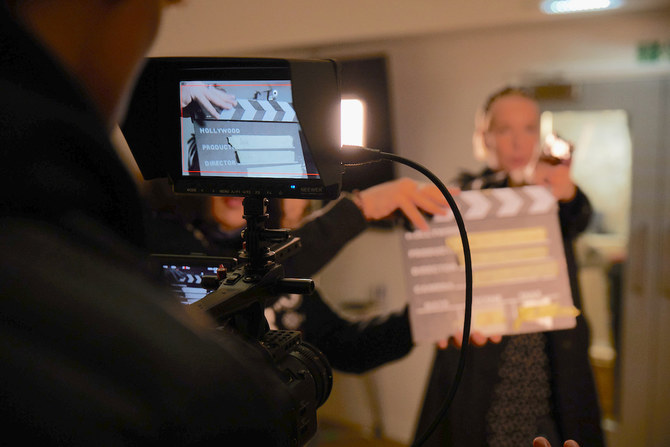
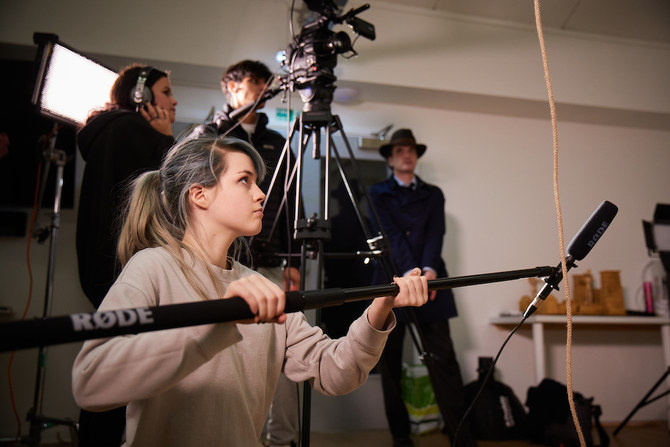
Smith made the comments after training filmmakers in AlUla. The 10-day program, which concluded last month, was a partnership between Film AlUla, established by the Royal Commission for AlUla, and the UK’s industry-led Creative Media Skills Institute.
This was Smith’s first visit to Saudi Arabia, and it was spent entirely in AlUla. “I’m a big fan of the desert, love the simplicity of life there and I love the silence, it really is beautiful,” he told Arab News.
The program combined classroom study and hands-on workshops. The first part of the program was largely theoretical, and involved production strategies, Smith explained.
The students “were very intelligent and very, very keen to acquire knowledge and information, and teaching (them) was a pleasure because they were receptive and responsive,” he said.
It would be unfair to compare the Kingdom to other parts of the world, he added. The UK, for example, has had a film industry for over 100 years and as a result, there are “ongoing traditions of work and the attitude towards the work has been inherited to a large extent,” he said.
Saudi Arabia needs to now create that opportunity for its talent and although not necessarily “quickly,” the country is moving in a “determined way,” he added.
For now, he described AlUla as a “Trojan Horse” because “it’s pushing into an opportunity that it can’t manage on its own” but there is potential. It needed to be part of a Saudi-wide initiative that establishes a production network in the country and the region, by partnering with neighboring countries like Jordan.
The Kingdom needs time and money to “build in the space of five to 10 years what in Britain took us 50 to 60 years,” he said.
“But I would say that Saudi Arabia stands a very good chance of becoming a major participant.”
Last year, the Saudi Film Commission announced an incentive program offering financial refunds of up to 40 percent for local and international producers shooting in the Kingdom.
“That absolutely sends a message that business will take note right away,” Smith said. But, he continued, there are three key areas the Kingdom needs to focus on: human infrastructure, technical infrastructure and creative talent.
While work on the first two is underway, the development of creative talent such as writers, actors, directors and producers, who can “develop material that will be able to go out and represent Saudi,” is crucial, Smith explained.
“Until recently, we have tended to tell stories within the spread of our own culture,” he said.
The advent and proliferation of streaming companies has resulted in the “film and television industry, partly by the need to survive, becoming more global, and so, “we’re seeing a global audience becoming percentage-wise, more and more important to the investment in the content,” he explained.
But good storytelling, more than anything else, is what is at the heart of success — globally and locally.
“It is a profound human need to tell stories,” and the power of storytelling is far more significant than the scale of production, he asserted.
India, for example, has harnessed the power of the content industry into creating content that is widely popular just not in India, but around the world. This year, the country celebrated its historic double win at the Oscars after the breakout hit “Naatu Naatu” won best original song and “The Elephant Whisperers” was named best short documentary.
“The Saudi situation is still to be proved but I do believe that it can happen and will happen,” as long as “storytellers are able to be sensitive to the expectations of their audiences” both inside and outside the Kingdom, Smith said.
During the last few years, the film and television industry has undergone massive transformation. On one hand, the closure of cinemas was catastrophic for many big-budget production houses; on the other hand, streaming services saw an unprecedented boom around the world heralding a wave of change for small and independent production houses and creators.
“We’re in the most interesting time of change,” said Smith. “The industry is having to learn some very hard lessons of undermining the very things that it held dear before.”
But with that, comes great opportunity for emerging markets like Saudi Arabia, which Smith said has a “fantastic vision.”
Moreover, he continued, Saudi Arabia has the financial means to achieve its vision. “Money and talent are everything. The rest is industrial and can be developed.”
He added: “There’s every good reason why Saudi should be a significant player in the global network of film and TV content production.”