



KARACHI: Emirati Luqaimat is a popular Middle Eastern sweet dish with a number of regional varieties across the world. Prominent Pakistani chef Naheed Ansari says the recipe is “easy and delicious” and can very well complement iftar platters in Pakistan during the holy month of Ramadan.
Known as ‘luqmat Al-qadi’ in the 13th century Arabic cookery books, the sweet dish is prepared with yeast-leavened dough which are deep fried and drizzled with sugar syrup. It is consumed best when fresh and warm, crunchy on the outside and soft and airy on the inside.
Muslims around the world abstain from food and drink from dawn till sunset during the holy month of Ramadan. In Pakistan, people spend Ramadan preparing special food items to consume at both sehri [pre-dawn meal] and iftar [fast-breaking evening meal].
Ansari, who has around 30 years of experience in culinary arts, learned the recipe in the Middle East and has been making the sweet dish in her classes for over two decades.
“Emirati Luqaimat is very easy and delicious, and people of all ages love it,” the famous chef told Arab News on Friday.
“Luqaimat is specific to Ramadan and is better than jalebi. It becomes more delicious when consumed with milk or cream. Pakistanis want crunch every time so I tweaked the recipe accordingly.”
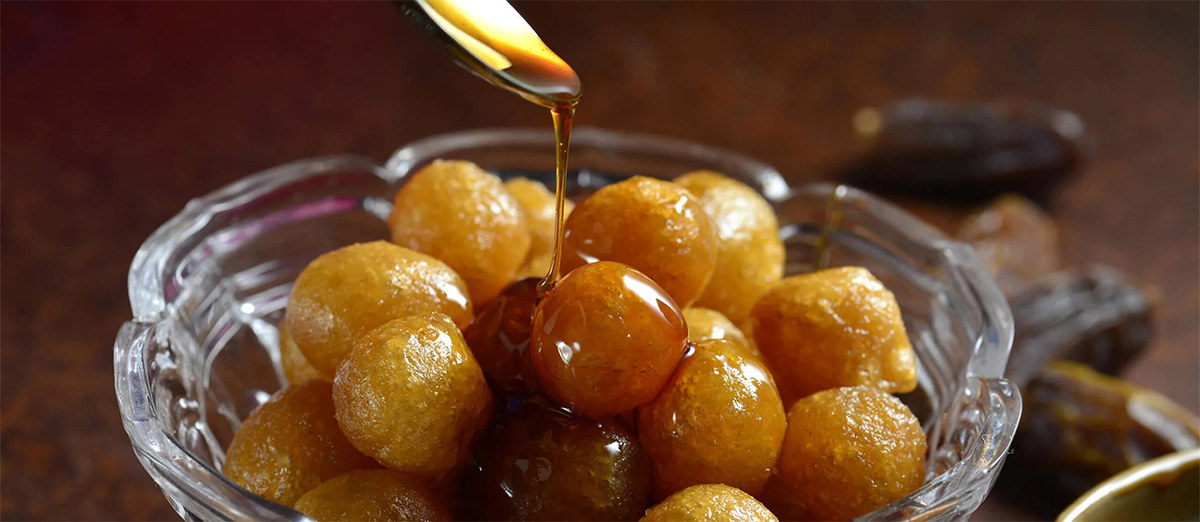
The undated picture shows Emirati Luqaimat, a popular Middle Eastern sweet dish. (Photo courtesy: Leisure Center)
Ansari shared a “simple recipe” for luqaimat that starts with mixing the all-purpose white flour (two cups), corn flour (two tbsp.), milk powder (two tbsp.) and oil (two tbsp.).
The chef said Arabs do not add milk powder, but she has added it to the recipe to give it a little more taste and crunch. “For a healthier version, you can just use flour. But with flour, it won’t be crunchy,” she shared.
The next step involves mixing of one tbsp. yeast, one-and-a-half cup of warm water and one tbsp. sugar *to the dry flour mixture.*
“I usually beat it with my hands. The more you beat it, the fluffier it gets,” Ansari said.
She emphasized on beating the batter a lot before putting it aside for an hour to rise. For ‘sheera’ (sugar syrup), the chef asked to boil two cups of sugar in two cups of water before adding a slice of lemon and two tablespoons of lemon juice.
“Boil it on high heat for 10 minutes and then close the flame,” Ansari said.
The easiest way is to take a water bottle and make a hole in the cap, according to Ansari. She recommended putting the batter in the bottle to make small balls and fry them.
“Once they are crispy brown, put them in the sheera. Take it out after 2-3 minutes and garnish with pistachio [or not],” she said.
Ansari suggested serving luqaimat in glasses or cups with milk or cream. For children, she said, it could even be served with chocolates or maple syrup.
“It is good for Eid too,” the chef added.


