Medina Capital founder delivers cybercrime warning at FII Priority conference

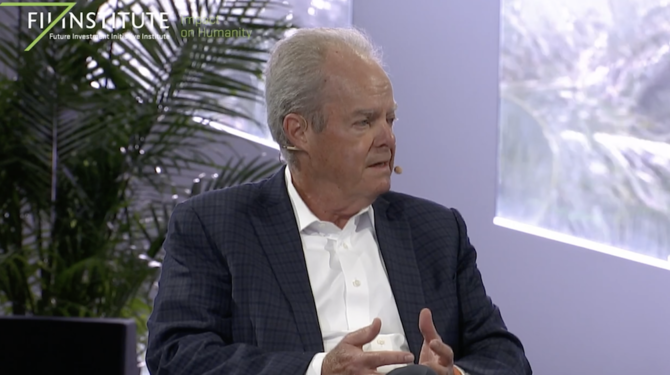
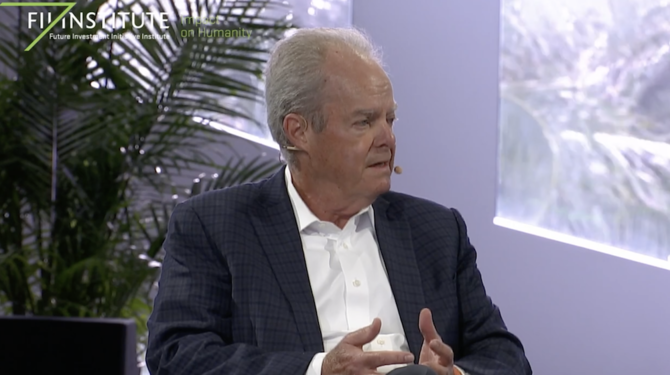
Manuel Medina, founder and managing partner of Medina Capital, at the FII Priority conference. (Screenshot/FII Priority)
Short Url
Updated 31 March 2023
Follow

Medina Capital founder delivers cybercrime warning at FII Priority conference

  • Basic ‘common sense stuff’ will help people protect themselves, says Manuel Medina

MIAMI: Almost half of organizations globally will have experienced a cyberattack on their software supply chains by 2025, according to analyst firm Gartner.

As Manuel Medina, founder and managing partner of Medina Capital, said: “There are only two types of enterprises and government agencies today: the ones that have been hacked and the ones that are going to be hacked.”

Speaking at the FII Priority conference in Miami, Medina highlighted the risk of cyberattacks, and said: “The internet was not designed to do what it’s doing today.”

Globalization and technological advances, such as cloud computing, mobility and virtualization, have made the internet less secure.

Companies across a host of industries are spending billions digitizing their infrastructure, but that infrastructure is difficult to protect, he said.

On an individual level, it mostly comes down to common sense, Medina added.

Social media companies do not charge users on their platforms because they are monetizing the users themselves, and by sharing copious amounts of personal information, users are only making it easier for both social media companies and potentially hackers to access their data, he said.

“They (social media companies) take your personal identity, and everything that they do is (about) how they track you in order to get commerce and sell you stuff. So, that’s totally contradictory to protecting you.”

Medina Capital, which hires “elite hackers,” has a motto of not liking people, because “people are the weak link,” Medina said.

“You are as strong as your weakest link.”

He added: “You can have the best software and the best systems,” but “human weakness” is the reason for the collapse of a security system.

Cybercriminals do not need weapons, politics or strategy; all they need is a laptop and a network connection, and governments need to evolve and cooperate to tackle this kind of criminal, Medina said.

Prosecuting cybercriminals is difficult because of globalization and innovation whereby it is possible for some evidence or information to be stored on a server located in a different country than the one where the criminal is being prosecuted, he said.

“The system today is the same system that it was 80 years ago. So, one of the things that we need to do is bring ourselves up to date.”

Individuals, too, need to do some basic “common sense stuff” to protect themselves, such as using multifactor authentication and storing their passwords in a secure digital wallet, he said.

“You have to sacrifice a little bit of convenience in order for you to be able to sleep better at night.”

Oman’s economy grows 2% in Q3 as bank credit expands 

Updated 5 sec ago
Follow

Oman’s economy grows 2% in Q3 as bank credit expands 

JEDDAH: Oman’s economy expanded 2 percent in the third quarter of 2025, supported by steady growth in non-oil activities, while bank lending continued to rise faster than deposits, underscoring improving domestic demand. 

Gross domestic product at constant prices reached about 9.91 billion Omani rials ($26 billion) in the three months through September, up from 9.71 billion rials a year earlier, according to preliminary data from the National Centre for Statistics and Information. 

The expansion was driven mainly by non-oil sectors, where value added increased 2 percent to more than 7.3 billion rials, Oman News Agency reported. 

This comes after Fitch Ratings recently upgraded the Sultanate’s sovereign credit rating to investment grade at BBB-, projecting GDP growth of around 4 percent in 2025, driven largely by robust expansion in the non-oil sector. 

Meanwhile, S&P Global Ratings expects steady real GDP growth of about 2 percent a year through 2028, supported by ongoing economic diversification and momentum in the services sector. 

“By economic activity, construction activities grew 1.3 percent to around 1.035 billion rials, while wholesale and retail trade increased 1.3 percent to 830.5 million rials. Public administration and defense rose 1.5 percent, reaching 932.5 million rials in Q3 2025,” the ONA report stated. 

Oil sector activities increased 1.9 percent to nearly 3.07 billion rials, compared with just over 3.01 billion rials in the same period of 2024. Crude oil production rose 2 percent to more than 2.55 billion rials, while natural gas activities grew 1.6 percent to 512.8 million rials, up from 504.7 million rials a year earlier. 

Meanwhile, total credit extended by conventional commercial banks in the Sultanate rose 8.5 percent by the end of November, with lending to the private sector increasing 5.8 percent to 21.9 billion rials. 

“In terms of investment, total holdings of conventional commercial banks in securities grew 7.4 percent, reaching approximately 6.4 billion rials by the end of November 2025,” ONA stated in another report. 

Within this category, investments in government development bonds rose 9.5 percent year on year to 2.2 billion rials, while investments in foreign securities declined 4.4 percent to 2.3 billion rials. 

On the liabilities side, total deposits with conventional commercial banks increased 6.3 percent to 26.4 billion rials by the end of November. 

Among total deposits, government deposits rose 7.6 percent to about 5.8 billion rials, while deposits from public sector institutions fell 25.6 percent to roughly 1.9 billion rials. 

Private sector deposits climbed 9.5 percent to 17.8 billion rials in November, accounting for 67.2 percent of total deposits with conventional commercial banks.