

Saudi Arabia, Miami offering development blueprint for rest of the world: FII Priority panel

1 / 3
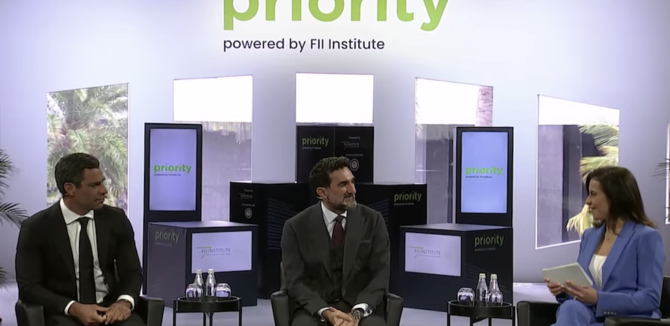
FII Chairman and Saudi Public Investment Fund Gov. Yasir Al-Rumayyan joined Miami Mayor Francis Suarez to discuss how humanity can get through the challenges of a post-COVID world. (Screenshot/FII Priority)
2 / 3
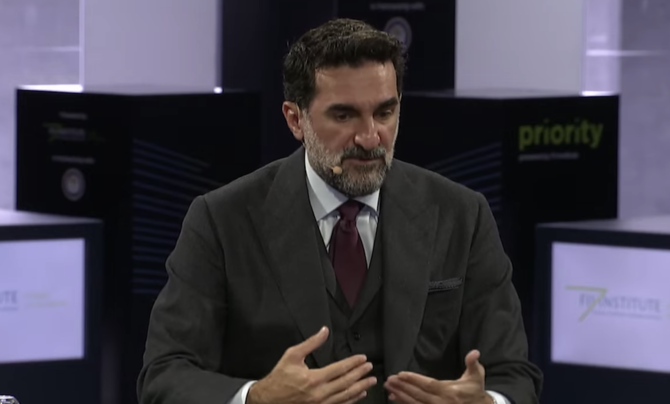
FII Chairman and Saudi Public Investment Fund Gov. Yasir Al-Rumayyan joined Miami Mayor Francis Suarez to discuss how humanity can get through the challenges of a post-COVID world. (Screenshot/FII Priority)
3 / 3
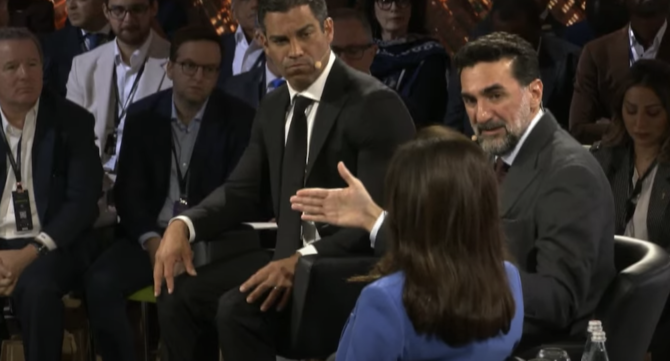
FII Chairman and Saudi Public Investment Fund Gov. Yasir Al-Rumayyan joined Miami Mayor Francis Suarez to discuss how humanity can get through the challenges of a post-COVID world. (Screenshot/FII Priority)
Short Url
Updated 30 March 2023
Follow

Saudi Arabia, Miami offering development blueprint for rest of the world: FII Priority panel

  • FII Chairman and Saudi Public Investment Fund Gov. Yasir Al-Rumayyan joined Miami Mayor Francis Suarez to discuss how humanity can get through the challenges of a post-COVID world
  • Al-Rumayyan said progress could be achieved anywhere in the world by running full diagnostic of economy and society

MIAMI: Economic and social reforms being carried out on a national level in Saudi Arabia and on a city level in Miami offer a model for progress and development for the rest of the world, the FII Priority conference heard on Thursday.

FII Chairman and Saudi Public Investment Fund Gov. Yasir Al-Rumayyan joined Miami Mayor Francis Suarez to discuss how humanity can get through the challenges of a post-COVID world, marked by the war in Ukraine, potential economic crises across the world, catastrophic weather events and soaring costs of living.

Since his election as mayor, Suarez said he had transformed Miami’s economy through lower taxation, investment in public security and enticing the future technology industry to the city, telling the conference that parallels could be drawn with Saudi Arabia’s transformation through its Vision 2030 plan.

Al-Rumayyan agreed, adding that progress could be achieved anywhere in the world by running a full diagnostic of an economy and society, as happened in the Kingdom with the launch of its Vision 2030 plan, by setting benchmarks, targets and key performance indicators.

“(The plan) is very challenging, but achievable,” he said. “You need the political will, the right processes and the right people. That’s what has made it work so well, so far, and hopefully we will achieve all of our targets by 2030,” he added.

Al-Rumayyan highlighted progress already made ahead of schedule in certain metrics across the Kingdom, including having 37 percent female employment by 2020, 7 percent more than initially expected, as well as Saudi Arabia’s 8.7 percent gross domestic product growth in 2022, which was 1.2 percent more than predicted by the IMF, making the Kingdom’s economy the fastest growing in the G20.

This week, with nationwide unemployment falling below 9 percent in Saudi Arabia for the first time, Al-Rumayyan was also keen to stress that Vision 2030 does not set out simply to create jobs, but to create “good quality” jobs, which is key for engaging an ever-youthful workforce.

Calling PIF the “enabler of Vision 2030,” Al-Rumayyan added that a healthy investment portfolio such as the Kingdom’s was key to sustainable progress and development; he highlighted its assets are worth $650 billion today, but it plans to expand this to $1 trillion by 2025 and to between $2-$3 trillion by 2030.

As chairman of Saudi Aramco, Al-Rumayyan outlined the company’s green energy ambitions and its low-emission credentials, but warned that the approach of some countries toward fossil fuels threatened the likelihood of achieving real development as a result of chasing unrealistic clean energy goals.

“Oil, gas and fossil fuels is not such a bad thing,” he said. “I could talk for days about why we should really invest in exploration. We should have long-term views and not (follow) a certain ideal or ideology without thinking about the consequences of that,” he added.

Completely dropping fossil fuels is not a practical solution for global development and progress, Al-Rumayyan told the panel, adding that the shift from traditional to renewable sources of energy would be a slow process, especially considering that much of the net zero infrastructure still requires petrochemicals and fossil fuels to produce.

The PIF governor said: “Some of the governments around the world bullied the oil and gas companies (because of the climate mission) and instead of looking at the problem and trying to fix it, they just wanted to stop it, and what happened after that?

“It started with the oil crisis, because you have less exploration, less supply and demand is increasing, because we want to change to renewable. I understand that, but it takes time to have a transition from fossil fuels to renewables.

“Are we making things better, or worse? From two sides, first, (damage to) the environment and secondly the affordability of energy for the world’s people, and that’s the problem we are facing now,” he added.


Gulf-EU value chain integration signals shift toward long-term economic partnership: GCC secretary general

Updated 03 February 2026
Follow

Gulf-EU value chain integration signals shift toward long-term economic partnership: GCC secretary general

RIYADH: Value chains between the Gulf and Europe are poised to become deeper and more resilient as economic ties shift beyond traditional trade toward long-term industrial and investment integration, according to the secretary general of the Gulf Cooperation Council.

Speaking on the sidelines of the World Governments Summit 2026 in Dubai, Jasem Al-Budaiwi said Gulf-European economic relations are shifting from simple commodity trade toward the joint development of sustainable value chains, reflecting a more strategic and lasting partnership.

His remarks were made during a dialogue session titled “The next investment and trade race,” held with Luigi Di Maio, the EU’s special representative for external affairs.

Al-Budaiwi said relations between the GCC and the EU are among the bloc’s most established partnerships, built on decades of institutional collaboration that began with the signing of the 1988 cooperation agreement.

He noted that the deal laid a solid foundation for political and economic dialogue and opened broad avenues for collaboration in trade, investment, and energy, as well as development and education.

The secretary general added that the partnership has undergone a qualitative shift in recent years, particularly following the adoption of the joint action program for the 2022–2027 period and the convening of the Gulf–European summit in Brussels.

Subsequent ministerial meetings, he said, have focused on implementing agreed outcomes, enhancing trade and investment cooperation, improving market access, and supporting supply chains and sustainable development.

According to Al-Budaiwi, merchandise trade between the two sides has reached around $197 billion, positioning the EU as one of the GCC’s most important trading partners.

He also pointed to the continued growth of European foreign direct investment into Gulf countries, which he said reflects the depth of economic interdependence and rising confidence in the Gulf business environment.

Looking ahead, Al-Budaiwi emphasized that the economic transformation across GCC states, driven by ambitious national visions, is creating broad opportunities for expanded cooperation with Europe. 

He highlighted clean energy, green hydrogen, and digital transformation, as well as artificial intelligence, smart infrastructure, and cybersecurity, as priority areas for future partnership.

He added that the success of Gulf-European cooperation should not be measured solely by trade volumes or investment flows, but by its ability to evolve into an integrated model based on trust, risk-sharing, and the joint creation of economic value, contributing to stability and growth in the global economy.

GCC–EU plans to build shared value chains look well-timed as trade policy volatility rises.

In recent weeks, Washington’s renewed push over Greenland has been tied to tariff threats against European countries, prompting the EU to keep a €93 billion ($109.7 billion) retaliation package on standby. 

At the same time, tighter US sanctions on Iran are increasing compliance risks for energy and shipping-related finance. Meanwhile, the World Trade Organization and UNCTAD warn that higher tariffs and ongoing uncertainty could weaken trade and investment across both regions in 2026.