

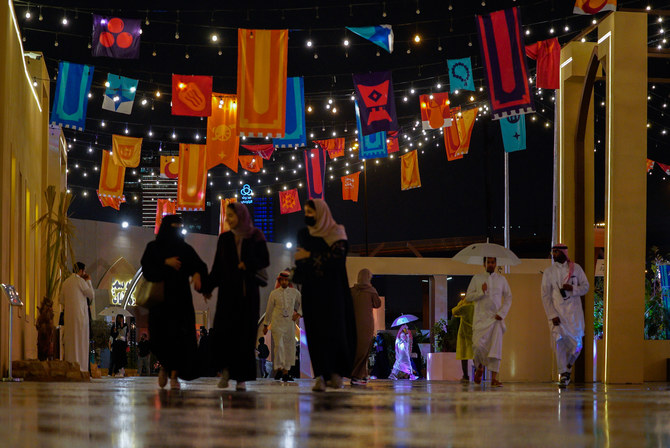


RIYADH: Visitors are flocking to the Ramadan tent in Riyadh, one of the star attractions of the Ministry of Culture’s holy month season.
The main tent, which is located east of King Abdullah Financial District, is open for visitors until April 19 and acts as a cultural introduction to Ramadan.
Basmah Alqahtani, a visitor to the attraction, told Arab News: “Ramadan Season was nothing less than amazing: the decorations and general theme, the shops, and the Ramadan tent are fantastic for both iftar and sahoor.”
Alqahtani added that the Ramadan Season felt like a continuation of the Riyadh Season.
The tent offers a unique experience for guests, with diverse activities for all ages including dining, sports, arts, and games.
It offers catered iftar by the Four Seasons Hotel for SR250 ($66) per person and opens every day at 5 p.m. for the feast, which is served until 8 p.m. Sahoor is served from 12 until the tent closes at 3 a.m.
Both the meals feature a variety of cuisine and international dishes from around the world.
Ramadan lights and decorations illuminate some of the symbols of Saudi culture close to the dining area, including dates, a prayer mat, a misbah, and an incense burner.
The souq sells incense and roasted coffee beans, along with traditional crafts.
Um Waleed has turned her passion into a small business by producing baskets, dining table mats, and sieves, all made from wicker which is taken from palm trees.
Meanwhile, Najla Abdulrahman has transformed her love for Sadu crafts, an authentic Bedouin practice, into a small business.
The tent also caters for children in a zone where youngsters from 5 to 12 take part in craft and art sessions, storytelling, and workshops.
Abdulaziz, a visitor to the Ramadan tent, said: “Our first visit here was amazing.
“I hope I can make another visit. It was honestly a beautiful experience for me and my family, especially with [the] Ramadan vibes.”
Abdulaziz, who attended with his wife and daughter, added: “I recommend this place for families in particular because it is well designed for families, and for people in general, of course.”
Visitors can try their hand at Ramadan riddles, cultural memory sessions, and poetry readings on the main stage of the tent.
The riddles are competitive affairs, with prizes for the winners such as coupons for the market or free meals.
Fun games are also on hand, including tennis, dominoes, pool, and chess.
Those interested in visiting can book their tickets through the Ministry of Culture website. There is free admission for those with special needs and those accompanying them.
The Ministry of Culture’s Ramadan Season is taking place in Riyadh, Jeddah and Makkah throughout the holy month to celebrate the Kingdom’s cultural heritage.


