

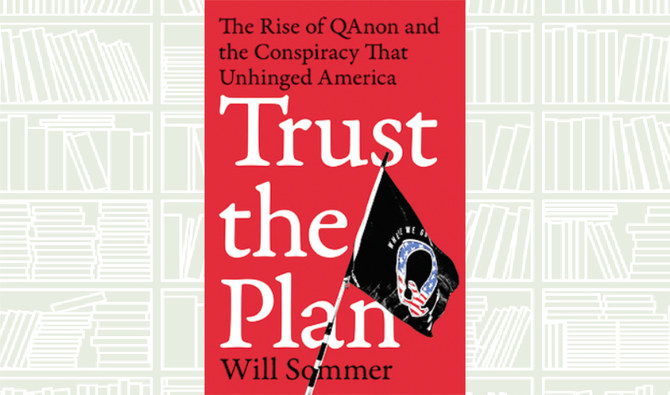
What We Are Reading Today: Trust the Plan by William Sommer

Short Url
Updated 24 March 2023
Follow

What We Are Reading Today: Trust the Plan by William Sommer

In “Trust the Plan,” William Sommer explains the rise of QAnon, how it has gained a mainstream following Republican lawmakers and ordinary citizens, the threat it poses to democracy, and how we can reach those who have embraced the conspiracy and are disseminating its lies.

What began as a fringe online conspiracy in the mid 2000s is now embraced by millions of Americans including new members of Congress and the thousands of Trump follower who attacked the US Capitol on Jan. 6, 2021.

This timely and essential book outlines what the nation must do to address this growing danger — including how to help friends and family who have fallen under Q’s pernicious sway.


What We Are Reading Today: ‘Rituals of War’

Photo/Supplied
Updated 29 December 2025
Follow

What We Are Reading Today: ‘Rituals of War’

  • Bahrani brings together and analyzes facets of war and sovereign power that fall under the categories of representation and display, the aesthetic, the ritualistic, and the supernatural

Author: Zainab Bahrani

“Rituals of War” is an investigation into the earliest historical records of violence and biopolitics. In Mesopotamia, ancient Iraq (ca. 3000–500 BC) rituals of war and images of violence constituted part of the magical technologies of warfare that formed the underlying irrational processes of war. In the book, three lines of inquiry are converged into one historical domain of violence, namely, war, the body, and representation.

Building on Foucault’s argument in “Discipline and Punish” that the art of punishing must rest on a whole technology of representation, Zainab Bahrani investigates the ancient Mesopotamian record to reveal how that culture relied on the portrayal of violence and control as part of the mechanics of warfare. Moreover she takes up the more recent arguments of Giorgio Agamben on sovereign power and biopolitic to focus on the relationship of power, the body and violence in Assyro-Babylonian texts and monuments of war.

Bahrani brings together and analyzes facets of war and sovereign power that fall under the categories of representation and display, the aesthetic, the ritualistic, and the supernatural.