IMF says was not consulted on Pakistan’s petrol subsidy plan — media

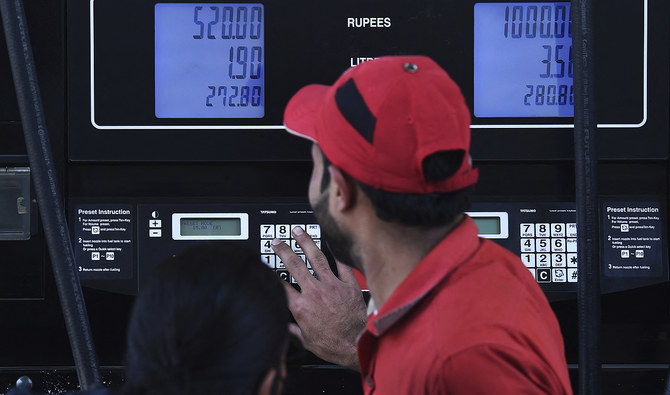
An employee of a petrol station fills the tank of a customer in Karachi on February 16, 2023. (Photo courtesy: AFP/File)
Short Url
Updated 21 March 2023
Follow

IMF says was not consulted on Pakistan’s petrol subsidy plan — media

  • Pakistan’s PM last week announced a petrol subsidy of Rs50 per liter for low-income people
  • Staff agreement to follow once “few remaining points” are closed, says IMF’s resident representative

ISLAMABAD: The International Monetary Fund’s (IMF) resident representative for Pakistan said on Monday that the Fund was not consulted on the government’s recent move to announce a fuel subsidy of Rs.50 per liter, adding that it is seeking “greater details” on the scheme, Bloomberg reported.

Pakistan has hiked taxes, shifted to a market-based exchange rate, and increased fuel prices to revive a stalled $6.5 billion IMF loan program as the prospect of default looms large over the South Asian country. As Pakistan’s currency weakened and its reserves dipped to historic lows over the past couple of months, inflation more than doubled to 31.5 percent in February this year, making it difficult for low-income Pakistanis to make ends meet.

Despite Pakistan’s efforts to seek a bailout program from the international lender, Prime Minister Shehbaz Sharif on Sunday announced a “petroleum relief package” for low-income people. The announcement of the relief package came days after the government increased the petrol price by Rs5 per liter, taking it to Rs272 per liter.

“Ruiz said the lender wasn’t consulted on the government’s plan to raise fuel prices for wealthier motorist to finance a subsidy for lower-income people,” Bloomberg said in a report.

“Fund staff are seeking greater details on the scheme in terms of its operation, cost, targeting, protections against fraud and abuse, and offsetting measures, and will carefully discuss these elements with the authorities,” Bloomberg quoted her as saying.

On the staff-level agreement, Ruiz said Islamabad had made “substantial progress” toward meeting policy commitments.

“A staff-level agreement will follow once the few remaining points are closed,” she told Bloomberg. “Ensuring there is sufficient financing to support the authorities in the implementation of their policy agenda is the paramount priority.”

Finance Minister Ishaq Dar said the IMF agreement has been delayed as the Fund wanted to see “friendly countries” finalize commitments they made to help Pakistan shore up its reserves before signing off on the bailout package.


Pakistan assembly speaker warns opposition against anti-state remarks in parliament

Updated 17 January 2026
Follow

Pakistan assembly speaker warns opposition against anti-state remarks in parliament

  • Ayaz Sadiq says criticism of judiciary and armed forces will not be allowed on assembly floor
  • He calls violence during protests unacceptable, vows neutrality as National Assembly speaker

ISLAMABAD: Pakistan’s National Assembly Speaker Sardar Ayaz Sadiq said on Saturday that opposition lawmakers would not be allowed to speak against Pakistan, the judiciary or the armed forces on the floor of parliament, calling such remarks unacceptable.

Speaking to reporters during a visit to the eastern city of Lahore, Sadiq said parliamentary debate must remain within constitutional and legal limits, while reiterating his commitment to act impartially as speaker.

“No one will be allowed to speak against Pakistan, the judiciary or the armed forces on the floor of the National Assembly,” Sadiq said. “Negative or controversial remarks about judges or the armed forces are unacceptable.”

His comments come amid heightened political tensions after opposition groups held protests in the past, criticizing state institutions and targeting government and military properties.

The speaker said peaceful protest was a democratic right but drew a sharp line at violence and vandalism.

“Protest is the right of every citizen in a democratic society, but it must remain peaceful and within the bounds of the constitution and the law,” he continued, adding that arson, damage to property and the use of sticks or weapons in the name of protest were “unacceptable” and posed a threat to the rule of law.

“No opposition lawmaker will be allowed to speak on the National Assembly floor if they speak against Pakistan,” Sadiq said.

The speaker also noted the country’s economic indicators were gradually improving, citing an increase in foreign exchange reserves, and said Pakistan had further strengthened relations with countries including the United States, China, Russia, Türkiye and Saudi Arabia.