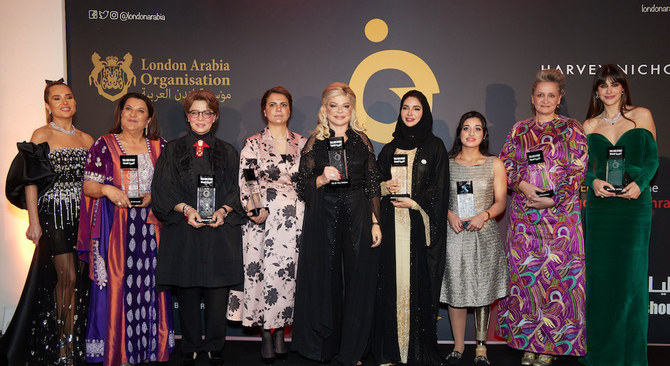

LONDON: Arab women are being encouraged to tell their stories to break down stereotypes associated with abuse and violence, and help empower and inspire younger female generations.
The Arab Women of the Year Awards, which is organized by the London Arabia Organization, held a lavish ceremony in the UK capital on Wednesday to recognize and celebrate remarkable achievements made by Arab women during the past year, in the presence of British and Arab royalty, diplomats, ministers, and industry leaders.
Dr. May Chidiac, a journalist and former Lebanese minister, received the Achievement in Media Activism Award for her work spanning nearly four decades, and for founding the May Chidiac Foundation Media Institute — a nongovernmental organization dedicated to research and education on media, human rights, democracy, and social welfare issues.
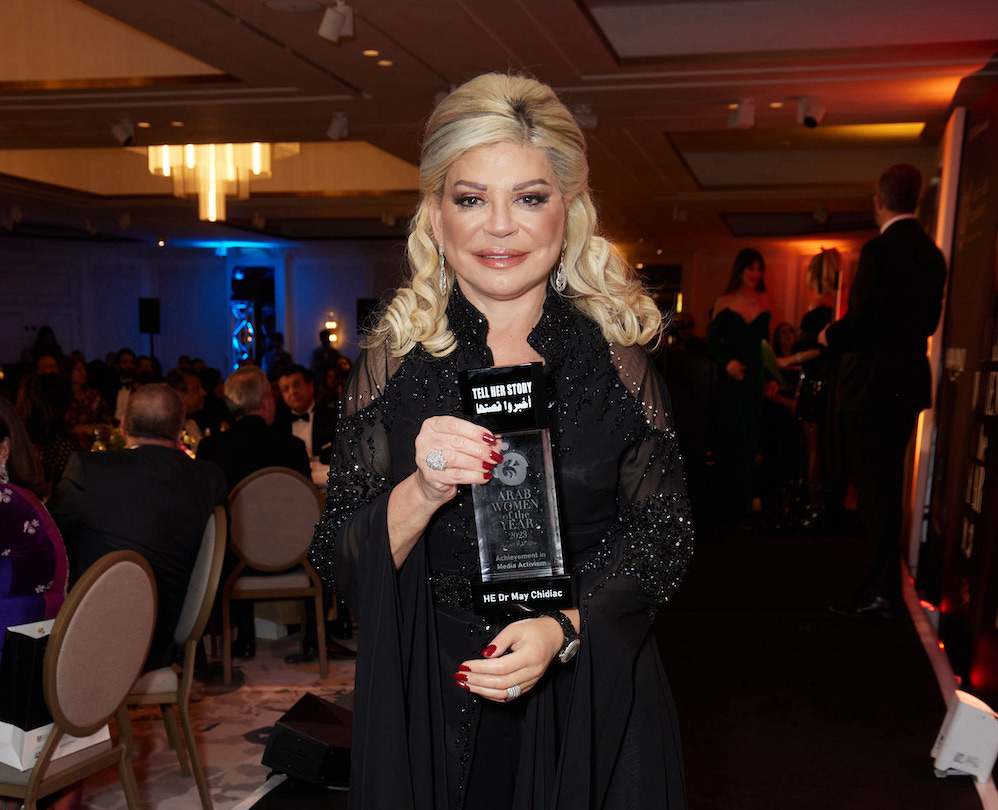
Dr. May Chidiac received the Achievement in Media Activism Award for her work spanning nearly four decades. (Supplied)
Chidiac, who survived a horrific assassination attempt by car bomb in Jounieh, Lebanon, in 2005 and returned to work as a broadcast journalist in 2006 after undergoing more than 40 surgeries, said that she was humbled to have received the award.
She told Arab News: “I can’t tell you how much I appreciated this recognition because seeing so many Arab women celebrated today, so many famous faces we met from different sectors — we can go from politics, activism, journalism, space, technology, to influencers — that means we are putting our finger in this world wherever women are achieving success stories.”
There are no set categories for the annual awards and they are selected every year to celebrate outstanding women and their achievements, regardless of their background or chosen field.
Kuwaiti Dr. Nada Al-Shammari, partner and chief inspiration officer at Orbital Space — a UAE-based company that works to make space accessible for everyone — received the Achievement in Innovation Award and is the first female to be recognized by the organization in the space field.
She said that in the last 10 years there had been a rise in the number of Gulf Cooperation Council-based private companies entering the space sector with the potential of becoming pioneers, and a lot of the companies were made up of Gulf youth.
Al-Shammari said: “We hope to engage the youth through space missions and space engagement activities to get passionate about, get connected with space and be the future of space leaders, not only for our region but the whole world.”
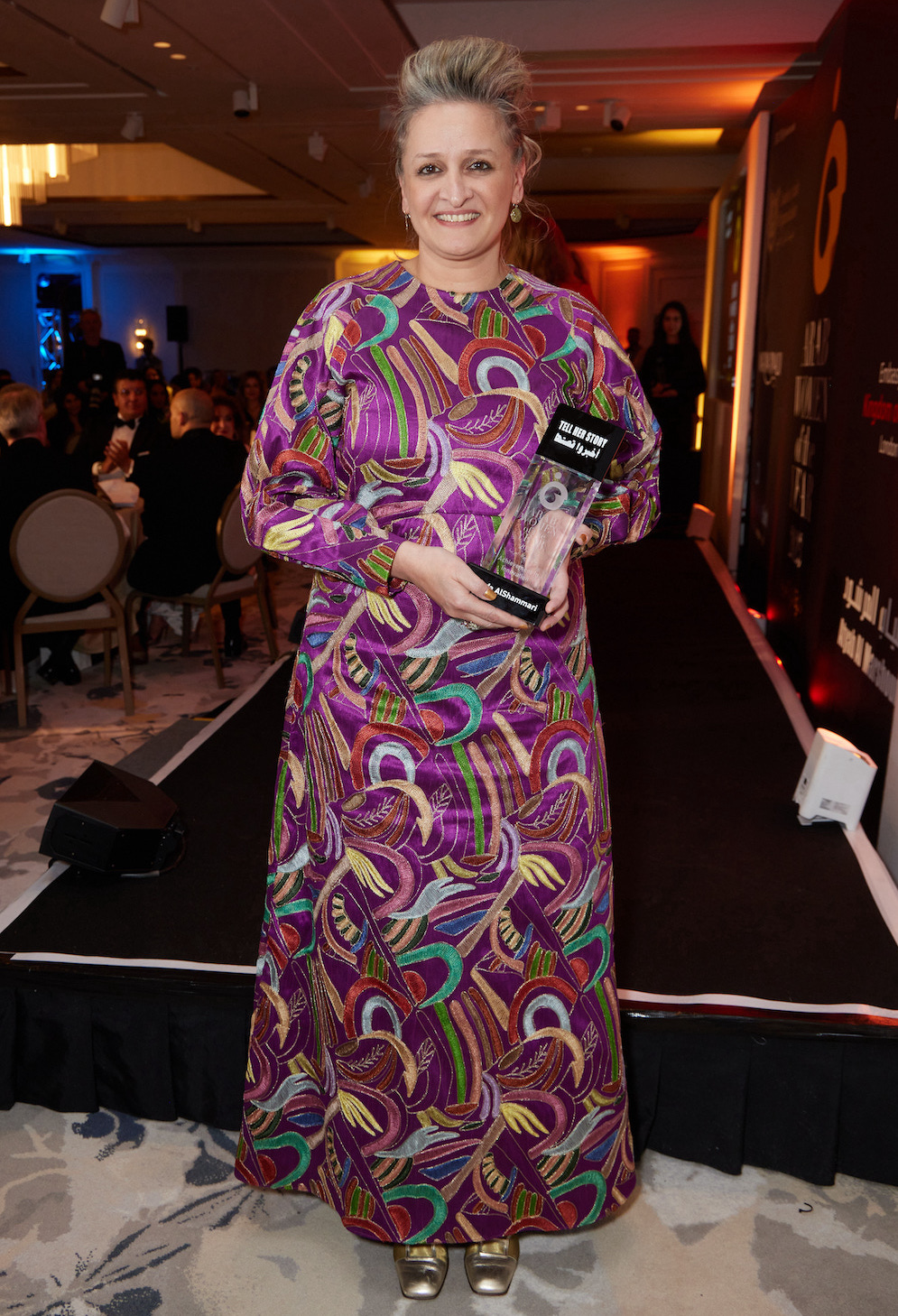
Kuwaiti Dr. Nada Al-Shammari, partner and chief inspiration officer at Orbital Space, received the Achievement in Innovation Award. (Supplied)
She added that Orbital Space — as a member of the private sector — had been pioneering with the Kuwaiti and Emirati governments to engage and widen the circle of participation to get more people into the space sector.
She said: “I would like to see Kuwait getting much further into the space sector and supporting more private entities to come into the space sector, but I would also like to see the first Kuwaiti young woman moving toward becoming the first astronaut in Kuwait.”
This year’s theme was “Tell Her Story,” which is part of the organization’s “Unlock Her Future” campaign that sought to challenge institutions, organizations, and individuals to confront the harsh obstacles that face young Arab girls, such as violence against women in the form of honor killing and child marriage.
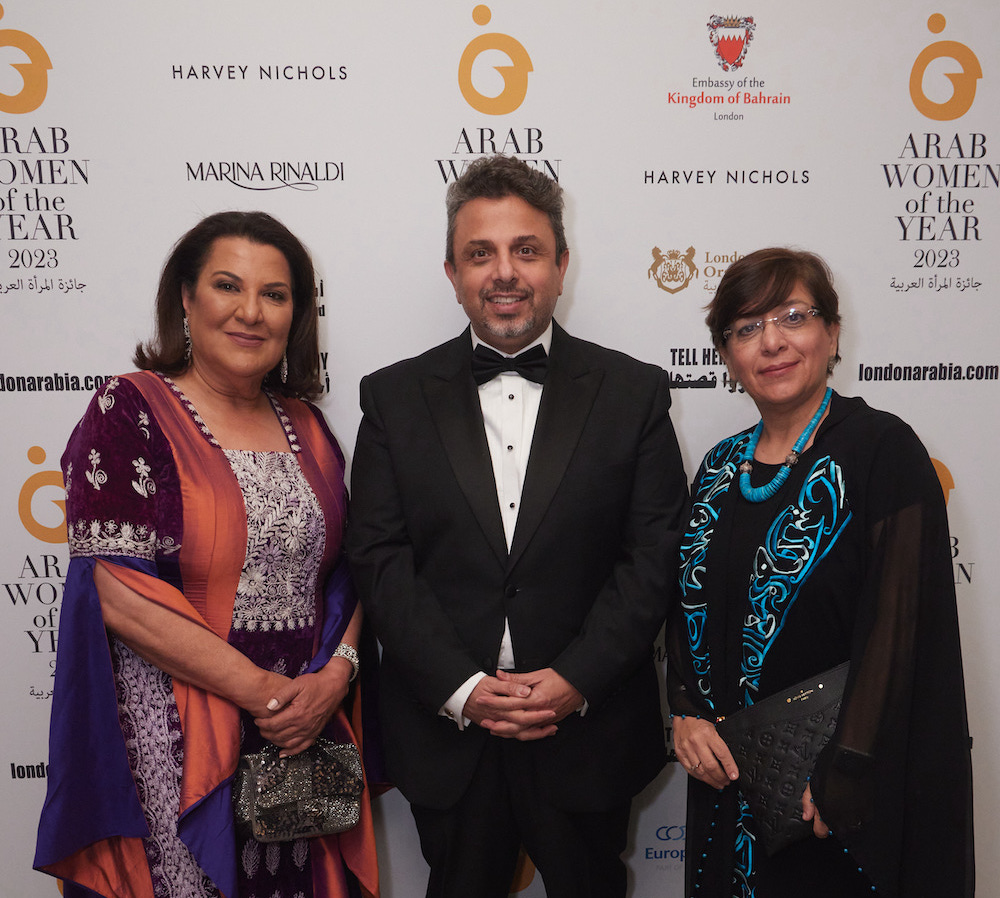
British and Arab royalty, diplomats, ministers, and industry leaders attended the event at the Jumeirah Carlton Tower in London. (Supplied)
Young girls during the ceremony shared stories of comments and criticism they had faced and how the campaign was able to support them.
Omar Bdour, CEO of the London Arabia Organization, said he used to disregard stories of women being abused or harassed as the common conception was that it was the woman’s fault.
He added: “Now I have a young daughter and sometimes I wonder when I laughed about it, will someone laugh about the same comments [if they came from my daughter]? So that’s why I feel I need to change.”
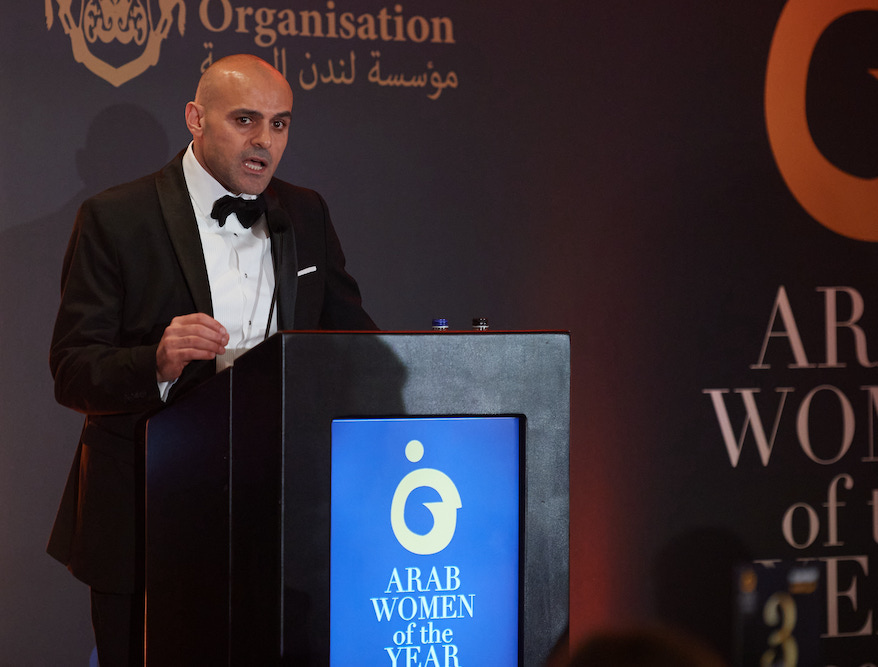
Omar Bdour, CEO of the London Arabia Organization, called on women to tell their stories. (Supplied)
Bdour said women are assaulted and raped in the West, but if they go to the police they are protected, whereas in the Arab world, “they will ask, are you sure you want to do this, why are you putting yourself through this, what were you wearing at that time, are you sure your family is going to be fine with it?”
He said he felt ashamed of how he used to think, and there was a need to think differently, while adding that he hopes to see other men also change their views.
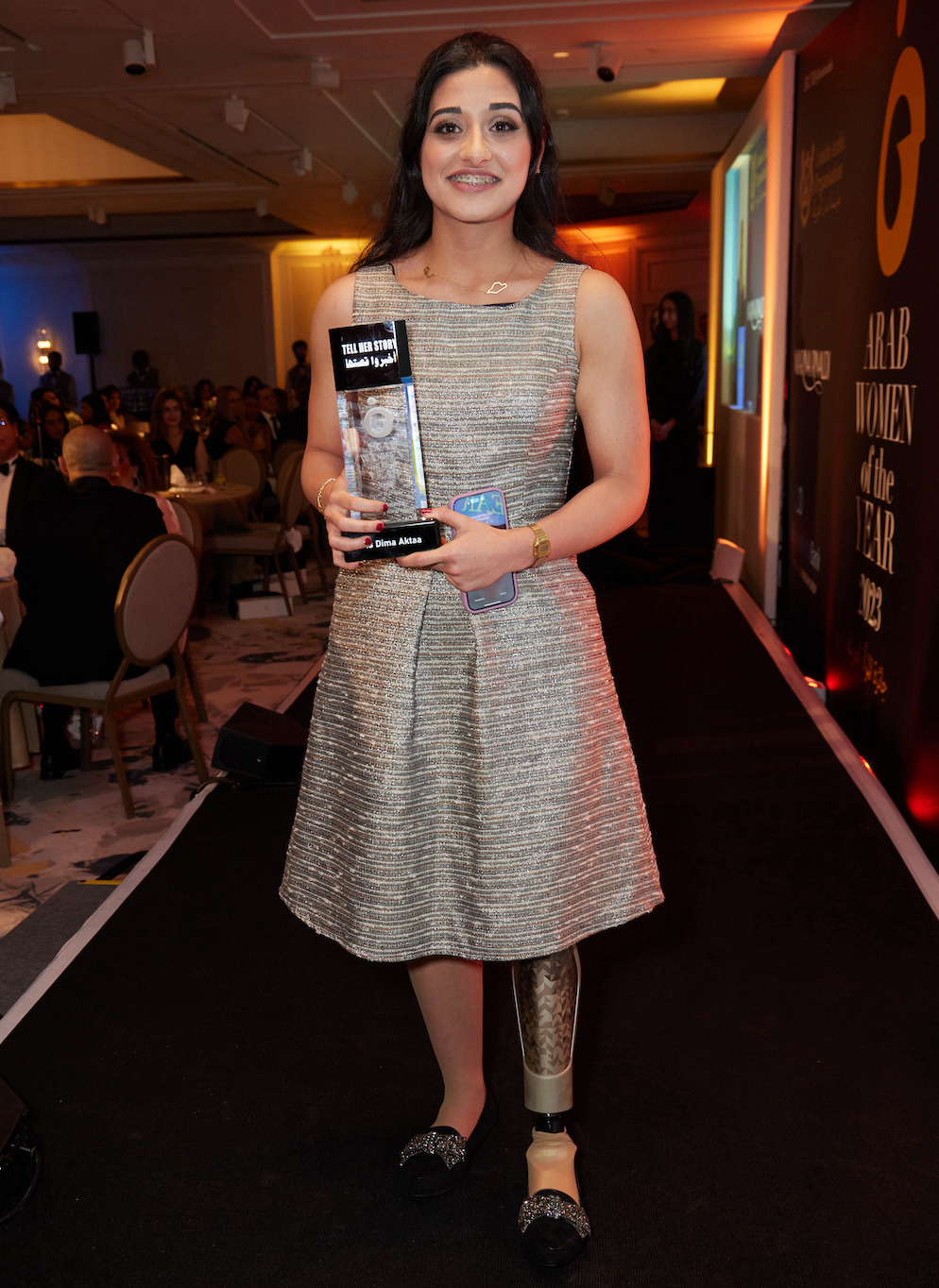
Among those recognized for their achievements was Syrian athlete Dima Aktaa in the community spirit award. (Supplied)
Among those recognized for their achievements were Bahrain’s Sheikha May Al-Otaibi in education, Libyan Foreign Minister Najla Mangoush in diplomacy, Emirati Sheikha Fatima bint Hazza Al-Nahyan in cultural development, former Jordanian Minister of Social Development Khawla Armouti in community service, Lebanese influencer and model Nour Arida in social impact, Yemeni mathematician Manahel Thabet in scientific development, and Syrian athlete Dima Aktaa in community spirit award.
Jordanian journalist Caroline Faraj, who won the Achievement in Media Award last year, said it was great to see all the new women achievers not only recognized in the Arab world, but also in London, and their stories heard in Britain.
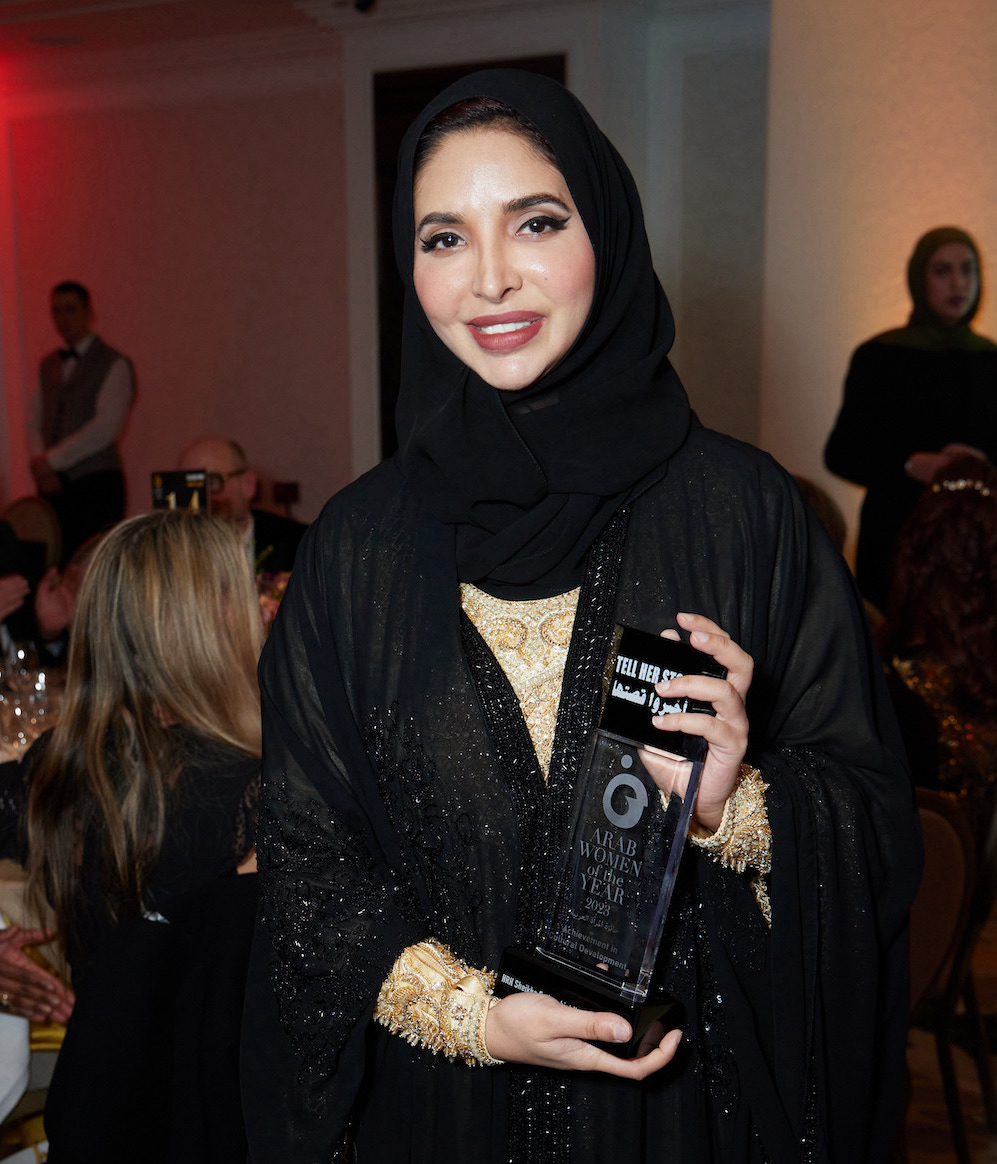
Among those recognized for their achievements was Emirati Sheikha Fatima bint Hazza Al-Nahyan in cultural development. (Supplied)
Faraj, who is vice president and editor-in-chief of CNN Arabic, said: “This organization was able to find these people, these women, and also to give them a floor, to give them a voice, so I’m really happy that I was part of those who got the award last year, but also I’m happy that every year I’m getting to know more women and more achievers and more voices from the Arab world.”
She said it was important for women to tell their stories but it remained “a challenge” and as part of CNN Arabic’s 20th anniversary, the channel launched an initiative called “Her Story” last year to provide free training and coaching for women in telling their stories.
“Anybody should be able to tell their stories so that they are able to be heard,” she said. “We need to train ourselves not only to tell but also to listen [and] we should really work together to do it, and do it properly.”