
KARACHI: Qatar Fund For Development (QFFD) will deliberate on the “best strategy” to assist Pakistan in building more resilience following last year’s devastating floods, a top expert at the Doha-based government fund who is touring deluge-hit areas of the South Asian nation said on Thursday.
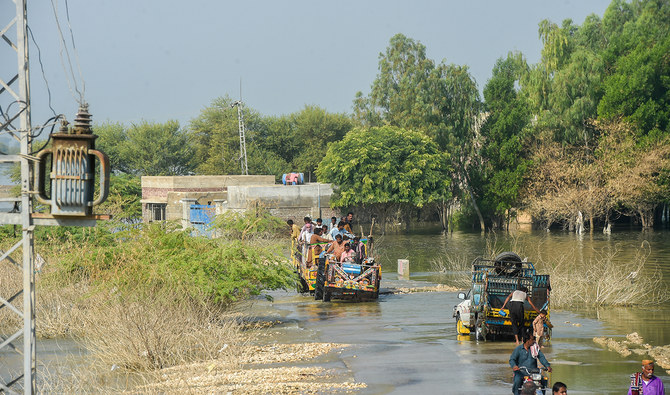
Last summer, at least 1,700 people died in flash floods that effected over 33 million across the nation and caused losses worth $30 billion, adding to the woes of an economy that is in the middle of a full-blown meltdown. Large swatches of Pakistan’s crops were also washed away in the deluges and agricultural lands inundated.
In January, Qatar pledged over $25 million during an international conference in Geneva to raise money for Pakistan’s post-floods reconstruction.

Aisha Al-Kuwari, Humanitarian and International Cooperation Expert at Qatar Fund For Development (QFFD) participating in a panel discussion at ‘Agri Connections 2023’ which was organized by Pakistan Agricultural Coalition on March 16, 2023 in Karachi. (AN photo)
Speaking at Pakistan’s first agricultural conference titled, ‘Agri Connection 2023,’ held in Karachi on Thursday, QFFD’s Aisha Al-Kuwari, who had toured flood-affected areas of Pakistan and held meetings with farmers this week, said the Fund would “deliberate on the strategy to assist Pakistan” upon the team’s return to Qatar.
“We are here to investigate in what way, shape, and form we can assist, particularly, because Qatar is really interested in helping,” Al-Kuwari said.
“Hopefully, upon return, we will be deliberating on the best strategy for us to really intervene and assist in the response and build more resilience in the country.”
Al-Kuwari said the Fund was committed to working with its Pakistani partners “to address challenges that they face and help them achieve their goals for sustainable development.”
The Fund was committed to supporting the United Nations Sustainable Development Goals (SDGs), particularly SDG-II, Al-Kuwari said, which aims at ending hunger, achieving food security, improving nutrition worldwide, and promoting sustainable agriculture practices.
The Fund is also supporting SDG-8, which seeks to promote sustained, inclusive, and sustainable economic growth, full and productive employment, as well as decent work for all.
“Access to food and nutrition is critical in achieving economic growth and developing decent work is essential for ensuring that people have the right resources and opportunities to access nutritious food,” she said. “By 2030, all of us would need to report to the SDGs and as a donor entity.”
Al Kuwari acknowledged that access to capital was critical for farmers because they needed to invest in their farms and required equipment and resources to grow post-floods.
“Without adequate access to capital, farmers cannot produce enough crops to meet their needs, and the growing population and in coming years would increase,” she said.