Karachi’s ‘Aurat March’ rally focuses on women’s economic rights amid soaring inflation

Women participants attend the Aurat March demonstration to mark International Women's Day in Karachi on March 12, 2022. (AN Photo)
Short Url
Updated 12 March 2023
Follow

Karachi’s ‘Aurat March’ rally focuses on women’s economic rights amid soaring inflation

  • Women demand equal rights, measures against climate change at Karachi rally
  • Participants shout slogans, carry placards to demand a more inclusive society

KARACHI: Hundreds of women, transgenders, and men rallied in Pakistan’s southern port city of Karachi on Sunday to demand economic rights, as decades-high inflation and the disastrous effects of climate change trouble Pakistan’s middle and lower-middle classes.

The “Aurat March” (Women’s March in Urdu) is an annual march event held across Pakistan to observe International Women’s Day on March 8. The pro-women rallies have faced a backlash from conservative forces since they first began in 2018. In 2021, blasphemy allegations were leveled at marchers following tampered video clips of a demonstration that emerged on social media.

Aurat March rallies have courted controversy in the past because of banners and placards waved by participants that raise subjects such as divorce, sexual harassment, and menstruation. Despite the challenges, organizers maintain the march aims to raise awareness of pressing issues faced by Pakistani women, including violence and sexual exploitation.

The Karachi chapter of Aurat March organized their rally on March 12 at Burns Garden instead of on March 8, saying that the date was pushed ahead as March 8 was a weekday, which would mean women from the working-class segment would miss out on a day’s wages.

This year’s march was held in the backdrop of soaring inflation, which climbed to 31.5 percent in February 2023 from 12.2 percent in the same period last year. Devastating floods from last year’s monsoon season also killed over 1,700 people in Pakistan and displaced over 33 million.

“Inflation, rising prices, food prices, poverty, the effect of climate change on women’s lives, the effects of floods on women, all these are issues that we are discussing this year,” Sheema Kermani, a prominent Pakistani dancer, social media activist, and an organizer of the march, told Arab News. 

“This time our emphasis is on poverty,” she added, explaining that soaring inflation affects women and their health.

“And we are looking for social security, we are looking for safety, and we are looking for recognition of our rights,” she added. The social activist demanded women to be paid fair wages for the work they do both within their homes and outside.
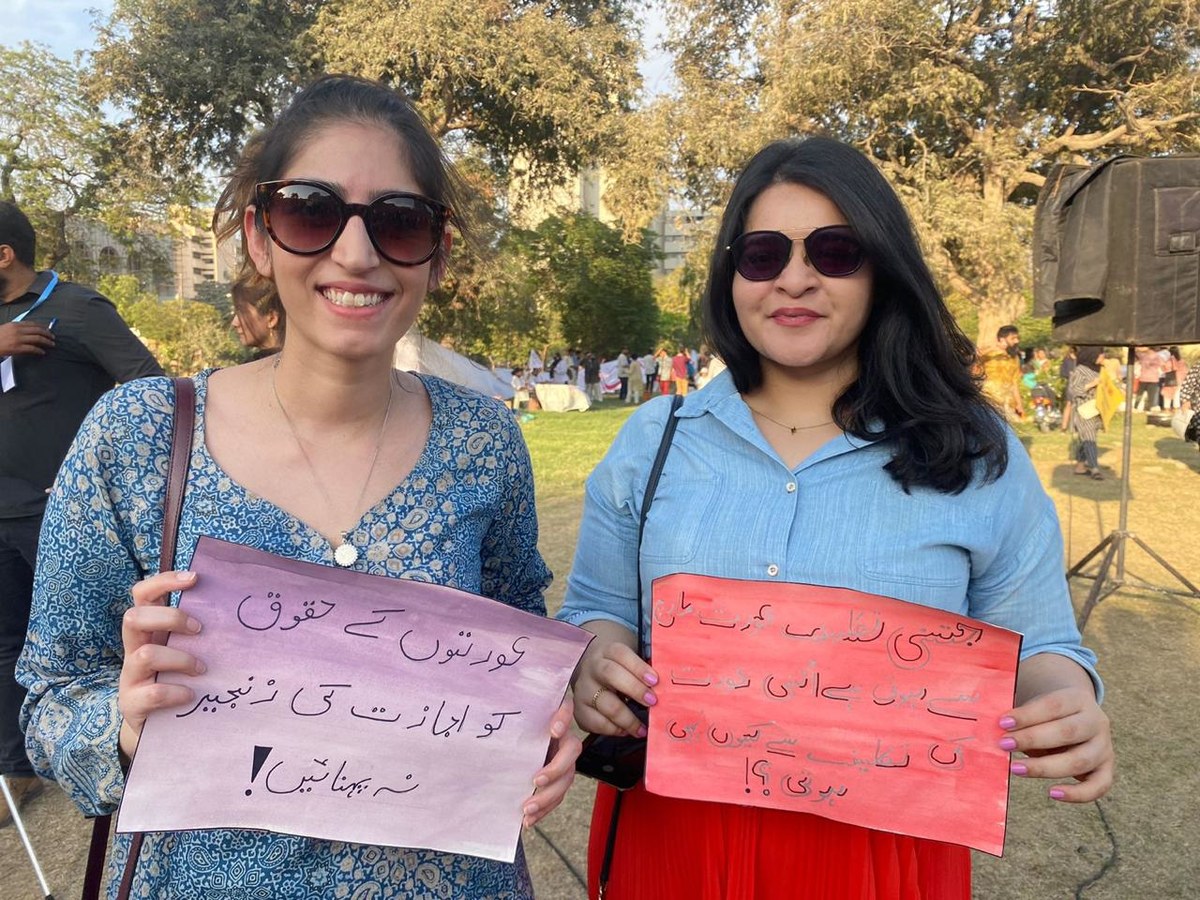


A woman holds a placard during the 'Aurat March' or women's march, an annual socio-political demonstration held to observe International Women's Day, in Karachi on March 12, 2023. (AN Photo)

As is the case each year, this Aurat March also featured various placards that featured a wide array of slogans. “Give a woman her rightful share of the bread,” read one. Another demanded the reversal of the ban on education for women in Afghanistan. Scores of women joined in as slogans raised by march organizers, calling for equal rights and an inclusive society, blared from speakers.
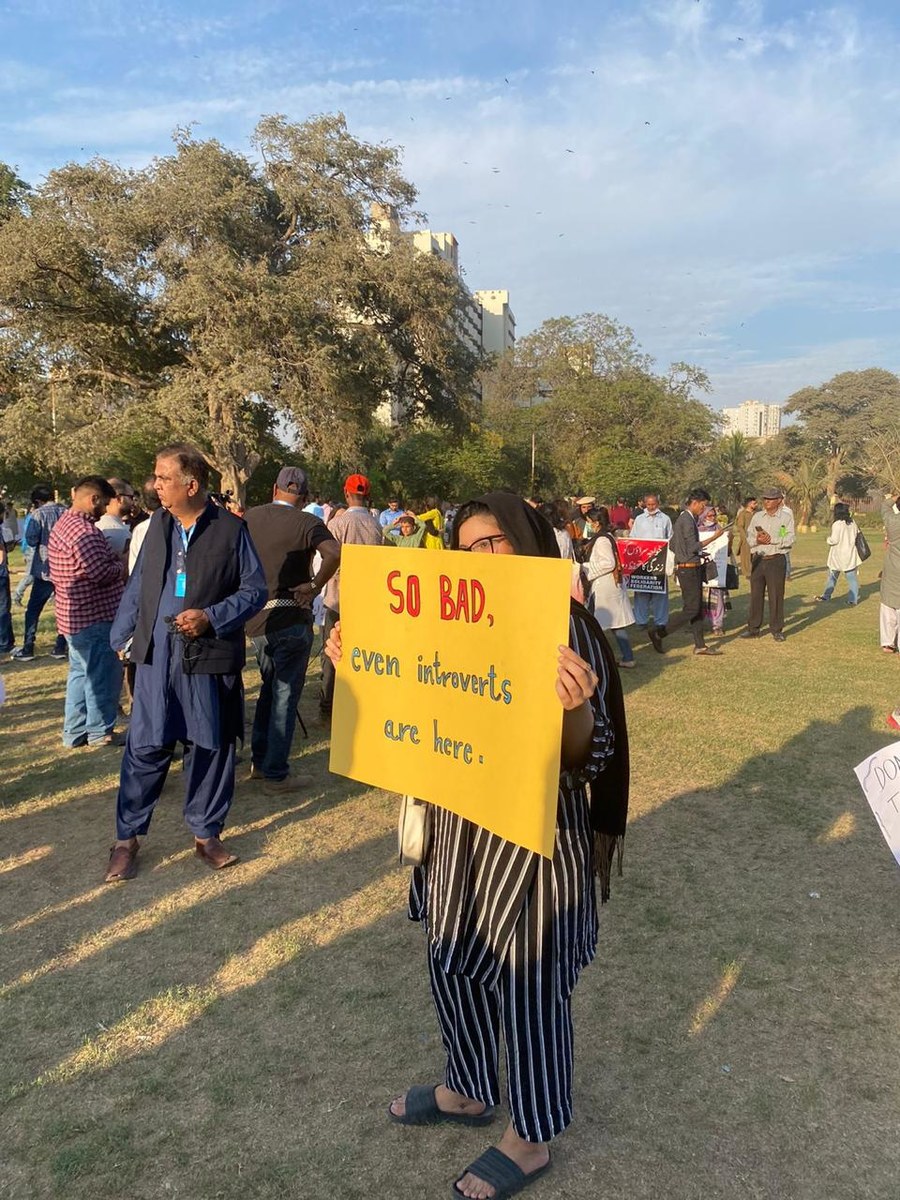


A woman holds a placard during the 'Aurat March' or women's march, an annual socio-political demonstration held to observe International Women's Day, in Karachi on March 12, 2023. (AN Photo)

Mira Sethi, a Pakistani actress, and author, rejected the perception that only elite women attend the march every year.

“People have come here from all over, there are “surkhas” [leftists] here as well, people from normal everyday life as here as well, women, the elderly and young people, all are here,” she told Arab News.

“Why does our obsession with culture start and end— especially when it comes to women— at their dressing?” she asked.

Maqsood Ali Khan, a retired civil servant, said he had accompanied his wife and two daughters to the march as a society couldn’t progress without women’s participation.

“The country cannot progress if you keep 50 percent of the population at home,” he told Arab News.
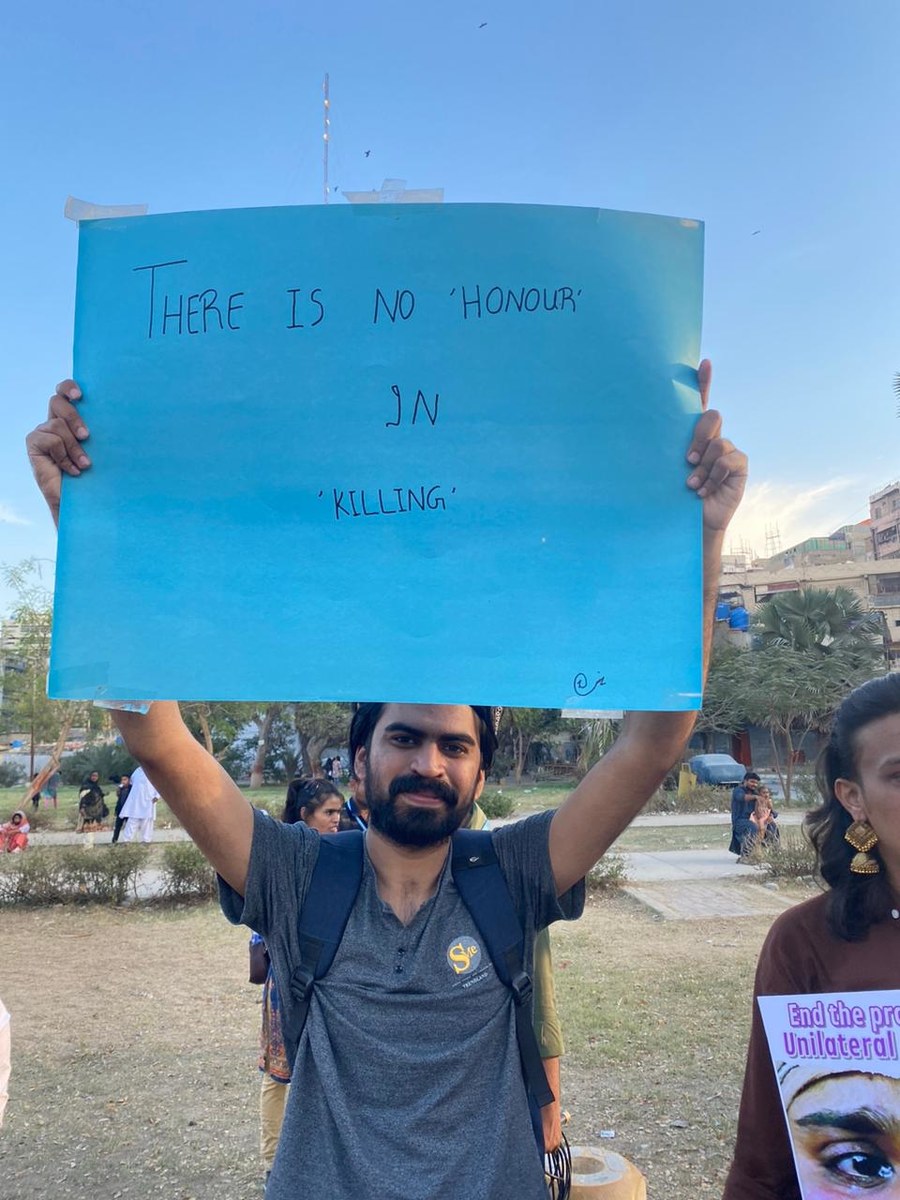

A man holds a placard during the 'Aurat March' or women's march, an annual socio-political demonstration held to observe International Women's Day, in Karachi on March 12, 2023. (AN Photo)


Pakistan, seven Muslim nations back Palestinian technocratic body, stress Gaza-West Bank unity

Updated 15 January 2026
Follow

Pakistan, seven Muslim nations back Palestinian technocratic body, stress Gaza-West Bank unity

  • The National Committee for the Administration of the Gaza Strip was announced on January 14
  • Muslim nations call for consolidation of the ceasefire and unimpeded humanitarian aid into Gaza

ISLAMABAD: Pakistan and seven other Muslim-majority countries on Thursday welcomed the formation of a temporary Palestinian technocratic body to administer Gaza, stressing that it must manage daily civilian affairs while preserving the institutional and territorial link between the Gaza Strip and the West Bank amid the ongoing peace efforts.

In a joint statement, the foreign ministers of Pakistan, Egypt, Jordan, Saudi Arabia, Qatar, Türkiye, Indonesia and the United Arab Emirates said the newly announced National Committee for the Administration of the Gaza Strip would play a central role during the second phase of a broader peace plan aimed at ending the war and paving the way for Palestinian self-governance.

“The Ministers emphasize the importance of the National Committee commencing its duties in managing the day-to-day affairs of the people of Gaza, while preserving the institutional and territorial link between the West Bank and the Gaza Strip, ensuring the unity of Gaza, and rejecting any attempts to divide it,” the statement said.

The committee, announced on Jan. 14, is a temporary transitional body established under United Nations Security Council Resolution 2803 and is to operate in coordination with the Palestinian Authority, the ministers said.

The statement said the move forms part of the second phase of US President Donald Trump’s Comprehensive Peace Plan for Gaza, which the ministers said they supported, praising Trump’s efforts to end the war, ensure the withdrawal of Israeli forces and prevent the annexation of the occupied West Bank.

The top leaders of all eight Muslim countries attended a meeting with Trump in New York last September, shortly before he unveiled the Gaza peace plan.

The ministers also called for the consolidation of the ceasefire, unimpeded humanitarian aid into Gaza, early recovery and reconstruction and the eventual return of the Palestinian Authority to administer the territory, leading to a just and sustainable peace based on UN resolutions and a two-state solution on pre-1967 lines with East Jerusalem as the Palestinian capital.