

Global trade to recover in coming quarters: QNB   

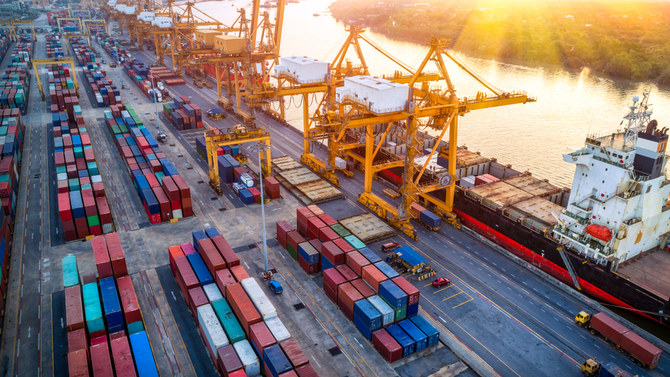
Another point to support QNB’s analysis of global trade stabilization is the economic rebound of the Chinese economy.  (Shutterstock)
Short Url
Updated 05 March 2023
Follow

Global trade to recover in coming quarters: QNB   

RIYADH: Global trade is expected to recover in the coming months on the back of advantageous foreign exchange movements, and the resurgence of China.   

“In our view, leading indicators are suggesting that the slump in global trade will be rather shallow and short-lived,” noted the report recently published by Qatar National Bank.  

It attributed the trade upturn to forward-looking investor expectations.   

Promising anticipations of future earnings of the transport sector – a central indicator for future growth in global trade – are expected to stabilize and even slightly grow the demand for physical goods.  

Global trade should have hit rock bottom in November 2022 and should go back to an expansionary mode in April of this year, according to the Dow Jones Transportation Average.   

The DJTA is an equity index consisting of airlines, trucking, marine transportation, railroad and delivery companies, whose performance leads global exports by at least three months.   

The report further added that developments in foreign exchange are also likely to further impact the progression of global trade.   

“USD weakness, predicated in a more resilient European economy and more aggressive rate hikes from the European Central Bank and the Bank of Japan in recent months, is a major tailwind to global trade growth,” it said.   

The report explained that global trade volumes see an increase when the US dollar drop, whereas the US dollar index has already declined 9 percent from the highs witnessed in September 2021.  

“Around 40 percent of global trade flows are invoiced in dollars and a weaker dollar makes non-US imports cheaper. This increases disposable incomes or even supports the substitution of domestic products for imports, positively affecting trade volumes,” added the report.   

Another point to support QNB’s analysis of global trade stabilization is the economic rebound of the Chinese economy.   

In 2021, China’s performance declined due to a hasty retraction of stimulus policies, Zero Covid policies, a restriction on real estate activities and tighter regulation for numerous industries.   

Since these policies are now all being reverted, China is expected to witness a significant economic rebound in the coming months.   

“This will likely ignite investment and consumption in China, favoring trade volumes both in Asia and globally.”   

The QNB report concluded that over the next quarter, the global trade volumes are set to see notable improvement and stabilization.   

“However, it remains to be seen whether major headwinds coming from monetary tightening, policy uncertainty and a more hostile geopolitical environment will lead to negative outcomes later in the year,” it added.   


G7 countries to release oil reserves as IEA agrees to largest ever market intervention

Updated 11 March 2026
Follow

G7 countries to release oil reserves as IEA agrees to largest ever market intervention

  • IEA recommends release of 400 million barrels

RIYADH: Germany, Japan and Austria will release part of their oil reserves after the International Energy Agency recommended the release of 400 million barrels of oil ‌from stockpiles, the largest ‌such move in IEA ​history.

In a statement, IEA Executive Director Fatih Birol said the flow of oil, gas and other commodities through the Strait of Hormuz have all but stopped, leading global energy supply to fall by around 20 percent.

Ahead of the confirmation of the move — a larger intervention than the 182.7 million barrels that were released in 2022 by in response to Russia’s invasion of Ukraine — several countries began setting out plans to bring their reserves into play as countries grapple with ​soaring crude prices amid ​the US-Israeli war with Iran. 

Birol said: “I can now announce that IEA countries have decided to launch the largest ever release of emergency oil stocks in our agency's history. 

“IEA countries will be making 400 million barrels of oil available to the market to offset the supply lost through the effective closure of the strait.

“This is a major action aiming to alleviate the immediate impacts of the disruption in markets.”

Germany’s Economy ⁠Minister ​Katherina Reiche ⁠confirmed on Wednesday her government plans to limit petrol price increases at filling stations to once a day and to introduce more stringent antitrust regulation of the sector.

She did not ⁠give an exact timing for ‌those measures, but added that ‌the US and ​Japan would be the ‌largest contributors to the release of the ‌oil reserves.

The US has not confirmed it would do so, but its Interior Secretary Doug Burgum told Fox News on Wednesday that “these are the kinds of moments that these reserves are used for.”

The announcements did not stop oil prices rising, with Brent crude up 3.26 percent to $90.66 a barrel at 4:29 p.m Saudi time, and West Texas Intermediate up 3.12 percent to $86.05. Both were some way below the $119 a barrel seen earlier in the week.

“The situation regarding oil supplies is tense, as the Strait of Hormuz is currently virtually impassable,” Germany’s Reiche said.

“We will comply with this request and ‌contribute our share, because Germany stands behind the IEA’s most important principle: mutual ⁠solidarity,” Reiche ⁠said about the IEA’s request.

According to a statement by Reiche’s ministry, Germany will contribute 2.64 million tonnes of oil. This corresponds to 19.51 million barrels.

Reiche stressed there was no supply shortage in the country, which has a legally mandated reserve of oil and oil products intended to cover 90 days’ demand.

South Korea will release 22.46 million ​barrels of oil, which represents 5.6 percent of the total IEA ask, the ⁠country's industry ministry said.

“The government will consult with the IEA ⁠secretariat on details, such ‌as ‌the ​timing ‌and amount, from ‌the perspective of national interests in accordance with domestic conditions,” ‌the ministry said in a statement.

The ⁠ministry ⁠said it would continue to coordinate closely with major countries in responding to high oil prices to minimise any domestic ​impact.

Austrian Economy Minister Wolfgang Hattmannsdorfer said his country was releasing part of the emergency oil reserve and extending the national strategic gas reserve, adding: “One thing is clear: in a crisis, there must be no crisis winners at the expense of commuters and businesses.”

Acting ahead of the IEA move, G7 ​member Japan announced plans to release 15 days' worth of ‌private-sector oil reserves and one month's worth of state oil reserves.

“Rather than wait for formal IEA approval ‌of a coordinated international reserve release, Japan will act first to ease global energy market supply and demand, releasing reserves as early as the 16th of this month,” Prime Minister Sanae Takaichi said in a broadcast statement.

Following a meeting with the IEA on Wednesday, G7 energy ministers said: “In principle, we support the implementation of proactive measures to address the situation, including the use of strategic reserves.”

All IEA member countries are required to keep 90 days’ worth of their nation’s oil use in reserve in case of global disruption.