Egypt to use daylight saving time again in a bid to save energy

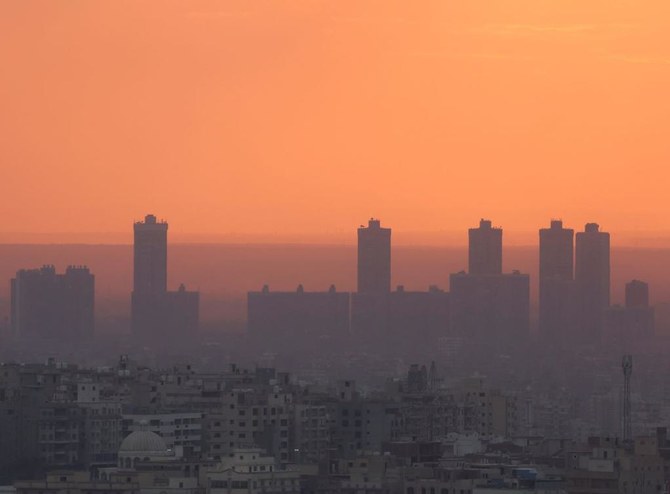
A general view of Cairo skyline during sunset, with foggy cold weather around the country, Cairo, Egypt. (File/Reuters)
Short Url
Updated 01 March 2023
Follow

Egypt to use daylight saving time again in a bid to save energy

  • Clocks will be brought forward one hour beginning on the last Friday of April

CAIRO: Egypt will again use daylight saving time this summer after a seven-year gap, the cabinet said on Wednesday, the latest in a series of government efforts to save energy.
Last year the Egyptian government announced a raft of rules to reduce government and commercial energy use so that the country could export more natural gas, a key foreign currency earner.
Changing the clocks “comes in light of global circumstances and economic shifts, as the government strives to rationalize energy usage,” the cabinet said while announcing the draft law that is expected to be approved by the country’s parliament.
The practice, which has been introduced and abolished at varying points in Egypt’s history, was last used in 2014, and is seen by some as a relic of the country’s previous regimes.
Clocks will be brought forward one hour beginning on the last Friday of April, with the change ending on the last Thursday in October every year, according to the cabinet.
Egypt is experiencing an economic crisis after the fallout from the Ukraine conflict aggravated a foreign currency shortage.


Jordan begins implementing Royal directives to modernize Arab Army

Updated 11 sec ago
Follow

Jordan begins implementing Royal directives to modernize Arab Army

  • On Saturday, it was reported that King Abdullah had announced the strategy

AMMAN: Jordan’s Armed Forces have begun implementing royal directives from King Abdullah II aimed at restructuring and modernizing the Arab Army to strengthen its operational readiness and ability to meet evolving security challenges, it was announced on Sunday.

The overhaul is designed to sharpen combat capabilities and establish a streamlined, flexible force equipped to operate across varied environments, while adapting to the demands of modern and unconventional warfare, the Jordan News Agency reported.

The directives called for closer alignment between organizational structures and operational needs, alongside upgrades to command, control and communications systems. 

They also urged stronger integration across military branches and units, as well as expanded use of advanced technologies, including unmanned systems and cyber capabilities.

Plans also include reinforcing reserve forces, improving logistics to ensure reliable supply chains, and supporting Jordan’s defense industries to enhance self-sufficiency and efficiency.

In a statement, the Jordanian Armed Forces said they were fully committed to carrying out the royal directives as part of a broader strategic vision to raise professionalism and preparedness.

On Saturday, it was reported that King Abdullah had announced a strategy “to achieve a structural transformation in the armed forces over the course of the next three years,” Petra said.

In a letter to the Chairman of the Joint Chiefs of Staff, the King wrote: “Our Arab Army is a national institution that every Jordanian is proud of.”

“We must examine the requirements for modernizing and developing our Armed Forces, while restructuring them to keep pace with combat demands within various environments of operation,” the king wrote. 

The king also said the army must have sufficient reserve forces reinforced with the necessary capabilities.

“Our Armed Forces must have sufficient reserve forces, equipped with the various needed capabilities to execute their operations efficiently.”