

Pakistani short film, tackling stigma around weak eyesight, wins at Cannes World Film Festival

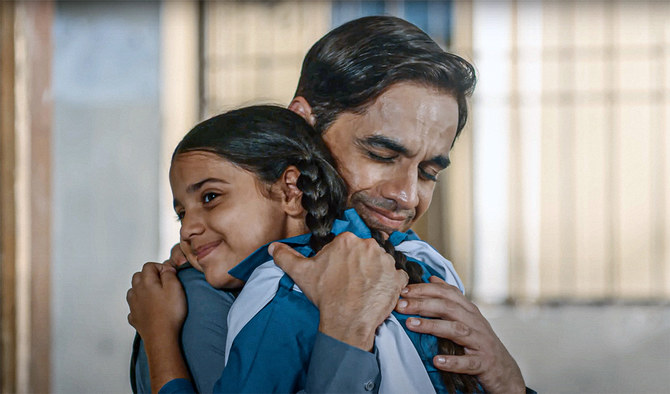
A screen grab taken from the Pakistan short film "Noor." (Photo courtesy: @seeprime/YouTube)
Short Url
Updated 01 March 2023
Follow

Pakistani short film, tackling stigma around weak eyesight, wins at Cannes World Film Festival

  • ‘Noor,’ released on Pakistani OTT platform SeePrime, winner in January online edition of Cannes World Film Festival
  • Scripted by Farah Usman, film stars Sarwat Gilani, Omair Rana, now automatically entered into annual Cannes competition

KARACHI: A Pakistani short film, ‘Noor,’ which tackles with the stigma around weak eyesight, this week won the "Best Health Film" award in the January online edition of Cannes World Film Festival, with its director saying there is always room for good, educational content in the cinema.  

The Cannes World Film Festival announced winners for the January online edition on Monday, in a relatively new development in which the jury acknowledges films made under a variety of genres.  

All monthly winners automatically enter the annual competition for a chance to receive a prestigious custom-made metal statuette, the "Luciole d'Or" (Golden Firefly), and an opportunity to have their film screened in Cannes, the cinema capital of the world.  


Scripted by Farah Usman, Noor features Sarwat Gilani, Omair Rana, Tanisha Shameem, Mizna Waqas and Tasneem Ansari. The 17-minute short film features a child artist in the lead role.   

“It [Noor] highlights the impact on kids of not wearing glasses and how that pressure affects their personalities,” Umer Adil, who directed Noor, shared with Arab News.  

“It’s a very cute story told through the lens of a young girl, Noor. She is a very good student but she faces some issues when her eyesight starts to weaken. Basically, it [Noor] is about the stigma attached to glasses that a person isn’t supposed to wear one or else they would look older.”  

Noor was one of the nominations announced last week through the festival’s official social media handle. The film released on Pakistani OTT platform SeePrime in January. 

It was a project by Sightsavers, an organization that works with school children on their eyesight and provides free screening and glasses. 

“They want to promote offbeat films,” Adil said. "Health related films aren’t really made in Pakistan, particularly around eye testing and eye health." 

Sightsavers wanted to develop content on stigma around weak eyesight and that was how the film came to life, according to the director. The organization itself submitted the picture in the health film category at the Cannes World Film Festival's January edition.  

“The child artist is leading the film so were wondering what kind of feedback it would receive considering that our film industry is star-driven. But we got really good feedback. We got 100,000 organic views initially. People really appreciated it through their comments. It was a good surprise for the platform and for the team,” Adil told Arab News.  

“There is always room for good, educational content that can be weaved into a narrative. We underestimate our audience that they won’t appreciate a good message. With the selection at Cannes, we’re getting good feedback as well as more views since the film got nominated last week.”  

Another Pakistani short film ‘Pehchaan’, written, directed and produced by Mohammad Ahsan also made it to the nominations of the January Edition at the Cannes World Film Festival but the film did not make the cut in the winners list. 


Imran Khan not a ‘national security threat,’ ex-PM’s party responds to Pakistan military

Updated 06 December 2025
Follow

Imran Khan not a ‘national security threat,’ ex-PM’s party responds to Pakistan military

  • Pakistan’s military spokesperson on Friday described Khan’s anti-army narrative as a “national security threat”
  • PTI Chairman Gohar Ali Khan says words used by military spokesperson for Khan were “not appropriate”

ISLAMABAD: Former prime minister Imran Khan’s Pakistan Tehreek-e-Insaf (PTI) party on Saturday responded to allegations by Pakistan military spokesperson Lt. Gen. Ahmed Sharif Chaudhry from a day earlier, saying that he was not a “national security threat.”

Chaudhry, who heads the military’s media wing as director general of the Inter-Services Public Relations (ISPR), spoke to journalists on Friday, in which he referred to Khan as a “mentally ill” person several times during the press interaction. Chaudhry described Khan’s anti-army narrative as a “national security threat.”

The military spokesperson was responding to Khan’s social media post this week in which he accused Chief of Defense Forces Field Marshal Asim Munir of being responsible for “the complete collapse of the constitution and rule of law in Pakistan.” 

“The people of Pakistan stand with Imran Khan, they stand with PTI,” the party’s secretary-general, Salman Akram Raja, told reporters during a news conference. 

“Imran Khan is not a national security threat. Imran Khan has kept the people of this country united.”

Raja said there were several narratives in the country, including those that created tensions along ethnic and sectarian lines, but Khan had rejected all of them and stood with one that the people of Pakistan supported. 

PTI Chairman Gohar Ali Khan, flanked by Raja, criticized the military spokesperson as well, saying his press talk on Thursday had “severely disappointed” him. 

“The words that were used [by the military spokesperson] were not appropriate,” Gohar said. “Those words were wrong.”

NATURAL OUTCOME’

Speaking to reporters earlier on Saturday, Pakistan’s Defense Minister Khawaja Asif defended the military spokesperson’s remarks against Khan.

“When this kind of language is used for individuals as well as for institutions, then a reaction is a natural outcome,” he said. 

“The same thing is happening on the Twitter accounts being run in his [Khan’s] name. If the DG ISPR has given any reaction to it, then I believe it was a very measured reaction.”

Khan, who was ousted after a parliamentary vote of confidence in April 2022, blames the country’s powerful military for removing him from power by colluding with his political opponents. Both deny the allegations. 

The former prime minister, who has been in prison since August 2023 on a slew of charges he says are politically motivated, also alleges his party was denied victory by the army and his political rivals in the 2024 general election through rigging. 

The army and the government both deny his allegations.