Turkish media regulator fines channels for critical quake coverage

The government’s handling of the disaster has become a significant issue in political debate ahead of general elections in May. (RTUK/File)
Short Url
Updated 23 February 2023
Follow

Turkish media regulator fines channels for critical quake coverage

  • Halk TV, Tele 1 and Fox TV Turkiye criticized government response to disaster
  • Decision seen as latest attempt to crack down on independent, opposition media

LONDON: Turkiye’s Radio and Television Supreme Council, the government telecommunications regulator known as RTUK, fined three TV channels on Wednesday over critical coverage of the response to earthquakes that hit the country.

Halk TV, Tele 1 and Fox TV Turkiye were issued with fines for reports that criticized the government’s relief efforts after devastating quakes killed more than 42,000 people.

RTUK fined Fox TV and Halk TV 3 percent of their monthly advertisement income due to comments by journalists attacking the government’s slow and ineffective earthquake response.

Halk TV was fined 5 percent of its monthly advertisement income and programs were stopped five times due to the comments of Ahmet Sik, a lawmaker with the Workers’ Party of Turkiye.

Tele 1 was issued with the same fines over comments by journalists regarding the government of President Recep Tayyip Erdogan and its policies.

The fines are widely seen as an attempt by the Turkish leader to silence critical voices.

The three networks are known for editorial lines critical of Erdogan, and Halk TV is strongly aligned with the Republican People’s Party, Turkiye’s main opposition.

Ilhan Tasci, an RTUK member from the CHP, said that the fines were “political” and called the decision a “betrayal of the profession of journalism.”

“While those who distort and censor the truth are patted on the back, those who pursue the truth are silenced,” he wrote.

Local and international media experts and journalists’ unions also condemned the fines, with media watchdog Committee to Protect Journalists calling on Turkish authorities to revoke the penalties and safeguard media freedom in the country.

“Critical journalism during a time of mourning for the tens of thousands of lives lost to the earthquakes may appear harsh, but it can also pave the way to justice for the victims and better regulations to save lives in the future,” said CPJ Program Director Carlos Martinez de la Serna.

“Turkish authorities should revoke the penalties leveled against broadcasters Fox TV Turkiye, Halk TV, and Tele1, and refrain from silencing media criticism of the government and its institutions.”

Turkiye was devastated by a series of earthquakes that hit the country’s south and southeastern provinces on Feb. 6.

The government’s handling of the disaster has become a significant issue in political debate ahead of general elections in May.

The opposition, experts and international rights groups have accused the RTUK of using the government’s controversial media law to penalize independent media and of functioning as an instrument of Erdogan’s authoritarian regime.

Since Feb. 6, Turkiye has arrested 78 people accused of creating fear and panic by “sharing provocative posts” about the quake on social media.

Earlier this month, Turkiye blocked access to Twitter for about 12 hours, citing the spread of disinformation, prompting an angry response from opposition politicians and people using the platform to find loved ones and share information about rescue efforts.

In 2022, Turkiye ranked 149th out of 180 countries in the latest press freedom index of watchdog organization Reporters Without Borders.


To infinity and beyond: Grendizer’s 50 years of inspiring Arabs

Updated 27 December 2025
Follow

To infinity and beyond: Grendizer’s 50 years of inspiring Arabs

  • ⁠ ⁠50 years after its creation, the Grendizer anime series continues to capture Arab imagination
  • ⁠ ⁠⁠Arab News Japan speaks to creator Go Nagai, Middle Eastern fans and retells the story behind the UFO Robot tasked with protecting our planet

LONDON: Few cultural imports have crossed borders as unexpectedly, or as powerfully, as Grendizer, the Japanese giant robot that half a century ago became a childhood hero across the Arab world, nowhere more so than in Saudi Arabia.

Created in Japan in the mid-1970s by manga artist Go Nagai, Grendizer was part of the “mecha” tradition of giant robots. The genre was shaped by Japan’s experience during the Second World War, and explored themes of invasion, resistance and loss through the medium of science fiction.

But while the series enjoyed moderate success in Japan, its true legacy was established thousands of kilometers away in the Middle East.

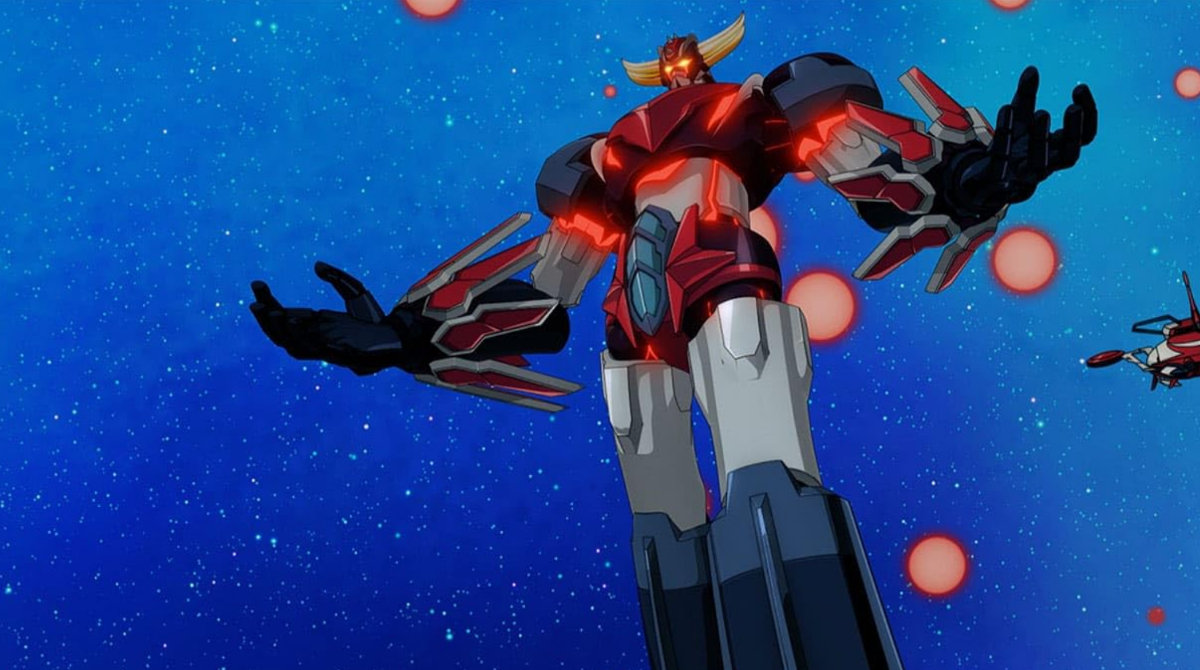
By the early 1980s, “Grendizer” had spread across the Middle East, inspiring fandoms in Saudi Arabia, Kuwait, Iraq and beyond. (Supplied)

The anime “UFO Robot Grendizer” arrived on television in the region in 1979, dubbed into Arabic and initially broadcast in Lebanon during the Lebanese civil war. The story it told of the heroic Duke Fleed, a displaced prince whose planet had been destroyed by alien invaders, struck a chord with children growing up amid regional conflict and occupation by Israel.

Its themes of defending one’s homeland, standing up to aggression and protecting the innocent were painfully relevant in the region, transforming the series from mere entertainment into a kind of emotional refuge.

Much of the show’s impact came from its successful Arabization. The powerful Arabic dubbing and emotionally charged voice-acting, especially by Lebanese actor Jihad El-Atrash as Duke Fleed, lent the show a moral gravity unmatched by other cartoons of the era.

While the series enjoyed moderate success in Japan, its true legacy was established thousands of kilometers away in the Middle East. (Supplied)

The theme song for the series, performed by Sami Clark, became an anthem that the Lebanese singer continued to perform at concerts and festivals right up until his death in 2022.

By the early 1980s, “Grendizer” had spread across the Middle East, inspiring fandoms in Saudi Arabia, Kuwait, Iraq and beyond. For many, it was not only their first exposure to anime, it also delivered lessons on values such as justice and honor.

Grendizer was so influential in the region that it became the subject of scholarly research, which in addition to recognizing the ways in which the plight of the show’s characters resonated with the audience in the Middle East, also linked the show’s popularity to generational memories of displacement, particularly the Palestinian Nakba.

By the early 1980s, “Grendizer” had spread across the Middle East, inspiring fandoms in Saudi Arabia, Kuwait, Iraq and beyond. (Supplied)

Half a century later, “Grendizer” remains culturally alive and relevant in the region. In Saudi Arabia, which embraced the original version of the show wholeheartedly, Manga Productions is now introducing a new generation of fans to a modernized version of the character, through a video game, The Feast of The Wolves, which is available in Arabic and eight other languages on platforms including PlayStation, Xbox and Nintendo Switch, and a new Arabic-language anime series, “Grendizer U,” which was broadcast last year.

Fifty years after the debut of the show, “Grendizer” is back — although to a generation of fans of the original series, their shelves still full of merchandise and memorabilia, it never really went away.


Grendizer at 50
The anime that conquered Arab hearts and minds
Enter
keywords