


ISLAMABAD: Saddique Shah, a 53-year-old construction worker, sat along a sidewalk with his fellow workers on the outskirts of the capital Islamabad, his head hung low as he worried.
What if he failed to find work Friday, for the second day in a row, just as Pakistan considers a tax hike amid looming economic troubles?
Starting early in the morning, Shah’s job is to pick up bricks, gravel, cement and sand and hand them to masons who use them on construction sites. He is paid 1,600 rupees ($6) a day — barely enough for basics like food. He doesn’t know what he’ll do if Pakistan’s government follows through on its plan for new taxes in the coming weeks.
“I could not get work yesterday, and I am waiting for customers since morning, and today I don’t have even money to get groceries before going to my home,” said Shah, who found work at midday after several costly hours without any.
Pakistan’s National Assembly, the lower house of parliament, is expected to approve a tax hike Monday in a step toward meeting the terms of a 2019 bailout worth $6 billion from the International Monetary Fund (IMF). The increase would then need a sign-off from President Arif Alvi.
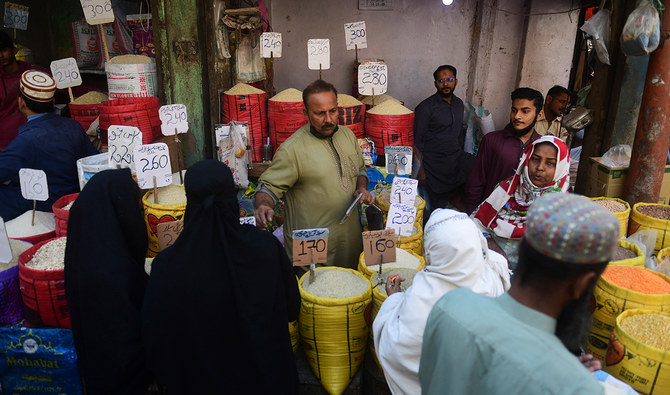
Economists say Pakistan is caught. It must slash subsidies and raise taxes to comply with the bailout terms and release a $1.2 billion portion of the deal that’s been stalled since December. But doing so would make food, gas, and power more expensive and drive up the hardship on poor people — like Shah.
Economists say if nuclear-armed Pakistan gets an IMF bailout, it will avoid a default. But critics say that the poor tend to be the ultimate victims of economic mismanagement and public austerity.
Taxes are included in utility bills and are added to the price of food. Increasing desperation means an increase in crime, which law enforcement experts in Pakistan say is on the rise. Protests add unease, as does Pakistan’s recent wave of violence. The country already was struggling to recover from record-breaking floods last summer that killed 1,739 people and made millions of Pakistanis homeless.
“The poor will specially pay a very heavy price for the mismanagement of the economy,” said economist Ashfaq Ahmad.
A more expensive future weighs on worried Pakistanis.
“How will we get out of this new storm of inflation?” Farzana Bibi, a housewife who lives in the Phulgran village near Islamabad, asked in a muffled voice, as she sat in an open farm field with her children.
“Life has become very difficult now,” said Ashfaq Ahmad, 52, who works as a junior clerk at a government department in Lahore, the cultural capital of Pakistan.
Saqib Kaif, a poet, said the latest increase in taxes will make many people jobless. “Most of the companies will reduce the numbers of their employees to curtail production-cost and expenses,” he said.
“Poverty and uncertain situations also affect mental health, and this is what we are witnessing in society,” Farwa Naqvi, an Islamabad-based psychologist, told The Associated Press. She said that “living in survival mode for too long, deprivation of basic needs and strangulation of hopes adversely affect mental health.”
Pakistan is low on foreign reserves, which slightly improved to $3 billion this week after dipping due to uncertainty about the ongoing talks between Pakistan and the IMF.
The war in Ukraine also is taking a toll. The cost of importing wheat and fuel has risen sharply since Russia’s invasion last year. Imran Khan, who was then the country’s prime minister, traveled to Moscow and refused to condemn the Russian invasion of Ukraine.
The IMF is imposing strict conditions on Pakistan — the latest country in the region to have to submit to its oversight.
Unlike Pakistan, neighboring India went to the IMF for loans seven times. But New Delhi introduced landmark reforms in 1991 and has not gone back to the fund for help. India’s foreign exchange reserves were $575.3 billion earlier this month.
“Pakistan has gone to the IMF 23 times. Why? Because we as a nation never opted for self-reliance,” said Ashfaq Ahmad, the economist.
However, current Prime Minister Shahbaz Sharif blames his predecessor, Khan, for violating the IMF terms. Khan was ousted through a no-confidence vote in the Parliament last April.
The crisis has affected daily life. In January, Pakistan ordered shopping malls and markets to close by 8:30 p.m. as part of a new energy conservation plan aimed at easing the economic crisis. But, the orders were ignored.
Last year, Pakistan imposed a ban on all imports and raw materials, except essential items and medicines. It gradually led to the partial closure of scores of factories and layoffs of thousands of employees.
Millions of flood survivors in Pakistan still rely on the government’s help for food, tents, medicine, drinking water and cash donated by local and global groups.
“We have been forgotten by all,” said Janat Bibi, 45, whose house was demolished by floods in the Swat valley in Khyber Pakhtunkhwa province. She said her husband died in the flood and she is relying on help from relatives.


