


NEW DELHI: Indian tax authorities raided the BBC’s New Delhi and Mumbai offices on Tuesday, weeks after the broadcaster aired a documentary on Prime Minister Narendra Modi’s actions during deadly sectarian riots in 2002.
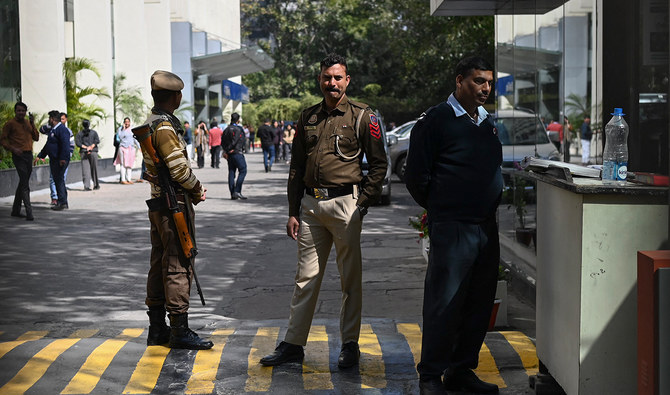
Police sealed off the New Delhi office, which occupies two floors, and half a dozen officers were stationed outside to prevent people from entering or leaving.
A BBC employee based in New Delhi told AFP that the tax raid was in progress and that officials were “confiscating all phones.”
An official at the scene said: “There is government procedure happening inside the office,” declining to disclose their department.
Another BBC staffer based in Mumbai confirmed the broadcaster’s office in India’s commercial hub was also being raided.
India’s Income Tax Department could not be reached for comment by AFP.
Last month, the broadcaster aired a two-part documentary alleging that Hindu nationalist Modi ordered police to turn a blind eye to sectarian riots in Gujarat state, where he was premier at the time.
The violence left at least 1,000 people dead, most of them minority Muslims.
India’s government blocked videos and tweets sharing links to the documentary, using emergency powers under its information technology laws.
Government adviser Kanchan Gupta had slammed the documentary as “hostile propaganda and anti-India garbage.”
University student groups later organized viewings of the documentary despite campus bans, defying government efforts to stop its spread.
Police arrested two dozen students at the prestigious Delhi University after stopping a screening there in late January.
Press freedom in the world’s biggest democracy has suffered during Modi’s tenure, rights activists say.
India has fallen 10 spots to 150 out of 180 countries in the World Press Freedom Index, compiled by Reporters Without Borders, since he took office in 2014.
Critical reporters, particularly women, say they are subjected to relentless campaigns of online abuse.
Media outlets, international rights groups and foreign charities have also found themselves subjected to scrutiny by India’s tax authorities and financial crimes investigators.
Late Catholic nun Mother Teresa’s charity last year found itself temporarily starved of funds after the home ministry refused to renew its license to receive foreign donations.
Amnesty International announced it was halting operations in India after the government froze its bank accounts in 2020, following raids on its offices.
In 2021, Indian tax authorities raided a prominent newspaper and a TV channel that had been critical of the government’s handling of the coronavirus pandemic, triggering accusations of intimidation.
The 2002 riots in Gujarat began after 59 Hindu pilgrims were killed in a fire on a train. Thirty-one Muslims were convicted of criminal conspiracy and murder over that incident.
The BBC documentary cited a previously classified British foreign ministry report quoting unnamed sources saying that Modi met senior police officers and “ordered them not to intervene” in the anti-Muslim violence by right-wing Hindu groups that followed.
The violence was “politically motivated” and the aim “was to purge Muslims from Hindu areas,” the foreign ministry report said.
The “systematic campaign of violence has all the hallmarks of ethnic cleansing” and was impossible “without the climate of impunity created by the state Government... Narendra Modi is directly responsible,” it concluded.
Modi, who ran Gujarat from 2001 until his election as prime minister in 2014, was briefly subject to a travel ban by the United States over the violence.
A special investigative team appointed by India’s Supreme Court to probe the roles of Modi and others in the violence said in 2012 it did not find any evidence to prosecute the then chief minister.


