

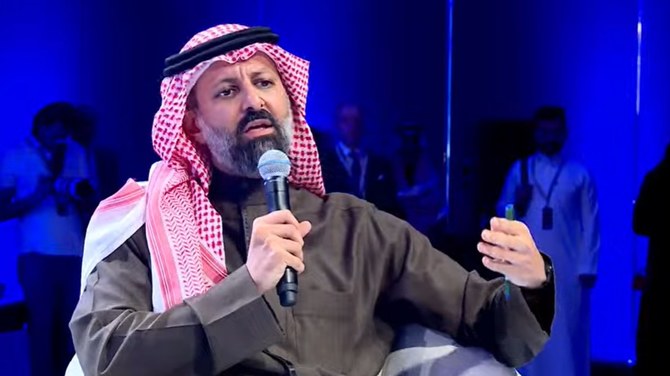
Saudi bourse has 23 new companies preparing for IPO in 2023: CMA chairman 

According to El-Kuwaiz, Saudi Arabia was the fourth-largest market in the world in terms of the amount of equity capital raised, just below China, India, and South Korea. 
Short Url
Updated 12 February 2023
Follow

Saudi bourse has 23 new companies preparing for IPO in 2023: CMA chairman 

RIYADH: At least 23 companies are preparing for an initial public offering in Saudi Arabia’s stock exchange, as the Kingdom emerges as a global financial hub in line with the goals outlined in Vision 2030, said a top official. 

Speaking at the second edition of the Saudi Capital Forum in Riyadh on Sunday, Mohammed El-Kuwaiz, chairman of the Saudi Capital Market Authority said that 2022 was a record year for the Saudi capital market, with 49 listings, as well as SR40 billion ($10.66 billion) raised in equity capital; the highest number in any single year, barring 2019 when Saudi Aramco was listed. 

“Today, there are 23 of those companies on the runway, waiting for the appropriate time for an initial public offering,” said El-Kuwaiz. 

He added: “2022 was a record year in terms of the number of IPOs. We had 49 listings, which includes listings in the main market, listings in Nomu, as well as listings of other investment products. Last year, the capital markets raised about SR40 billion of equity capital, which was actually the highest number that was raised in any single year barring the year of the listing of Saudi Aramco.” 

According to El-Kuwaiz, Saudi Arabia was the fourth-largest market in the world in terms of the amount of equity capital raised, just below China, India, and South Korea. 

The CMA chairman, however, noted that despite the flurry of applications for IPOs, the authority is very vigilant in approving these requests. 

“In spite of the largest number of listings and a larger number of applications, we are also seeing a larger number of rejections. The CMA, for the first time, has started to reject files that do not meet disclosure and government standards,” he added. 

Commenting on the opportunity for dual listings, El-Kuwaiz added: “We are having several discussions on dual listings. We have started to see a vibrant wave of applicants that are seriously exploring opportunities. We will create frameworks based on this interest.” 

El-Kuwaiz also outlined the rapid increase of foreign investor participation in the Saudi capital market. 

According to the CMA chairman, foreign investors represent less than 15 percent of free float, and they were responsible for an inflow of SR43 billion in 2022 — the highest since opening the capital market and inclusion in global indices. 

“We are continuing to see a rapid increase in the proportion of foreign investors, both in terms of percent of ownership and trading. On the equity market, the feedback from foreign investors continues to be quite positive. Our expectation is that positive is never good enough. I think we need to further improve regulations to make the market more accessible,” he said. 

El-Kuwaiz further pointed out that Saudi Arabia has made all necessary arrangements and regulatory reforms to make the investment process simpler in the Kingdom. 

Talking about the ongoing Capital Market Forum, he said that the “number of people attending the conference is a reflection of the level of capital market activities and the level of IPO activities in the Kingdom.” 


Saudi minister at Davos urges collaboration on minerals

Global collaboration on minerals essential to ease geopolitical tensions and secure supply, WEF hears. (Supplied)
Updated 20 January 2026
Follow

Saudi minister at Davos urges collaboration on minerals

  • The reason of the tension of geopolitics is actually the criticality of the minerals

LONDON: Countries need to collaborate on mining and resources to help avoid geopolitical tensions, Saudi Arabia’s minister of industry and mineral resources told the World Economic Forum on Tuesday.

“The reason of the tension of geopolitics is actually the criticality of the minerals, the concentration in different areas of the world,” Bandar Alkhorayef told a panel discussion on the geopolitics of materials.

“The rational thing to do is to collaborate, and that’s what we are doing,” he added. “We are creating a platform of collaboration in Saudi Arabia.”

Bandar Alkhorayef, Saudi Minister of Industry and Mineral Resources 

The Kingdom last week hosted the Future Minerals Forum in Riyadh. Alkhorayef said the platform was launched by the government in 2022 as a contribution to the global community. “It’s very important to have a global movement, and that’s why we launched the Future Minerals Forum,” he said. “It is the most important platform of global mining leaders.”

The Kingdom has made mining one of the key pillars of its economy, rapidly expanding the sector under the Vision 2030 reform program with an eye on diversification. Saudi Arabia has an estimated $2.5 trillion in mineral wealth and the ramping up of extraction comes at a time of intense global competition for resources to drive technological development in areas like AI and renewables.

“We realized that unlocking the value that we have in our natural resources, of the different minerals that we have, will definitely help our economy to grow to diversify,” Alkhorayef said. The Kingdom has worked to reduce the timelines required to set up mines while also protecting local communities, he added. Obtaining mining permits in Saudi Arabia has been reduced to just 30 to 90 days compared to the many years required in other countries, Alkhorayef said.

“We learned very, very early that permitting is a bottleneck in the system,” he added. “We all know, and we have to be very, very frank about this, that mining doesn’t have a good reputation globally.

“We are trying to change this and cutting down the licensing process doesn’t only solve it. You need also to show the communities the impact of the mining on their lives.”

Saudi Arabia’s new mining investment laws have placed great emphasis on the development of society and local communities, along with protecting the environment and incorporating new technologies, Alkhorayef said. “We want to build the future mines; we don’t want to build old mines.”