



CHICAGO: Political obstacles, mainly from Damascus, are slowing humanitarian relief efforts in the wake of Monday’s devastating earthquake in northern Syria, the head of a major aid organization said on Friday.
Dr. Mohammed Zaher Sahloul, president and co-founder of the MedGlobal, which focuses on responding to disasters worldwide, including in the Middle East, said that aid efforts have been stymied by the Syrian regime of President Bashar Assad because the region hit by the quake is home to pro-democracy and anti-regime activists, as well as refugees from the 12-year war.
Sahloul told Arab News during an interview on the US Arab Radio Network that geopolitical divisions caused by years of war in Syria have created the biggest obstacle to getting relief to quake victims.
“It is very hard to get aid to this area in Syria. Not many people know about the geopolitics and how Syria right now is not one Syria. Syria is four Syrias. Each part is controlled by a different governing body and different entity,” he said.
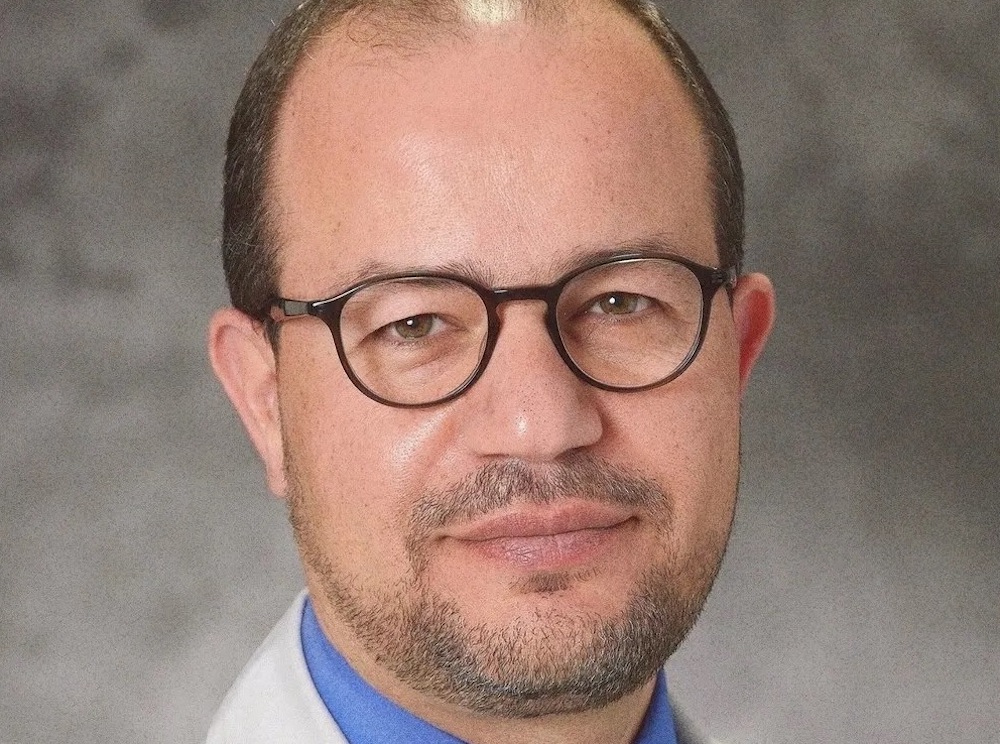
Dr. Mohammed Zaher Sahloul, president and co-founder of the MedGlobal, which focuses on responding to disasters worldwide, including in the Middle East. (Supplied)
“You have Syria controlled by the Assad regime in Damascus, where most of the aid is being sent. Areas controlled by the regime are not affected too badly compared with the northwest of Syria or Idlib, where most of the casualties are and which is controlled by Hayat Tahrir Al-Sham, a rebel group.”
HTS controls most of the area struck by the earthquakes. The other three regions include the far northeast region controlled by Kurdish forces, or SDF, and Turkish administrative regions in the north (Euphrates Shield, Olive Branch, and Peace Spring) , and most of Syria controlled by Assad's Russia-Iran coalition.
Sahloul said about 7.7 million Syrians remain in the earthquake zone. More than half, 4.2 million, are in northwest Syria in areas controlled by HTS, while another 3.5 million are in neighboring Turkiye.
US sanctions on Syria are not blocking aid to Syrian victims of the earthquakes, he said. Rather, political divisions in the country are causing the most trouble.
“There are sanctions against the Syrian regime because of what it did to its people. There are still 6.5 million Syrian refugees because of what the regime has done,” he said.
Sahloul highlighted that the Syrian regime has been accused of torture and using chemical weapons against civilians.
He praised the Turkish government for its support in helping Syrian earthquake victims.
“Humanitarian aid is exempt from the sanctions. So throughout the last 12 years, humanitarian aid flows through Damascus. Sanctions do not pertain to humanitarian aid or medicine. But the regime does not give aid to these people. The only way is through Turkiye. Turkish authorities have been very helpful throughout the last 12 years of getting aid across the border,” Sahloul said.
“Of course, no one would like to have sanctions, but sanctions have nothing to do with the aid. Sanctions are manipulated by the Assad regime to promote their own agenda. The Assad regime has manipulated the aid. The Syrian government uses a tactic of ‘starve or kneel,’ and that is according to the UN. The only way in is through Turkiye.”
Sahloul said there are only two crossing points in that area along the Syrian border with Turkiye.
“The UN approved passage of aid through one of them, which is Bab Al-Hawa. Both were closed until this past Thursday. The reason they were closed, according to Turkish authorities, was because the highways leading to them were all damaged,” Sahloul said.
Many European nations are sending humanitarian aid through Damascus via the Assad regime, which Sahloul compared to giving aid to Israel for the people in Gaza.
It is unlikely the Assad regime will provide any relief to the HTS-controlled area struck by the earthquakes, he said.
Sahloul described the situation as “tragedy over tragedy,” adding: “It is a horrible situation. The only way to get to them is an airlift, but I don’t think there is a political will in any country to provide an airlift to these trapped populations.”
He said that the US government has several air bases in northern Syria, and suggested these could also be used to get aid to the victims.
MedGlobal runs several hospitals, primary health centers, and mobile clinics in northwest Syria. It had a local team of 200 doctors, nurses, psych social workers, mental health specialists, and community health professionals. Its hospitals have been treating the victims if the earthquake. Its team has been also distributing life saving medical supplies to other hospitals in addition to provide them with diesel fuel to run their electrical generators.
For more information visit MedGlobal.org.


