



ISLAMABAD: Former Pakistani president and army chief, General (retired) Pervez Musharraf, passed away in Dubai, close family associates confirmed, after years of self-imposed exile in the United Arab Emirates.
Musharraf, 79, was under treatment at a Dubai hospital for amyloidosis, a rare disease, a former close aide of the military ruler and chairman of his All Pakistan Muslim League (APML) party, Dr. Amjad Chaudhry, said.
Chaudhry said the former president had been "seriously sick since 2018."
"When I last talked to his family about a week back, he was serious and hospitalized,” he added.
“I am in contact with the family for the repatriation of the mortal remains of the former president,” another close aide of the former general, Major General (retired) Rashid Qureshi, told Arab News.
The Pakistani army, navy, and air chiefs and the chairman of the joint chiefs of staff committee (CJCSC) condoled Musharraf's death in a statement to the press.
“CJCSC & Services Chiefs express heartfelt condolences on the sad demise of General Pervez Musharraf,” the statement said. “May Allah bless the departed soul and give strength to the bereaved family.”
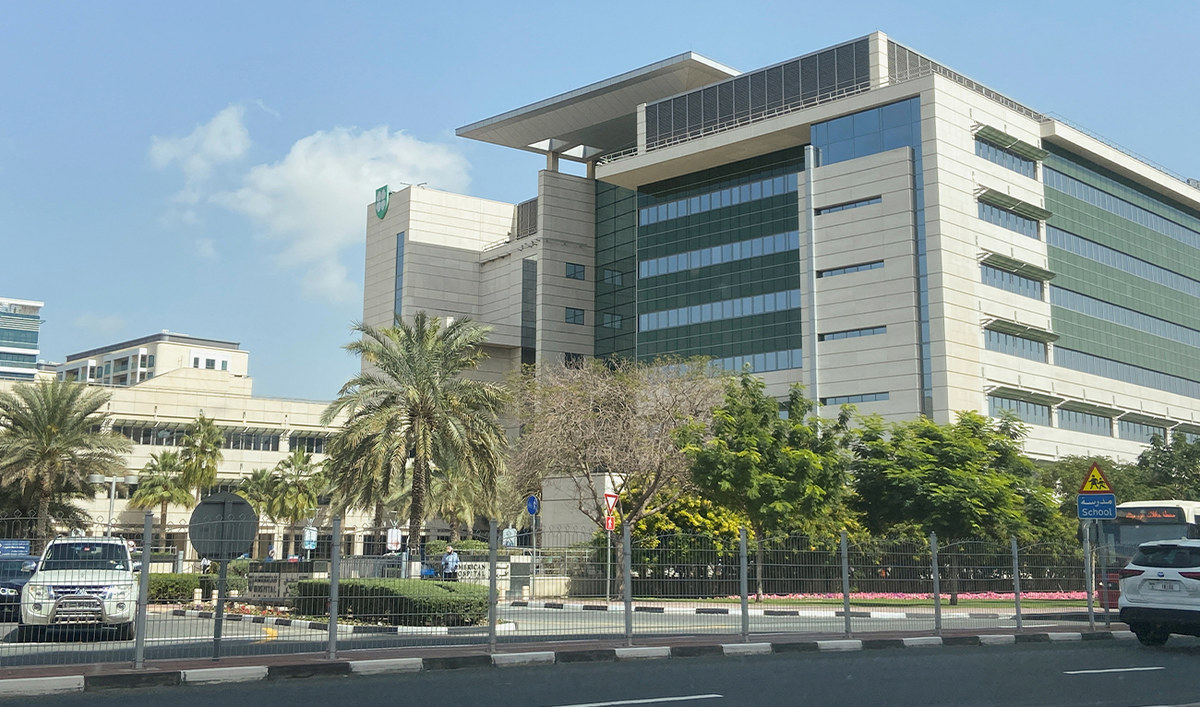
A general view of the exterior of the American Hospital Dubai, where former Pakistan President General Pervez Musharraf is believed to have died, in Dubai, United Arab Emirates (UAE), on February 5, 2023. (REUTERS)
Musharraf, the son of a career diplomat, was born in New Delhi in 1943 and migrated to the newly independent Pakistan with his family in 1947. Musharraf joined the army in 1964 and graduated from the Army Command and Staff College in Quetta. He also attended the Royal College of Defence Studies in London and has fought in Pakistan’s 1965 and 1971 wneighboringneighbouring India.
After holding a number of appointments in the army's artillery, infantry, and commando units, Musharraf was appointed army chief by then prime minister Nawaz Sharif in 1998 - a move he would later come to regret when the military ruler ousted Sharif in a bloodless military coup in 1999. Musharraf then served as Pakistan's president from 2001 to 2008.
Following the US invasion of Afghanistan after the September 11 attacks in 2001, Washington sought Pakistan's support in the 'War on Terror,' and Musharraf became a close ally of the then US administration of George Bush. He also won mass appeal in the West through his calls for Muslims to adopt a lifestyle of “enlightened moderation.” He also embraced liberal economic policies during his rule that impressed business leaders, brought in foreign investment and led to annual economic growth of as much as 7.5 percent.
Musharraf ruled as army chief until 2007 when he quit, trading the military post for a second five-year term as president.
He stepped down as president also in 2008 over fears of being impeached by Pakistan’s then ruling coalition. He subsequently left the country but returned in 2013 with the hope of regaining power as a civilian at the ballot box. However, he encountered a slew of criminal charges, and within a year, was barred for life from running for public office.
In 2016, after a travel ban was lifted, Musharraf left for Dubai to seek medical treatment and has since remained there. In 2019, a special court indicted him on treason charges in absentia, which he denied, and eventually sentenced him to death, though the ruling was later overturned by a higher court.
During his years in power, Musharraf saw many moments of tumult.
In 2006, a popular tribal leader from the southwestern province Balochistan was killed in military action ordered by Musharraf, unleashing an armed insurgency that goes on to date. In 2007, he ordered troops to storm a mosque in Islamabad whose clerics and students were calling for the imposition of Shariah law. The siege led to the birth of an indigenous Taliban movement, the Tehreek-e-Taliban Pakistan, which has since led an insurgency against the government in Islamabad and killed tens of thousands in brazen assaults on security, government and civilian targets.
In 2007, Musharraf demanded the resignation of then chief justice of the Supreme Court, unleashing a mass protest movement that massively dented his popularity and started calls for him to step down.
Prime Minister Shehbaz Sharif, who is the brother of three-time former PM Nawaz whom Musharraf ousted in 1999, condoled over the military ruler's death and "sent prayers for forgiveness of the deceased and patience for the family,” the Prime Minister's Office (PMO) said in a statement.
Among others who condoled were Chairman Senate Muhammad Sadiq Sanjrani, Pakistan Peoples Party Leader Faisal Karim Kundi, and a senior leader of the Pakistan Tehreek-i-Insaf (PTI), Chaudhary Fawad Hussain, who was for years in Musharraf's party.
“I have a long association with him and he always considered me his family member,” he said in a video statement. “Many called him a military dictator but Pakistan has never seen better democracy than his tenure.”
“He led Pakistan in very difficult circumstances and made it a pluralist society. He was a very big person, his friends proved to be small.”


