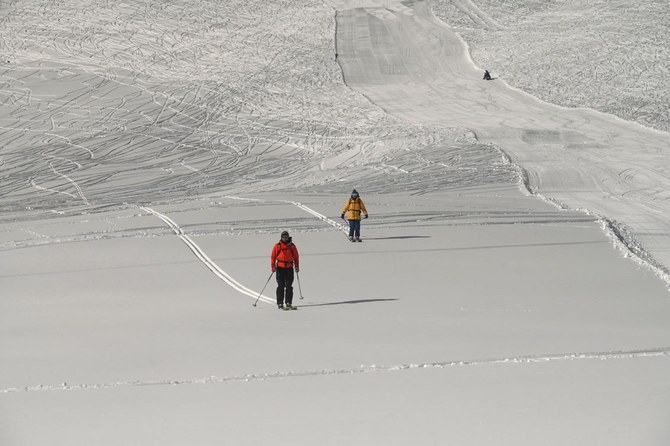
VIENNA: A series of avalanches in Austria has left three people dead since Friday, as the ski season gets into full swing, with authorities warning of the risks posed by a particularly unstable snow cover.
“One winter sports enthusiast was killed in an avalanche in Kaltenbach on Saturday,” a police spokesman told AFP, declining to give any information about the circumstances of the accident in the small Alpine village.
According to the Austrian news agency APA, the victim was a 17-year-old New Zealander who was skiing off-piste.
On Friday, a 32-year-old Chinese man, also said to be skiing away from the designated routes, died in an avalanche in the resort of Soelden.
A third victim was found dead Saturday after being reported missing the previous day.
APA reported that the man was 50 years old and died in the Kleinwalsertal valley on the border with Germany.
Over the past two days, intensive snowfall and wind have increased the avalanche danger in the Alpine Tyrol and Vorarlberg regions.
Warnings have been issued in both these popular ski resort regions, urging winter sports enthusiasts to exercise caution.
However an alert level four, on a scale of five, has not prevented many holidaymakers from venturing off the marked slopes, authorities said.
The avalanche situation also led to numerous rescue operations on Saturday, made hazardous by the weather conditions.
The February school holidays have begun in Vienna and resorts have filled up, after a gloomy start to the season, marked by the absence of snow at low and medium altitudes.
In recent years, in Austria, a leading winter sports destination, there have been an annual average of 20 deaths on the slopes.

Austrian avalanches leave three dead
Short Url
https://arab.news/8wte2
Austrian avalanches leave three dead
- "One winter sports enthusiast was killed in an avalanche in Kaltenbach on Saturday," said a police spokesman
- A 32-year-old Chinese man, also said to be skiing away from the designated routes, died in an avalanche in the resort of Soelden
Japan PM’s big election win could mean more beef with Beijing
TOKYO: Japanese Prime Minister Sanae Takaichi’s thumping election win has blunted domestic opposition to her hawkish security agenda, encouraging plans to press ahead with a defense expansion that China has condemned as a return to militarism. As the scale of her government’s historic victory became clear on Sunday — capturing 352 of the 465 seats in the lower house — Takaichi said she would “work flat out to deliver” an agenda that includes building a military strong enough to deter Chinese threats to its islands, including those close to Taiwan. In November, Takaichi touched off a diplomatic storm with Beijing by suggesting Japan could respond militarily to any Chinese attack on the democratically governed island if it also threatened Japanese territory.
STANDING UP TO CHINA
“I expect to see Japan very forward-leaning on defense policy, such as her statements on a Taiwan contingency,” said Kevin Maher, a former US diplomat now with NMV Consulting in Washington. “One impact could be that President Xi Jinping comes to understand her strong stance,” he added.
China
responded furiously
to Takaichi’s Taiwan comment, promising to “resolutely prevent the resurgence of Japanese militarism” if Tokyo continued on its “wrong path.” Beijing also imposed a series of economic countermeasures including a boycott on travel to Japan and export restrictions on items such as rare earths it says Tokyo could use in military equipment.
Shingo Yamagami, a senior fellow at the Sasakawa Peace Foundation and a former Japanese ambassador to Australia, said the “hidden agenda” of the Sunday election was China.
“In light of belligerent actions and waves of economic coercion, should Japan acquiesce or stand tall?” he wrote on X. “The Japanese people clearly chose the latter.”
Taiwan’s de facto ambassador to Japan, Lee Yi-yang, was among the first foreign dignitaries to congratulate Takaichi, writing on Facebook that her victory showed Japan was not intimidated by China’s “threats and pressure.”
China’s foreign ministry on Monday again
urged Takaichi
to withdraw her remarks on Taiwan and said its policy toward Japan would not be changed by one election.
“We urge Japan’s ruling authorities to take seriously, rather than ignore, the concerns of the international community, and to pursue the path of peaceful development instead of repeating the mistakes of militarism,” foreign ministry spokesman Lin Jian said.
SECURITY STRATEGY Takaichi, a fan of Britain’s former leader Margaret Thatcher, is already accelerating defense spending to bring it to a record 2 percent of gross domestic product by the end of March. She has also pledged to ease restrictions on arms exports and allow Japan to pursue joint defense equipment projects with other countries.
Her administration plans to formulate a new national security strategy, likely by year end, that would further accelerate military spending.
That could lift defense outlays to around 3 percent of GDP, an LDP lawmaker told Reuters ahead of Sunday’s election, speaking on condition of anonymity because of the sensitivity surrounding such a move.
The potential increase would follow pressure from US President Donald Trump on Washington’s allies to raise defense spending.
Drawing lessons from nearly four years of war in Ukraine, Japan wants to build up munitions stockpiles and buy new equipment, including drones, to prepare for any prolonged conflict against a more powerful adversary, analysts say. The scale of Takaichi’s security ambitions could, however, be constrained by tax cuts and economic stimulus measures that would strain public finances, said Jeffrey Hornung, an expert on Japanese security policy at the RAND Corporation.
“Maybe you’ll see an effort to spend more, but because of her plans to spend on consumer measures, they may not choose to push much further,” he said.
The landslide victory could also bring a long-taboo security goal into view, one that would not burden public finances.
With more than a two-thirds majority in the lower house, she could table an amendment to Japan’s pacifist constitution to formally recognize the Self-Defense Forces as a military. Any such change would still require a two-thirds majority in the upper house — which she does not currently control — and approval in a national referendum.
“It’s not a slam dunk,” Hornung said, “but probably the best chance for any prime minister.”
STANDING UP TO CHINA
“I expect to see Japan very forward-leaning on defense policy, such as her statements on a Taiwan contingency,” said Kevin Maher, a former US diplomat now with NMV Consulting in Washington. “One impact could be that President Xi Jinping comes to understand her strong stance,” he added.
China
responded furiously
to Takaichi’s Taiwan comment, promising to “resolutely prevent the resurgence of Japanese militarism” if Tokyo continued on its “wrong path.” Beijing also imposed a series of economic countermeasures including a boycott on travel to Japan and export restrictions on items such as rare earths it says Tokyo could use in military equipment.
Shingo Yamagami, a senior fellow at the Sasakawa Peace Foundation and a former Japanese ambassador to Australia, said the “hidden agenda” of the Sunday election was China.
“In light of belligerent actions and waves of economic coercion, should Japan acquiesce or stand tall?” he wrote on X. “The Japanese people clearly chose the latter.”
Taiwan’s de facto ambassador to Japan, Lee Yi-yang, was among the first foreign dignitaries to congratulate Takaichi, writing on Facebook that her victory showed Japan was not intimidated by China’s “threats and pressure.”
China’s foreign ministry on Monday again
urged Takaichi
to withdraw her remarks on Taiwan and said its policy toward Japan would not be changed by one election.
“We urge Japan’s ruling authorities to take seriously, rather than ignore, the concerns of the international community, and to pursue the path of peaceful development instead of repeating the mistakes of militarism,” foreign ministry spokesman Lin Jian said.
SECURITY STRATEGY Takaichi, a fan of Britain’s former leader Margaret Thatcher, is already accelerating defense spending to bring it to a record 2 percent of gross domestic product by the end of March. She has also pledged to ease restrictions on arms exports and allow Japan to pursue joint defense equipment projects with other countries.
Her administration plans to formulate a new national security strategy, likely by year end, that would further accelerate military spending.
That could lift defense outlays to around 3 percent of GDP, an LDP lawmaker told Reuters ahead of Sunday’s election, speaking on condition of anonymity because of the sensitivity surrounding such a move.
The potential increase would follow pressure from US President Donald Trump on Washington’s allies to raise defense spending.
Drawing lessons from nearly four years of war in Ukraine, Japan wants to build up munitions stockpiles and buy new equipment, including drones, to prepare for any prolonged conflict against a more powerful adversary, analysts say. The scale of Takaichi’s security ambitions could, however, be constrained by tax cuts and economic stimulus measures that would strain public finances, said Jeffrey Hornung, an expert on Japanese security policy at the RAND Corporation.
“Maybe you’ll see an effort to spend more, but because of her plans to spend on consumer measures, they may not choose to push much further,” he said.
The landslide victory could also bring a long-taboo security goal into view, one that would not burden public finances.
With more than a two-thirds majority in the lower house, she could table an amendment to Japan’s pacifist constitution to formally recognize the Self-Defense Forces as a military. Any such change would still require a two-thirds majority in the upper house — which she does not currently control — and approval in a national referendum.
“It’s not a slam dunk,” Hornung said, “but probably the best chance for any prime minister.”
© 2026 SAUDI RESEARCH & PUBLISHING COMPANY, All Rights Reserved And subject to Terms of Use Agreement.