


RIYADH: The July full moon illuminated skies across the Kingdom this week, captivating residents, photographers and astronomy enthusiasts from the Northern Borders to the Asir region in a celestial display that blended natural beauty with centuries-old cultural traditions, the Saudi Press Agency reported.
Known in some parts of the world as the “Buck Moon” or “Deer Moon,” it was clearly visible under favorable weather conditions across the Kingdom.
In the Northern Borders region, Astronomy and Space Club member Adnan Khalifa said the July full moon is traditionally called the “Buck Moon” in North American indigenous folklore, marking the period when male deer begin growing new antlers.

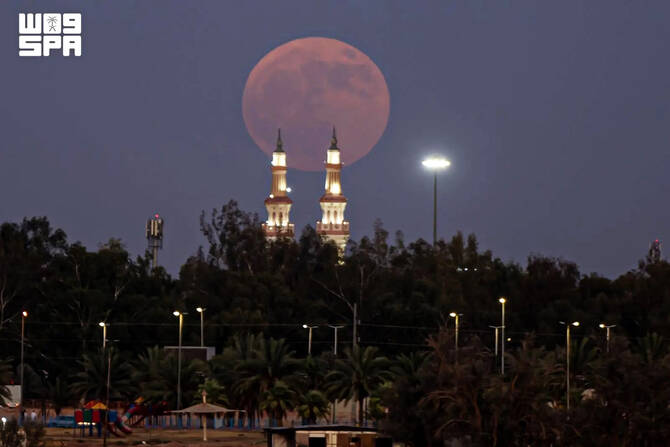
The full moon in the Northern Borders region was clearly visible under favorable weather conditions, offering unobstructed views. (SPA photo)
Other cultures refer to it as the “Mango Moon” because it coincides with mango harvests in some regions. Khalifa said such names are rooted in cultural heritage rather than astronomy, reflecting how communities historically linked lunar cycles with seasonal and environmental changes.
Meanwhile, residents of the Asir region observed what is locally known as the “Rutab Moon,” a traditional name associated with the summer date-ripening season, when the fruit is soft and fresh.
The bright full moon cast a striking glow over Asir’s mountainous landscapes, attracting photographers and skywatchers who gathered to capture the seasonal spectacle.
The Rutab Moon has long been part of local folklore, illustrating the close relationship between agricultural seasons, celestial events and everyday life in the region, the SPA report explained.

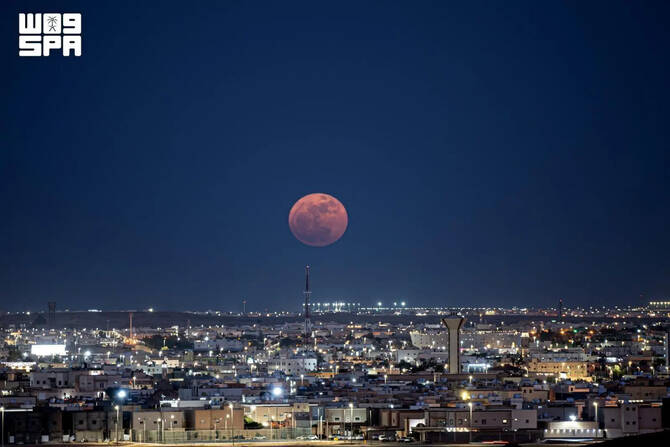
Full moon over Asir: The Rutab Moon has long been part of local folklore, illustrating the close relationship between agricultural seasons, celestial events and everyday life in the region. (SPA)
The full moon is one of the most prominent phases of the lunar cycle, occurring when it is positioned opposite the sun as viewed from Earth. At that point, sunlight illuminates nearly the entire lunar disk, making it appear fully lit and especially bright in the night sky.
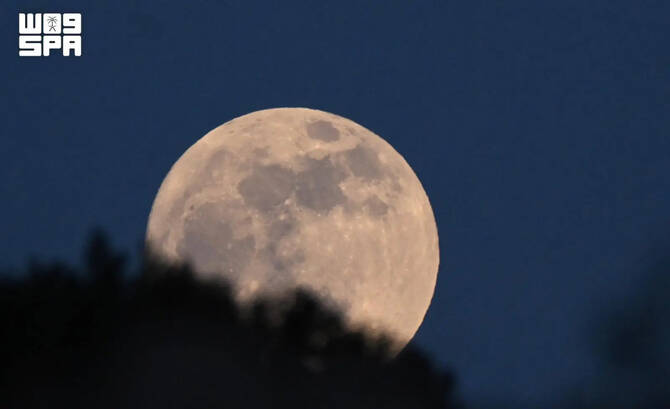
Under clear skies, observers can often distinguish prominent lunar surface features, including craters, mountain ranges and highlands using binoculars or small telescopes.
The latest display follows the observation in June of the Dhul Hijjah full moon — the final full moon of the 1447 Hijri year — which was also widely viewed across the Northern Borders region under excellent observing conditions.
Saudi Arabia’s generally clear desert skies and varied landscapes continue to make the Kingdom an increasingly attractive destination for astronomy enthusiasts and astrophotographers throughout the year.


