

Saudi creative Ahmed Al-Saif showcases African tribal life at Xposure International Photography Festival

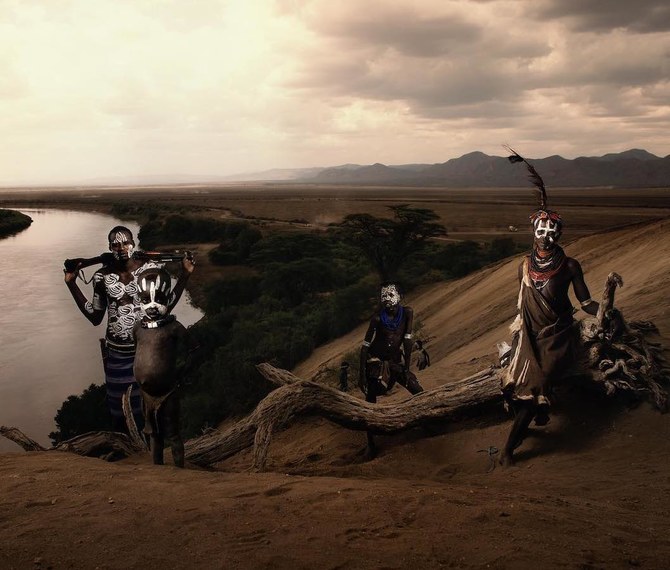
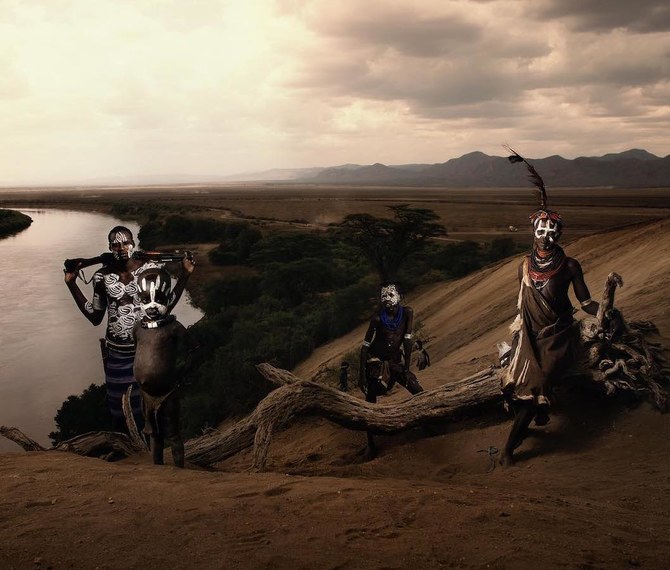
Al-Saif said his work would take visitors on a journey to Africa to learn about the tribes of the Omo Valley in Ethiopia. (Instagram)
Short Url
Updated 05 February 2023
Follow

Saudi creative Ahmed Al-Saif showcases African tribal life at Xposure International Photography Festival

  • Fascinating culture in Ethiopia’s Omo Valley, says artist
  • Sharjah event features 74 photographers with 1,794 prints

DUBAI: Creatives are gearing up for the seventh edition of the Xposure International Photography Festival, which is set to take place in the UAE from Feb. 9 to 15.

Organized by the Sharjah Government Media Bureau, the event at the Expo Center Sharjah will feature 74 world-renowned photographers and a display of 1,794 prints.

One of the participating artists is Saudi photographer Ahmad Al-Saif, who specializes in travel and culture-focused photography.


Al-Saif said his work would take visitors on a journey to Africa to learn about the tribes of the Omo Valley in Ethiopia.

“The focus of these nations in my work is to illustrate their fascinating lifestyle and heritage. They distinguish themselves from other tribes with unique body paints, scarification and lip and ear plates,” he said. “These body modifications and beautifications, as they consider them, have a deep-rooted heritage and reasons.

“I wish I could find the words to describe what it feels like to visit these tribes and I aspire to convey a little bit of their beauty in this exhibition,” he said.


One of his favorite pictures to be showcased at the exhibition is “Glance” — a photograph taken of the Karo tribe.

“This picture was taken (in) the first few minutes when I reached the Karo tribe land,” he said. “The picture captured a child’s curiosity to see me for the first time, which had a similar reflection of my curiosity when I saw them.”

“Glance” was awarded an honorary award in the Sheikh Hamdan International Photography Competition in 2016.


Al-Saif’s infatuation with photography started in early 2007 when he was only 20 years old.

He started experimenting using his father’s compact camera at first. He then bought his first DSLR camera in 2009 and started taking professional photos of Saudi Arabia’s local communities and cultural heritage, especially in his home city of Al-Ahsa.


“As a child, I was curious and liked to try new things. Similar to photography, I have practiced swimming, football and drawing,” he recalled. “However, the love for photography kept growing inside me until I had the chance to get my own camera when I was 21 years old. At this age I knew that I had the passion and the drive to pursue photography professionally.”

Al-Saif considers photography an integral part of his identity. He believes that travel photography has made him “a different person.”


“I learned to see all things with a beautiful eye, and I became more accepting with respect to the difference in people, cultures and religious beliefs,” he explained.

However, being a travel photographer does come without its challenges. “One of the main issues is the restriction that is imposed in some regions or countries as well as safety. The other thing is expenses of these trips that limit our travel duration and frequency,” he explained.


Despite having a photography career that spans over 13 years, Al-Saif believes he is only starting.

“The first thing I always tell myself and other ambitious youth is to start sailing in the world of exploration and travel, and to capture beautiful moments that you see with your eyes, to share experiences with the world,” he said.


Art Cairo spotlights pioneering artist Inji Efflatoun

Updated 23 January 2026
Follow

Art Cairo spotlights pioneering artist Inji Efflatoun

CAIRO: Art Cairo 2026 returned to Egypt’s bustling capital from Jan. 23-26, with visitors treated to gallery offerings from across the Middle East as well as a solo museum exhibition dedicated to pioneering Egyptian artist Inji Efflatoun.

While gallery booths hailed from across the Arab world, guests also had the chance to explore the oeuvre of the politically charged artist, who died in 1989.

Many of the pieces in the 14-work exhibition were drawn from the collection of the Egyptian Museum of Modern Art and cover four main periods of the artist’s work, including her Harvest, Motherhood, Prison and Knoll series.

While gallery booths hailed from across the Arab world, guests also had the chance to explore the oeuvre of the politically charged artist, who died in 1989. (Supplied)

Efflatoun was a pivotal figure in modern Egyptian art and is as well known for her work as her Marxist and feminist activism.

“This is the third year there is this collaboration between Art Cairo and the Ministry of Culture,” Noor Al-Askar, director of Art Cairo, told Arab News.

“This year we said Inji because (she) has a lot of work.”

Born in 1924 to an affluent, Ottoman-descended family in Cairo, Efflatoun rebelled against her background and took part heavily in communist organizations, with her artwork reflecting her abhorrence of social inequalities and her anti-colonial sentiments.

Many of the pieces in the 14-work exhibition were drawn from the collection of the Egyptian Museum of Modern Art and cover four main periods of the artist’s work, including her Harvest, Motherhood, Prison and Knoll series. (Supplied)

One untitled work on show is a barbed statement on social inequalities and motherhood, featuring a shrouded mother crouched low on the ground, working as she hugs and seemingly protects two infants between her legs.

The artist was a member of the influential Art et Liberte movement, a group of staunchly anti-imperialist artists and thinkers.

In 1959, Efflatoun was imprisoned under Gamal Abdel Nasser, the second president of Egypt. The artist served her sentence for four years across a number of women’s prisons in the deserts near Cairo — it was a period that heavily impacted her art, leading to her post-release “White Light” period, marked dynamic compositions and vibrant tones.

Grouped together, four of the exhibited works take inspiration from her time in prison, with powerful images of women stacked above each other in cell bunkbeds, with feminine bare legs at sharp odds with their surroundings.

Art Cairo 2026 returned to Egypt’s bustling capital from Jan. 23-26. (Supplied)

The bars of the prison cells obstruct the onlooker’s view, with harsh vertical bars juxtaposed against the monochrome stripes of the prison garb in some of her works on show.

“Modern art, Egyptian modern art, most people, they really don’t know it very well,” Al-Askar said, adding that there has been a recent uptick in interest across the Middle East, in the wake of a book on the artist by UAE art patron Sultan Sooud Al-Qassemi.

“So, without any reason, all the lights are now on Inji,” Al-Askar added.

Although it was not all-encompassing, Art Cairo’s spotlight on Efflatoun served as a powerful starting point for guests wishing to explore her artistic journey.