KARACHI: It all began on a summer afternoon in 2019 when Ramish Rizwan Chaudhary, the 18-year-old son of a roadside samosa vendor, shot a cooking video of his father Rizwan Chaudhary on his cell phone and posted it on YouTube.
The recipe for restaurant-style Kofta curry amassed 260,000 views instantly. There was no kitchen, no studio — just an easy-to-make and well-explained recipe taught in Chaudhary’s unique style of delivery.
Four years later, the family’s BaBa Food RRC page has 3.78 million subscribers on YouTube and in a ceremony in December last year, it won the award for Pakistan’s ‘Top Food Creator’ from the video-sharing giant TikTok.
Based on the earnings from his social media fame, Chaudhary and his family of five that once lived in a small rented house in Multan now own their residence in the city of Narowal, complete with a recording studio and sophisticated editing equipment. Their kitchen alone is worth Rs500,000, and since 2019, the family says it has been able to donate up to Rs25 million to poor families to help them set up their own food businesses.
“This journey started in 2019 from a small kiosk from where we produced the first video for the BaBa Food RRC YouTube channel,” Ramish told Arab News, saying his father used to sell savory snacks and burgers at the roadside stall at the time.
“The first hurdle was that there was no money to buy a camera, no money to purchase lights, no money to buy mics, and beyond that, the biggest hurdle was that there was no money to create the recipes,” Ramish, who produces all the content for the family’s page with is brother Ali, said.
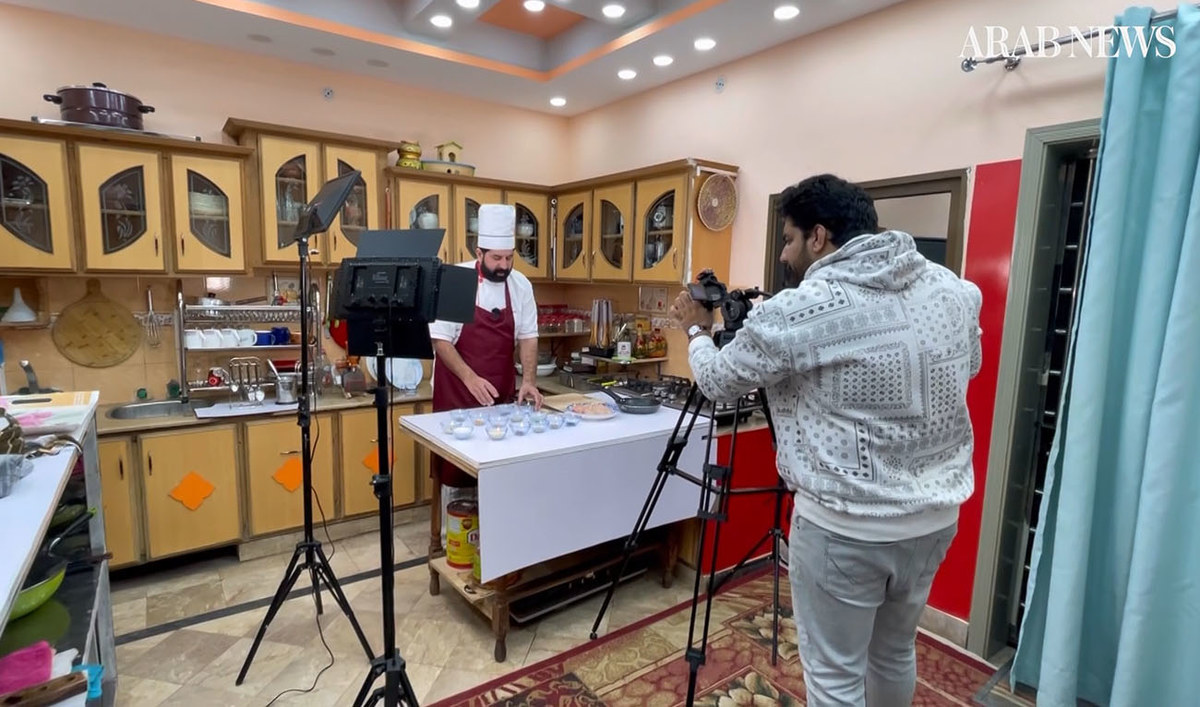
Ramish Rizwan is seen recording a video of his father explaining a recipe for his YouTube channel from his kitchen in Narowal, Pakistan on February 2, 2023. (AN Photo)
“My family and I have witnessed poverty and unemployment very closely.”
But Chaudhary had no complaints about his difficult path to fame and wealth.
“Sometimes, Allah passes a person from the worst conditions to eventually bless him with the best,” the food creator told Arab News, giving credit for his success to his children and wife.
“Usually parents teach their children, but this didn’t happen in our case,” he said. “I taught my children and my children taught me [back] and that’s how we have taken this system ahead.”
Chaudhry’s wife Shahida added:
“Behind these two, rather three [successful] men, there is the hand of a woman and a mother ... I have worked hard with my husband and my children, I have worked hard day and night and the recipes I have given them, every recipe of mine has gone into millions [of social media views].”
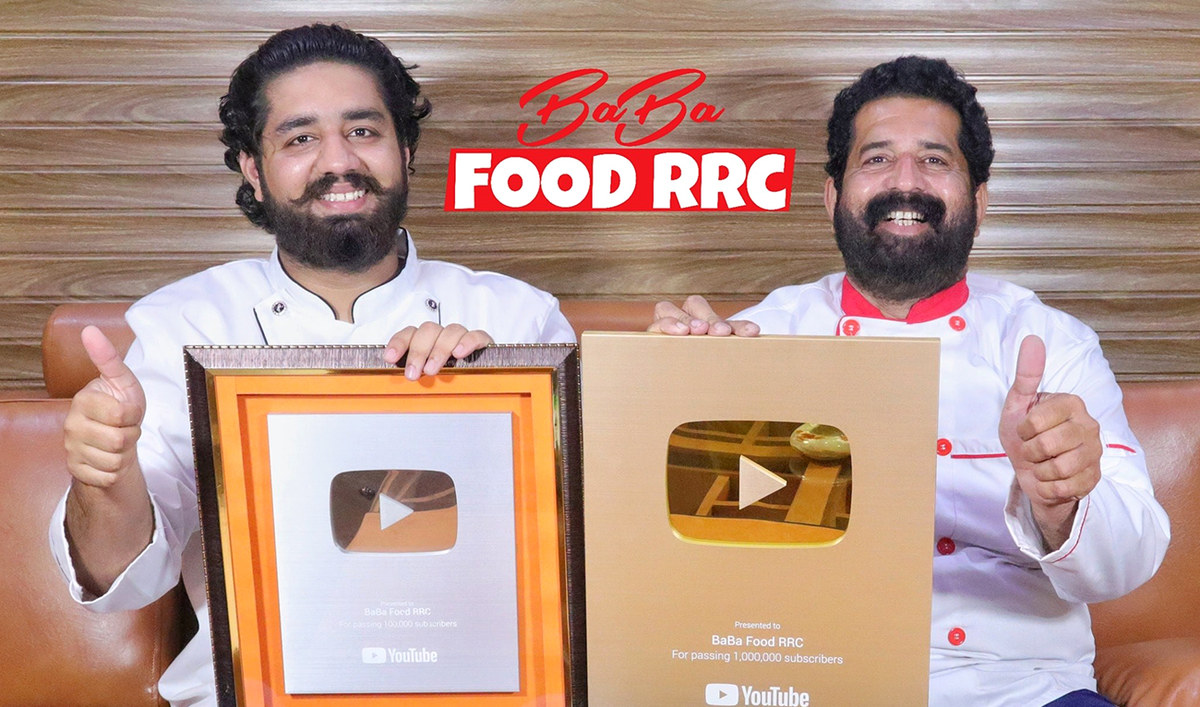
Rizwan Chaudhary (right) and his son Ramish Rizwan pose with their YouTube top creator gold and silver shields in Narowal Pakistan. (Photo courtesy: BaBa Food RRC/Facebook)
“THERE’S NOTHING TO IT”
The key to the family’s success, Ramish said, was his father’s unique style, his diction, and the way he engaged with followers and responded to comments, teaching easy-to-make recipes that other beginner cooks, especially women, could try at home.
Another factor owing to his popularity was that Chaudhary frequently shared recipes for commercial food — everything from Russian salad to KFC-style nuggets to pulao that tastes like that from the Savour franchise. Even his recipe for a homemade oil that allegedly turns gray hair black has over seven million views, his most popular video by far. His fifth most popular video is about how to make an anti-wrinkle cream at home, and his pages are filled with herbal remedies for everything, including colds, coughs and joint pains.
Chaudhary’s fans also agreed that his appeal was in the practical demonstration of his refrain ‘there’s nothing to it,’ making any recipe easy to execute.
Mahnoor Maqsood, a resident of Peshawar who has been following Chaudhary’s channel for two years, described the chef’s attraction thus:
“He has a very sweet way of explaining his recipes, like one of your own parents is explaining them.”
Chaudhary’s tips and tricks for everything from peeling vegetables, or hard boiled eggs, more quickly and easily, have also won him a loyal following.
“He once said that if you put oil in boiled macaroni after you strain out the water, they won’t stick to each other after they’re cooked,” Maqsood told Arab News.
Macaroni, where each narrow curved tube sits separately, is the dish that Maqsood said she now cooks most often.
But the seemingly easy videos take hours, even days, of painstaking work in recipe creation and production.
Ramish, who learnt to create and produce videos with the help of online guides, said even seven-minute-long clips could take days of hectic work to complete.
“The recipe is first written down, it is then tried and discussed,” Ramish said. “The background of recipes is discussed: when was it invented, when did it start, how was it made then, and how is it made now?”
“Mostly it happens that we have to make the video of a recipe ten times,” he said, smiling, “since it did not turn out the way we want to show it.”