Hijabi ‘indie mothers’ embraced by young Indonesian music fans

1 / 4
The Nasida Ria band performs on stage at a festival in Jakarta on January 6, 2023. (AFP)
2 / 4
The Nasida Ria band performs on stage at a festival in Jakarta on January 6, 2023. (AFP)
3 / 4
4 / 4
Makhi, a member of the all-female hijab-clad Nasida Ria band, performs during a festival in Jakarta on January 6, 2023.(AFP)
Short Url
Updated 01 February 2023
Follow

Hijabi ‘indie mothers’ embraced by young Indonesian music fans

  • Originally formed 47 years ago as a Qur'an recital group, the all-female Nasida Ria band now numbers a dozen performers, fusing Arabic and traditional Indonesian dangdut music

JAKARTA: At a packed festival in central Jakarta, hijab-clad sexagenarian singer Rien Djamain bursts into an upbeat track about nuclear destruction to a crowd of thousands, mostly young Indonesians.
Behind the frontwoman of the all-female Nasida Ria band are her fellow musicians, dressed in silver and black sequined dresses, backing up her velvety vocals with bongos, violins, mandolins, bamboo flutes and tambourines.
“O cursed creator of the nuclear bomb, why do you invite the day of judgment?” she sang on the track “Bom Nuklir.”
Young concert-goers swung from side to side during the macabre ditty, shouting “mother!” at their favorite band members.
Originally formed 47 years ago as a Qur'an recital group, the band now numbers a dozen performers, fusing Arabic and traditional Indonesian dangdut music, which was once thought tacky and dated in cosmopolitan circles.
Their humorous Islamic pop tunes about serious themes, such as justice and human rights, have caught on with social media-obsessed young people looking for some levity in their playlists.
Riding the wave of Indonesia’s increasingly vibrant music scene, the band’s droll lyrics have gained them a certain notoriety.
Their songs are laden with similes and metaphors, comparing womanizers to “seditious bats” or describing how “monkeys like to carry rifles, humans like to show nipples.”
Twenty-three-year-old Fathul Amin said he thinks the band is “more than just cool.”


The Nasida Ria band performs on stage at a festival in Jakarta on January 6, 2023. (AFP)

“Why? Because all of the members are women who can play more than three musical instruments,” he said.
Screen grabs of Nasida Ria’s expressive words have been widely shared as memes, forging a connection between the band and the younger generation.
“That is how youths communicate nowadays, and that is OK. More importantly, it shows that our messages through the songs are well accepted,” Djamain told AFP.
“I am grateful that despite the mostly old members, Nasida Ria is still loved by the youths. That our music is still enjoyable to them.”

Music consumption in Indonesia is evolving, experts say, with listeners adding combinations of genres that include more traditional sounds — such as dangdut with Javanese lyrics or reggae-pop sung in eastern Indonesian dialects — to their Western favorites.
That growing trend has made Nasida Ria more relevant than ever, according to music journalist Shindu Alpito.
“The younger generations tend to celebrate music with a sense of humor. They are attracted not only to the musical aesthetics but also musical comedy,” he told AFP.
Dangdut music has been increasing in popularity, with acts now playing at festivals across Indonesia, performing for young audiences alongside rock bands, in addition to gigs for their usual crowds in smaller villages.
“A lot of youths in... Jakarta are re-embracing local music. Now, these types of music are what they call a guilty pleasure,” Alpito said.
“Islamic songs are usually serious, with lyrics carefully quoting Islamic teachings. However, Nasida Ria have charmed broader society through a language style that is easy to understand and amusing.”

The group capitalized on the demand for entertainment while the world was stuck indoors and concert venues were closed during the Covid-19 pandemic.
Nasida Ria’s youngest member, 27-year-old Nazla Zain, attributes their success to modern technology allowing people from all backgrounds to be exposed to their music.
“We are keeping up with the trend by using YouTube and other music applications,” she said.
“So now youths with mobile phones can listen to our songs. That might be a reason why they like us.”
They have seen their YouTube subscriber count surge six-fold since March 2020 to nearly 500,000.
They also boast nearly 50,000 listeners every month on streaming platform Spotify and 38,000 followers on Instagram.
“They are so cool as they still perform at a not-so-young age,” said 32-year-old metal and punk fan Ricky Prasetyo.
“No wonder many people call them the indie mothers.”


 Recipes for Success: Chef Aniket Chatterjee offers advice and a mutton curry recipe 

Updated 29 January 2026
Follow

 Recipes for Success: Chef Aniket Chatterjee offers advice and a mutton curry recipe 

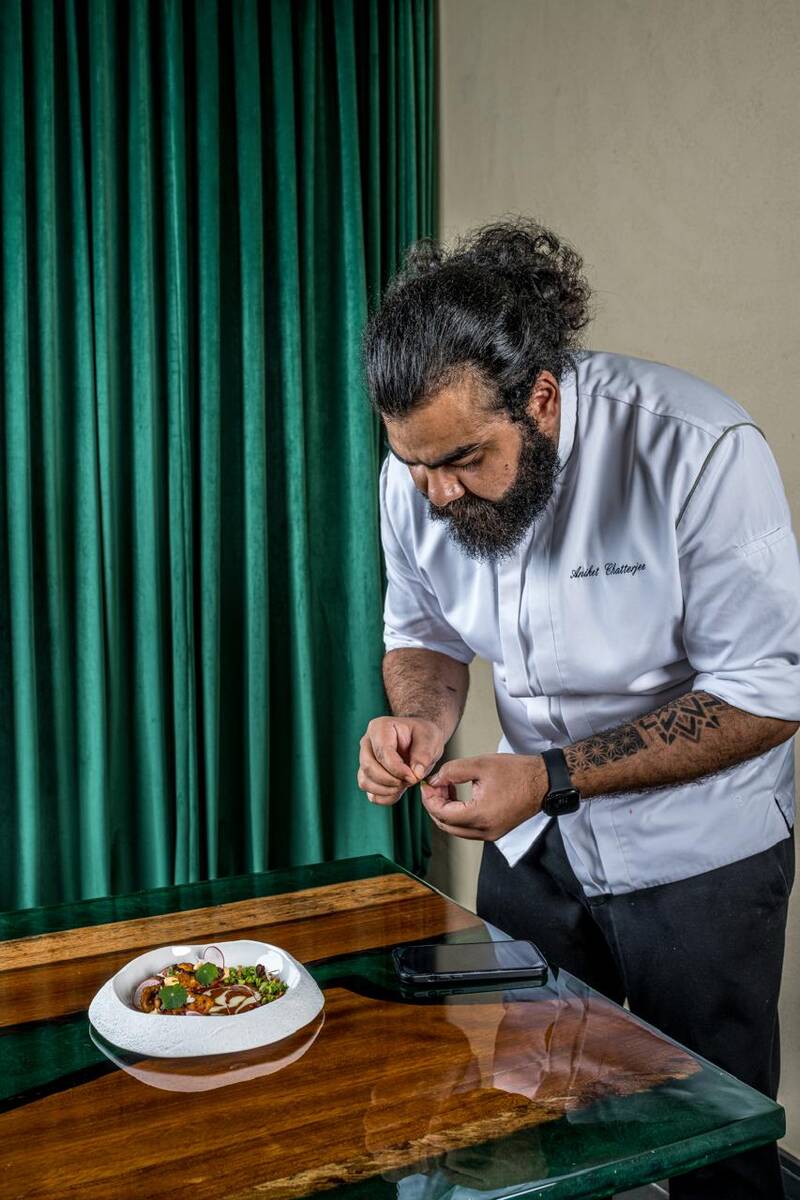
DUBAI: Aniket Chatterjee — currently chef de cuisine at Atrangi by Ritu Dalmia in Dubai — says his cooking is shaped as much by memory and personal history as it is by technique.  

Working closely with celebrity chef and restaurateur Dalmia, Chatterjee has developed a style that looks at Indian food not through trends, he says, but through stories — from home kitchens and street food to lesser-known regional traditions. 

Chatterjee has developed a style that looks at Indian food not through trends, he says, but through stories. (Supplied)

Many of his dishes at Atrangi are contemporary adaptations of familiar Indian flavors and everyday recipes. His approach reflects how Indian cuisine in Dubai, and beyond, is shifting, with more diners interested in regional cooking, comfort food and the stories behind where dishes come from, he tells Arab News.  

When you started out, what was the most common mistake you made?  

I put a lot of stress and pressure on myself, which was leading to my passion getting depleted.  

What’s your top tip for amateur chefs? 

Always cook with intuition and intent. Cooking depends a lot on your mindset. Once you start cooking not because someone wants to eat, but because you want to feed them, that’s a game changer.  

   What one ingredient can instantly improve any dish? 

Simple: salt. Seasoning is key. Someone once said: “The difference between good food and great food is a pinch of salt,” and I strongly believe that. And love, of course. 

When you go out to eat, do you find yourself critiquing the food?  

Obviously it’s a mechanism, after working for so many years, that I try to analyze anything that I eat. But it’s just for understanding or inspiration purposes. I do believe in giving feedback because I genuinely want the restaurant or the cook to be better.  

What’s the most common issue that you find in other restaurants? 

The thing that ticks me off is anything which starts with “viral.” I’m out. I don’t like it when restaurants follow trends and don’t do what they are actually capable of doing or love to do.  

What’s your favorite cuisine or dish? 

I love Japanese food. It’s simple yet complex. But my favorite dish changes weekly. It is like that one song that you listen to on a loop and then you get sick of it. I do the same with food. Last week it was mandi with haneeth ribs — the fat, the freshness from the tomato, rice and laban is so beautifully balanced. This week, it’s mostly ramen.  

What’s your go-to dish if you have to cook something quickly at home? 

I love to make a nice bowl of pasta. Usually, back home, in my pantry, we always have the ingredients, because even my mom loves it. It’s usually a nice simple tomato and basil spaghetti with some fresh mozzarella or a ragu or an aglio e olio.  

What customer behavior most annoys you? 

When they tell us they are allergic to something but later turns out they just don’t like the particular thing. That has happened multiple times.  

What’s your favorite dish to cook and why? 

A nice spicy curry — chicken or lamb. It’s therapeutic. Making curry, for me, is the most beautiful thing in the world. It’s very complex and layered, and it’s completely based on understanding, not a recipe. 

What’s the most difficult dish for you to get right?  

It’s not a dish, it’s two ingredients: doodhi (bottle gourd) and karela (bitter gourd). I absolutely despised both those vegetables with all my heart, until I took on a challenge to work around it. It worked out and I have had a lot of my fellow haters end up liking both. 

As a head chef, what are you like? Are you a disciplinarian? Or are you more laid back? 

I don’t like shouting; I feel that’s a very weak approach to leading a team. You have to be calm and composed. I’m a firm believer in energies and that it transpires into the food, so I don’t want a stressful work environment and having fun in the kitchen is mandatory. Of course, there are some non-negotiables, and that’s where the discipline kicks in. 

Chef Aniket’s lazy Sunday mutton curry  

Chef Aniket’s lazy Sunday mutton curry . (Supplied)

(serves 4)  

Ingredients 

Marination: 

 Mutton or lamb curry cut – 600g 
Mutton or lamb fat (preferably in cubes) – 100g 
Full fat yoghurt – 50g 
Red onion (sliced) – 450g 
Ginger and garlic paste – 80g 
Coriander stems (whole) – 15g 
Mustard oil – 30ml 
Kashmiri red chilli powder – 16g 
Turmeric powder – 8g 
Coriander powder – 14g 
Roasted cumin powder – 14g 
Black salt – to taste 

Garam masala:  

 Cumin – 8g 
Cinnamon – 4g 
Cloves – 2g 
Green cardamom – 6g 
Black cardamom – 2g 
Bay leaf – 2 pcs 
Whole dried red chilli – 1 pc 
Black pepper – 3g 
Fennel seeds – 6g 

For the tempering: 
Mustard oil – 80ml 
Whole dried red chilli – 2 to 3 pcs 
Bay leaf – 2 to 3 pcs 
Black pepper (whole) – 6g 
Cinnamon sticks – 2 to 3 pcs 

Instructions:  

Take a bowl and combine all the ingredients listed under marination. Let it sit for at least three hours, preferably overnight in the fridge. 

For the spice mix, combine all the ingredients listed under garam masala in a cold non-stick pan and slowly bring to heat. Toss the spices as they warm so they roast evenly without burning. Once cooled, blend into a coarse powder. 

Take a pressure cooker and add the mustard oil from the tempering. Once hot, add the dry spices and saute for a minute. 

Add the marinated mutton or lamb directly into the oil. The marinade will have released some water, so separate it and add only the meat, onions and fat first. This helps the meat and onions sear and caramelize properly. 

Once browned, add the remaining marinade liquid and cook for another 10 to 15 minutes. Cover and cook for two whistles plus 30 minutes for mutton, or two  whistles plus 15 minutes for lamb. Let it rest for 15 to 20 minutes until the steam releases naturally. 

Once the meat is tender, adjust the consistency and seasoning to taste. 

Turn off the heat and add one tablespoon of the garam masala. At this point, add one tablespoon clarified butter or ghee, julienned ginger (5 g), lemon juice to taste and a pinch of sugar.  

Finish with plenty of fresh chopped coriander and serve hot with rice or parathas.