BAGHDAD: Iraq’s premier said Tuesday that new banking regulations had revealed fraudulent dollar transactions made from his country, as the fresh controls coincide with a drop in the local currency’s value.
Iraq has in recent months been making efforts to ensure its banking system is compliant with the international electronic transfer system known as SWIFT.
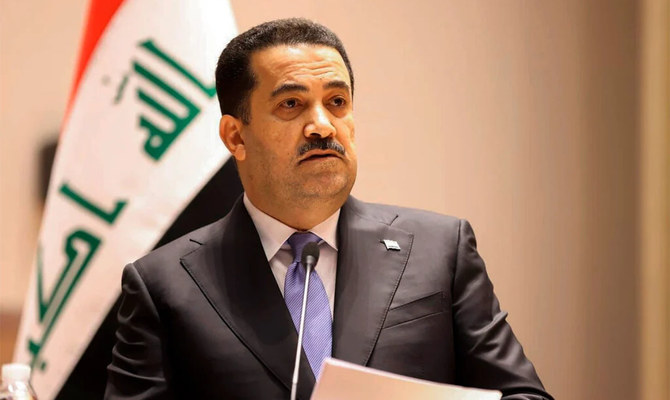
Referring to the new controls, Prime Minister Mohammed Shia Al-Sudani hailed “a real reform of the banking system,” but denounced “falsified invoices, money going out fraudulently,” in particular as foreign currency payments for imports.
“That is a reality,” he said in an interview on state television.
The adoption of the SWIFT system was supposed to allow for greater transparency, tackle money laundering and help to enforce international sanctions, such as those against Iran and Russia.
An adviser to Sudani had said that since mid-November, Iraqi banks wanting to access dollar reserves stored in the United States must make transfers using the electronic system.
The US Federal Reserve will then examine the requests and block them if it finds them suspicious.
According to the adviser, the Fed had so far rejected 80 percent of the transfer requests over concerns of the funds’ final recipients.
Before the introduction of the new regulations, “we were selling $200 million or $300 million a day,” Sudani said.
“Now, the central bank provides $30 million, $40 million, $50 million,” he said, questioning: “What were we importing in a single day for $300 million?“
“There are products that were entering (Iraq) for prices that make no sense. Clearly, the objective was to take foreign currency out of Iraq,” he said. “This must stop.”
Money may have been transported to Iraq’s autonomous Kurdistan province “and from there to neighboring countries,” Sudani said, without specifying whether he was referring to Turkiye, Iran or war-torn Syria.
He said the new controls had been planned for two years, in accordance with an agreement between Iraq’s central bank and US financial authorities, and deplored previous failures to put them in place.
Iraq, which is trying to move past four decades of war and unrest, is plagued by endemic corruption.
The official exchange rate is fixed by the government at 1,470 dinars to the dollar, but the currency was trading at around 1,680 on Tuesday on unofficial markets amid dollar scarcity.
The drop has sparked sporadic protests by Iraqis worried about their purchasing power.
Foreign Minister Fuad Hussein and the new central bank chief will be among a delegation traveling to Washington on February 7 to discuss the new mechanism and the fluctuating exchange rate, Sudani said.


![]()

Iraqi PM says banking reforms reveal fraudulent dollar transactions
Short Url
https://arab.news/jurub
Iraqi PM says banking reforms reveal fraudulent dollar transactions
- Iraq has in recent months been making efforts to ensure its banking system is compliant with the international electronic transfer system known as SWIFT


Latest updates


Recommended


© 2026 SAUDI RESEARCH & PUBLISHING COMPANY, All Rights Reserved And subject to Terms of Use Agreement.