US curbs exports to Iranian firms for producing drones for Russia

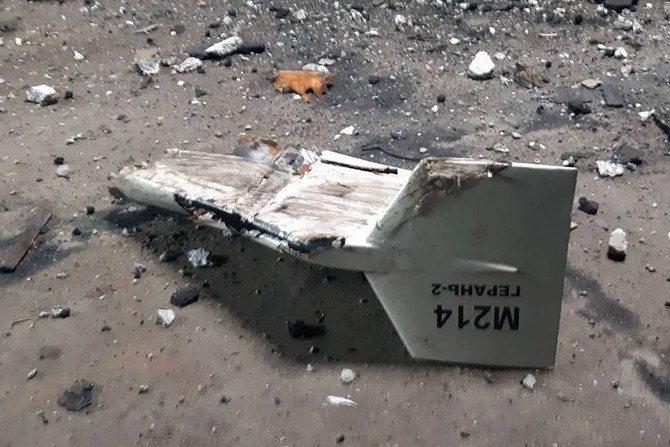
The Commerce Department said Iranian unmanned UAVs are being transferred to Russia for use in Ukraine. (File/AP)
Short Url
Updated 31 January 2023
Follow

US curbs exports to Iranian firms for producing drones for Russia

  • Allies of Ukraine have scrambled to gather and deploy air defenses to defeat cruise missiles and Iranian-built kamikaze drones

WASHINGTON: The United States on Tuesday added seven Iranian entities to its trade blacklist for producing drones that Russia has used to attack Ukraine, according a posting by the US Department of Commerce.
Nearing a year since Russia’s invasion of Ukraine, allies have scrambled to gather and deploy air defenses to defeat cruise missiles and Iranian-built kamikaze drones that have attacked energy infrastructure targets this winter.
Earlier this month, Canada announced it would buy a US-made National Advanced Surface-to-Air Missile System (NASAMS) for Ukraine. NASAMS is a short- to medium-range ground-based air defense system that protects against drone, missile, and aircraft attack. The United States has provided two NASAMS to Ukraine, with more on the way.
Other ground-based air defense systems such as Raytheon Technology Corp’s Patriot have been pledged by the United Kingdom, the United States and the Netherlands as allies hope to stave off further power disruptions.
The Iranian entities added to the blacklist are Design and Manufacturing of Aircraft Engines, Islamic Revolutionary Guard Corps Aerospace Force, Islamic Revolutionary Guard Corps Research and Self-Sufficiency Jihad Organization, Oje Parvaz Mado Nafar Company, Paravar Pars Company, Qods Aviation Industry, and Shahed Aviation Industries.
The Commerce Department posting said the Iranian unmanned aerial vehicles (UAVs) produced are being transferred to Russia for use in Ukraine, activity that is contrary to US national security and foreign policy interests.


UN says Yemen’s Houthis seized telecoms equipment, vehicles

Updated 5 sec ago
Follow

UN says Yemen’s Houthis seized telecoms equipment, vehicles

  • The Houthis have repeatedly targeted UN agencies and detained dozens of its staff
  • The actions threaten to worsen access to humanitarian services and aid in Houthi-controlled areas

SANAA: Yemen’s Houthi militants have confiscated telecommunications equipment and vehicles from unstaffed United Nations offices in Sanaa, the world body said in a statement Friday, decrying potential disruptions to its humanitarian work.
The Houthis have repeatedly targeted UN agencies and detained dozens of its staff as part of a crackdown on alleged Israeli espionage rings since the start of the war in Gaza.
The actions threaten to worsen access to humanitarian services and aid in Houthi-controlled areas, where most of Yemen’s impoverished population lives.
On Thursday, the Houthis “entered at least six UN offices in Sanaa, all of which are currently unstaffed, and removed to an unknown location most of the telecommunication equipment in these offices and several UN vehicles,” the office of the resident and humanitarian coordinator for Yemen, Julien Harneis, said in a statement on X.
The Iran-backed group did not inform the UN why it had taken the assets, the statement said.
The development came a day after a UN official told AFP that the World Food Programme was ending the contracts of all 365 staff in Houthi-controlled Yemen, citing funding challenges and an unsafe environment for employees.
The statement said the militants had also prevented the UN Humanitarian Air Service from flying to Sanaa for more than a month, and to a government-held area not far from the capital for even longer.
“This decision further constrains the delivery of humanitarian assistance in these areas,” it said.
Around 19.5 million people in Yemen — more than half the population — were in need of humanitarian assistance in 2025, according to UN figures.
In November, the WFP and the UN’s Food and Agriculture Organization named Yemen as one of the countries with populations at “imminent risk of catastrophic hunger.”
“This confiscation of UN assets and the blocking of UNHAS flights... comes at a time when humanitarian needs in Yemen, particularly in areas under their (Houthi) control, are increasing. This will make the humanitarian situation worse in those parts of Yemen,” the resident coordinator’s office said.
It added the actions were taken “without discussions with the UN, and therefore without any opportunity to find mutually acceptable arrangements for the delivery of assistance.”