

Pakistan has to abide by tough IMF conditions out of ‘compulsion’ — defense minister

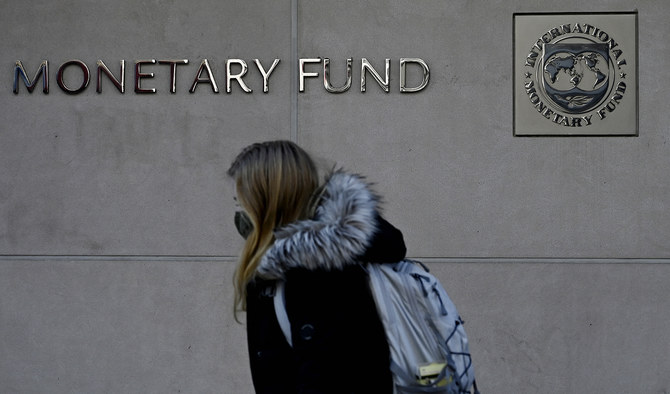
A woman walks past the International Monetary Fund headquarters in Washington, DC, on January 26, 2022. (AFP/File)
Short Url
Updated 29 January 2023
Follow

Pakistan has to abide by tough IMF conditions out of ‘compulsion’ — defense minister

  • IMF wants Pakistan to reestablish market-based mechanism to determine Pakistani rupee's value
  • Defense Minister Khawaja Asif says government would try not to burden citizens under IMF’s conditions

ISLAMABAD: As Pakistan increased petrol prices by Rs35 per liter, Defense Minister Khawaja Muhammad Asif said on Sunday that the country had to agree to “very tough” conditions imposed by the International Monetary Fund (IMF) out of “compulsion” to address its economic woes.

The IMF’s mission is scheduled to visit Pakistan on January 31 to discuss the resumption of its $7 billion loan program, as Islamabad desperately seeks another loan tranche to shore up its foreign exchange reserves. Pakistan's forex reserves have declined to a staggering $3.6 billion, not even enough to cover a month of imports.

Earlier today, Finance Minister Ishaq Dar announced jacking up prices of petroleum products in the country by as much as Rs35 per liter. The minister said the decision was taken due to the Pakistani rupee's recent devaluation and up to an 11 percent increase in global fuel prices.

The hike in prices of petroleum products is part of the IMF's conditionalities to revive the stalled loan program, which requires Pakistan to do away with expensive energy subsidies. The price hike is expected to further increase decades-high inflation in the South Asian country. 

The global lender also wants Pakistan to reestablish a market-based mechanism to determine the value of the Pakistani rupee, which fell to a record low of 269.60 against the dollar in the open market this week. Such a mechanism is a key prior action for the country to receive IMF support.

“The IMF program, which we had to re-enter because of the [current] circumstances and out of compulsion, has set very strict and tough conditions for Pakistan,” Asif said on Sunday, speaking to reporters.

He added the government would undertake efforts to ensure the common man would not have to bear the economic burden of IMF’s conditions.

“We will try that only those belonging to the [upper] socioeconomic class will have to bear the economic burden of this crisis,” he said.

Answering a question related to the acute dearth of forex reserves in the country and the ensuing depreciation of the rupee against the dollar, the defense minister said people who have a foreign currency account in the country would still be able to withdraw “some” of their money in dollars.

“If someone here has a dollar account and wants to withdraw money from their banks, they can do so but in small amounts. For instance, if someone wants to take out money to pay for their children’s school fees, they can do so,” he clarified.

Asif also said the country’s imports, which had to be halted due to the dwindling reserves, were “gradually being relaxed.”

“Our exports are gradually being relaxed, so we will hopefully recover from the economic [turmoil] soon,” he said. “Slowly and gradually, things are being streamlined.”

Pakistan secured a $6 billion IMF bailout in 2019, which was topped up with another $1 billion last year. However, the lender then stalled disbursements in November due to Pakistan’s failure to make more progress on fiscal consolidation and economic reforms.


Rescuers evacuate dozens to safety amid heavy snowfall in northwest Pakistan

Updated 4 sec ago
Follow

Rescuers evacuate dozens to safety amid heavy snowfall in northwest Pakistan

  • Khyber, Swat and South Waziristan are areas worst affected by snowfall in Khyber Pakhtunkhwa
  • Authorities say rescue operations ongoing, process of clearing roads underway in affected areas

ISLAMABAD: Rescuers evacuated dozens of stranded residents to safety as heavy snowfall blanketed several mountainous districts, blocked roads and cut off villages in Pakistan’s northwestern Khyber Pakhtunkhwa (KP) province, authorities said on Friday.

Rescue 1122 teams are operating in different areas of Tirah valley in KP’s Khyber district and shifted over 40 people, including children, to safe locations. The evacuees were provided with food, warm clothes and bedding, according to Rescue 1122 spokesman Bilal Faizi.

Around 55 people, who had been stranded in 20 vehicles in Sandana area, were rescued. Rescue 1122 teams from Peshawar, Swabi and Nowshera are participating in rescue operations, which continue despite difficulties due to slippery roads and heavy snow.

“People are stranded at various places due to heavy snowfall,” KP government spokesman Shafi Jan said in a statement. “Contact with some areas is not possible due to the suspension of [mobile] signals and road closures, however, rescue operations are ongoing.”

Separately, several people were stranded in four vehicles in Bahrain area of KP’s Swat, according to Rescue 1122.

“As soon as the information was received, the rescue disaster and medical teams immediately reached the scene,” the rescue service said. “The rescue personnel, taking professional action, safely shifted all the people to a safe place and also safely recovered the stranded vehicles.”

The process of clearing snow from the Malam Jabba Road, Kalam and other areas was being carried out, according to local authorities. Heavy snowfall has disrupted traffic on several roads in South Waziristan’s Ladha town as well.

Provincial authorities have not yet reported any loss of life.

Snowstorms have proven deadly in Pakistan in the past. At least 21 people, including children, died in January 2022 after they were stuck in freezing temperatures during a snowstorm in the Pakistani hill station of Murree.

Tens of thousands of tourists flock to Pakistan’s scenic areas in northwestern KP to witness snowfall every winter, often neglecting warnings from disaster management authorities amid dangerous weather conditions.