


RIYADH: UAE banks’ investments exceeded 511 billion dirhams ($139 billion) at the end of November 2022, the highest level in 13 months, according to the Central Bank of the UAE.
The CBUAE’s statistics also showed an annual increase of 7.7 percent, equivalent to 36.6 billion dirhams, reaching a total of 511 billion dirhams at the end of November, compared to 474.5 billion dirhams in November 2021.
According to the figures, securities that are debts to third parties, or bonds, accounted for the largest share of banks’ investments by more than 49.1 percent, reaching 250.9 billion dirhams at the end of November, an increase of 4.5 percent on a monthly basis, compared to 240.1 billion dirhams in the previous year.
The share of banks’ investments in securities held to maturity amounted to some 39.3 percent of total investments, reaching 200.8 billion dirhams at the end of November 2022.
This was an annual increase of 76 percent compared to 114 billion dirhams in November 2021, and a monthly increase of some 2.9 percent compared to 195.1 billion dirhams in October 2022.
The banks’ investments in stocks totaled 12.2 billion dirhams in November 2022, a monthly increase of around 4.3 percent, compared to some 11.7 billion dirhams in October 2022. It also decreased on an annual basis by around 12.9 percent.
The statistics also showed that the other banks’ investments totaled 47.2 billion dirhams at the end of last November.
This was an annual increase of 4.7 percent, compared to 45.1 billion dirhams in November 2021, and a monthly increase of 0.85 percent, compared to 46.8 billion dirhams in October 2022, as well as an increase of 10.8 percent over the first 11 months of 2022, compared to about 42.6 billion dirhams in December 2021.
NBF’s 2022 net profit jumps to $92.7m
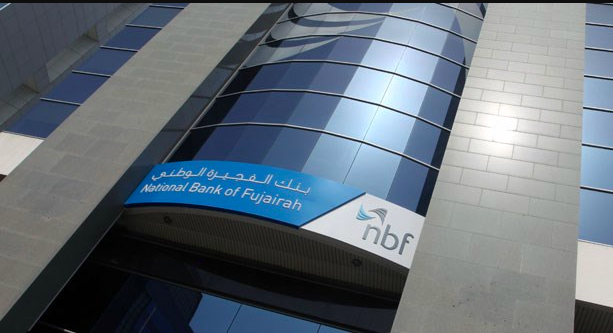
The National Bank of Fujairah posted year-on-year growth of 195.3 percent to close the year at a net profit of 340.4 million dirhams compared to 115.2 million dirhams in 2021, according to its 2022 financial results.
The bank logged its highest-ever operating profit totaling 1.2 billion dirhams, a rise of 29.4 percent compared to 955.6 million dirhams in 2021 underpinned by higher net interest income and net income from Islamic financing and investment activities, fee and exchange income.
Commenting on the bank’s results, Sheikh Saleh bin Mohamed bin Hamad Al Sharqi, chairman of NBF, said: “Our record 2022 operating performance was testament to the robustness of our business model and operational strategy.”
Moreover, NBF recorded its best-ever operating income of 1.8 billion dirhams, up 25.8 percent over 2021 reflecting the robust core business performance and asset and liability management in a rising interest rate environment.
Net interest income and net income from Islamic financing and investment activities grew 29.8 percent to 1.2 billion dirhams compared to 941.1 million dirhams in 2021.
Net fees, commission and other income rose 14.2 percent to 393.3 million dirhams compared to 344.3 million dirhams in 2021.
Operating expenses increased by 18.9 percent, reflecting NBF’s investments in its businesses, systems, infrastructure and people.
FAB posts net profit of $3.6bn in 2022, up 7% year-on-year
First Abu Dhabi Bank reported a group net profit of 13.4 billion dirhams during 2022, up 7 percent year-on-year compared to the same period in 2021 despite its fourth-quarter net profit falling to 2.5 billion dirhams, a drop of 26 percent from a year earlier.
Sheikh Tahnoun bin Zayed Al-Nahyan, national security adviser and chairman of FAB, said: “2022 was a year of continued strategic diversification and expansion for the UAE and regional economies, which posted their fastest economic growth in a decade. By capitalizing on favorable macroeconomic conditions, FAB has been laying the foundations for the future.”
In achieving the group’s highest annual revenue and net profit to date, FAB has strengthened its strategic position to build a future-proof bank and advance the interests of our customers, community, and stakeholders.
SIB achieves record net profit of $177.2m in 2022
Sharjah Islamic Bank recorded an increase of 26.6 percent in the net profit reaching 650.9 million dirhams for the year ending Dec. 31, 2022, compared to 514.1 million dirhams in the same period of 2021.
SIB also reported an increase in operating profits by 17.4 percent, reaching 998.3 million dirhams in 2022, compared to 850.7 million dirhams in the previous year.
The growth in the bank’s net profit indicated a strong performance in all aspects of the bank’s business. As a result, the net income from financing and investment products increased by 10.9 percent, or 119.1 million dirhams, to reach 1.2 billion dirhams in 2022, compared to 1.1 billion dirhams in 2021.
Net fees, commissions and other income increased by 18.8 percent to reach 395.8 million dirhams, compared to 333.2 million dirhams in 2021.


