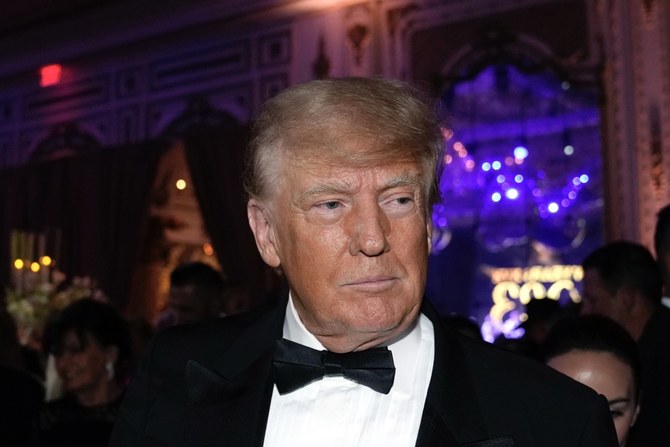
Facebook parent Meta is reinstating former President Donald Trump’s personal account after a two-year suspension following the Jan. 6 insurrection.
The company said in a blog post Wednesday it is adding “new guardrails” to ensure there are no “repeat offenders” who violate its rules.
“In the event that Mr. Trump posts further violating content, the content will be removed and he will be suspended for between one month and two years, depending on the severity of the violation,” Meta, which is based in Menlo Park, California, said.
Trump, in a post on his own social media network, blasted Facebook’s decision to suspend his account as he praised his own site, Truth Social.
“FACEBOOK, which has lost Billions of Dollars in value since “deplatforming” your favorite President, me, has just announced that they are reinstating my account. Such a thing should never again happen to a sitting President, or anybody else who is not deserving of retribution!” he wrote.
He was suspended on Jan. 7, a day after the deadly 2021 insurrection. Other social media companies also kicked him off their platforms, though he was recently reinstated on Twitter after Elon Musk took over the company. He has not tweeted.
Banned from mainstream social media, Trump has been relying on Truth Social, which he launched after being blocked from Twitter.


Donald Trump is reinstated to Facebook after 2-year ban
https://arab.news/b4vhr
Donald Trump is reinstated to Facebook after 2-year ban


Paris exhibition marks 200 years of Le Figaro and the enduring power of the press
- The exhibition celebrated the bicentennial of Le Figaro, offering visitors a rare opportunity to step inside the newspaper’s vast historical archive
PARIS: One of France’s most influential newspapers marked a major milestone this month with a landmark exhibition beneath the soaring glass nave of the Grand Palais, tracing two centuries of journalism, literature and political debate.
Titled 1826–2026: 200 years of freedom, the exhibition celebrated the bicentennial of Le Figaro, offering visitors a rare opportunity to step inside the newspaper’s vast historical archive. Held over three days in mid-January, the free exhibition drew large crowds eager to explore how the title has both chronicled and shaped modern French history.
More than 300 original items were displayed, including historic front pages, photographs, illustrations and handwritten manuscripts. Together, they charted Le Figaro’s evolution from a 19th-century satirical publication into a leading national daily, reflecting eras of revolution, war, cultural change and technological disruption.
The exhibition unfolded across a series of thematic spaces, guiding visitors through defining moments in the paper’s past — from its literary golden age to its role in political debate and its transition into the digital era. Particular attention was paid to the newspaper’s long association with prominent writers and intellectuals, underscoring the close relationship between journalism and cultural life in France.
Beyond the displays, the program extended into live journalism. Public editorial meetings, panel discussions and film screenings invited audiences to engage directly with editors, writers and media figures, turning the exhibition into a forum for debate about the future of the press and freedom of expression.
Hosted at the Grand Palais, the setting itself reinforced the exhibition’s ambition: to place journalism firmly within the country’s cultural heritage. While the exhibition has now concluded, the bicentennial celebrations continue through special publications and broadcasts, reaffirming Le Figaro’s place in France’s public life — and the enduring relevance of a free and questioning press in an age of rapid change.