BRUSSELS: The European Union cannot list Iran's Revolutionary Guards as a terrorist entity until an EU court has determined that they are, the European Union's foreign policy chief said on Monday.
EU foreign ministers are however set to add 37 names to the bloc's list of people and entities subject to sanctions over human rights violations in Iran, two European diplomats told Reuters last week.
The European Parliament has called on the EU to list the Revolutionary Guards as a terrorist entity, blaming it for the repression of domestic protests and the supply of drones to Russia.
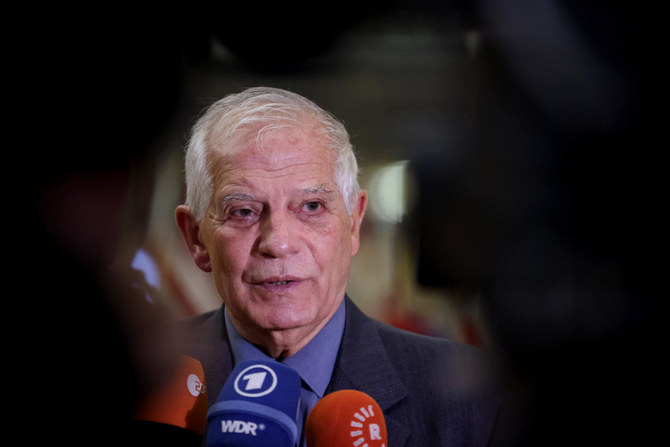
"It is something that cannot be decided without a court, a court decision first. You cannot say I consider you a terrorist because I don't like you," Josep Borrell told reporters as he arrived for the meeting of foreign ministers in Brussels.
He added that the court of an EU member had to issue a concrete legal condemnation before the EU itself could act.
The IRGC was set up shortly after the 1979 Islamic Revolution to protect the Shi’ite clerical ruling system and provide a counterweight to the regular armed forces.
It has an estimated 125,000-strong military with army, navy and air units. It also commands the Basij religious militia, a volunteer paramilitary force loyal to the clerical establishment which is often used to crack down on anti-government protests.
Relations between EU member states and Tehran have deteriorated as efforts to revive nuclear talks have stalled. Tehran has also detained several European nationals and the bloc has become increasingly critical of its continuing violent crackdown on protesters and the transfer of Iranian drones to Russia.


![]()

EU says it cannot brand Iran's Guards as terror group before court ruling
Short Url
https://arab.news/jdbwa
EU says it cannot brand Iran's Guards as terror group before court ruling
Latest updates


Recommended


© 2026 SAUDI RESEARCH & PUBLISHING COMPANY, All Rights Reserved And subject to Terms of Use Agreement.