

UK Afghan relocation backlog reaches 71k as charities decry ‘restrictive’ criteria

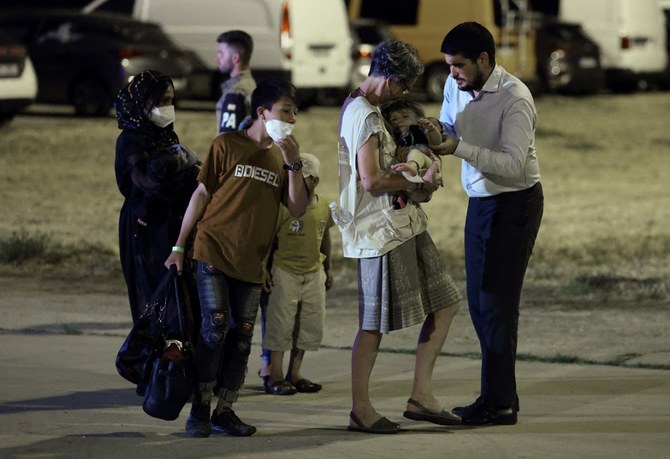
The Afghan Relocations and Assistance Policy aims to relocate people who worked with UK forces during the country’s war until the Taliban takeover in 2021. (File/AFP)
Short Url
Updated 22 January 2023
Follow

UK Afghan relocation backlog reaches 71k as charities decry ‘restrictive’ criteria

  • Applicants who “risked lives” serving British forces face “impossible choices,” says advocacy director

LONDON: Britain’s Afghan relocation scheme has a backlog of 71,149 applications from vulnerable people still stuck in the Taliban-led country, The Independent reported.

The Afghan Relocations and Assistance Policy aims to relocate people who worked with UK forces during the country’s war until the Taliban takeover in 2021.

Many are in imminent danger after waiting for months on their applications, charities have warned, amid a wave of reprisals in the country against those who worked with Western-led forces.

Figures from the UK Ministry of Defence show that more than 127,000 applications have been received since April 2021, with staff only recently assessing files from January 2022.

Charities have also described the ARAP criteria as “restrictive,” leading to many applicants “falling through the cracks” despite having served British interests in the country.

About 12,000 Afghans have been relocated to Britain through the scheme.

One Afghan waiting on a response to his ARAP application was told by the Ministry of Defence to acquire a birth certificate for his children through Taliban authorities.

Zehrah Hassan, advocacy director of the charity Joint Council for the Welfare of Immigrants, said: “The disgraceful ARAP figures reveal our government has slammed the door shut on vulnerable Afghans.”

She added: “People who have already risked their lives — working as interpreters, teachers and aid workers — will now face the impossible choice of risking persecution in Afghanistan or making their own perilous journeys here and facing criminalization.”

Refugee Council campaigns chief Mark Davies said: “It is unacceptable that so many Afghans are caught in the backlog of applications to the ARAP program, leaving them desperately unsafe in Afghanistan.”

A Ministry of Defence spokesperson said: “Our priority, as set by ministers, is not simply processing a volume of applications but finding and relocating those Afghans who meet the ARAP criteria through direct service with the British Armed Forces.

“There are fewer than 1,000 interpreters and other staff yet to be allocated a place on the scheme. Our priority is finding them and bringing the individuals and their families to the UK.”


Trump insists he struck Iran on his own terms

Updated 04 March 2026
Follow

Trump insists he struck Iran on his own terms

  • “We are now a nation divided between those who want to fight wars for Israel and those who just want peace and to be able to afford their bills and health insurance,” Marjorie Taylor Greene posted on X.
  • Rubio himself doubled down on Tuesday after meeting with US House and Senate members, while insisting that “No, I told you this had to happen anyway”

WASHINGTON, United States: President Donald Trump and his team scrambled Tuesday to reclaim the narrative on why he decided to attack Iran, after his top diplomat suggested the US struck only after learning of an imminent Israeli strike.
Secretary of State Marco Rubio alarmed Democrats — who say only Congress can declare war — as well as many of Trump’s MAGA supporters on Monday when he said: “We knew that there was going to be an Israeli action.”
“We knew that that would precipitate an attack against American forces, and we knew that if we didn’t pre-emptively go after them before they launched those attacks, we would suffer higher casualties,” Rubio told reporters.
Administration officials quickly backpedalled, insisting Trump authorized the strikes because Tehran was not seriously negotiating an accord on limiting its nuclear ambitions, and the United States needed to destroy Iran’s missile capabilities.
“No, Marco Rubio Didn’t Claim That Israel Dragged Trump into War with Iran,” White House Press Secretary Karoline Leavitt posted Tuesday on X.
At an Oval Office meeting later with Germany’s chancellor, Trump went further, saying that “Based on the way the negotiation was going, I think they (Iran) were going to attack first. And I didn’t want that to happen.”
“So, if anything, I might have forced Israel’s hand.”

- Had to happen? -

Rubio himself doubled down on Tuesday after meeting with US House and Senate members, while insisting that “No, I told you this had to happen anyway.”
“The president made a decision. The decision he made was that Iran was not going to be allowed to hide... behind this ability to conduct an attack.”
Critics seized on the muddied messaging to accuse Trump of precipitating the country into a war without a clear rationale, without informing Congress — and without a clear idea of how it might end.
They noted that just two weeks ago, Israel Prime Minister Benjamin Netanyahu pressed Trump again in Washington to take a hard line, in their seventh meeting since Trump’s return to power last year.
Some Republican allies rallied behind the president, with Senator Tom Cotton, chairman of the Senate Intelligence Committee, insisting that “No one pushes or drags Donald Trump anywhere.”
“He acts in the vital national security interest of the United States,” Cotton told the “Fox & Friends” morning show.
But as crucial US midterm elections approach that could see Republicans lose their congressional majority, Trump risks shedding supporters who had welcomed his pledge to end foreign military interventions.
“We are now a nation divided between those who want to fight wars for Israel and those who just want peace and to be able to afford their bills and health insurance,” Marjorie Taylor Greene, a top former Trump ally and a major figure in the populist and isolationist hard right, posted on X.
