

SABIC pledges to process 1m metric tons through circular plastic initiative by 2030

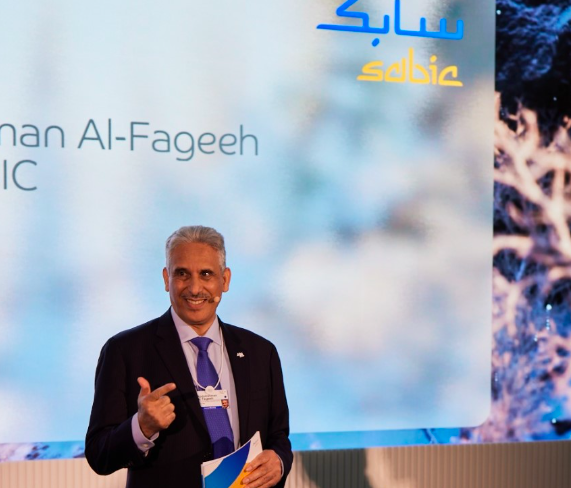
Abdulrahman Al-Fageeh, acting CEO of SABIC (Supplied)
Short Url
Updated 19 January 2023
Follow

SABIC pledges to process 1m metric tons through circular plastic initiative by 2030

RIYADH: Chemical company Saudi Basic Industries Corp. has reaffirmed its commitment to accelerating the circular carbon economy by announcing plans to process 1 million metric tons of plastics through its Trucircle solutions initiative. 

Abdulrahman Al-Fageeh, acting CEO of the firm – also known as SABIC – unveiled the ambition during the World Economic Forum Annual Meeting in Davos.

Trucircle is a portfolio of products offered by SABIC which include circular and bio-based products based on second and third-generation renewable feedstock, mechanically recycled polymers, ocean and ocean-bound recycled solutions, and closed-loop services and design for recyclability. 

“At SABIC, we are committed to helping provide our customers with more sustainable solutions, and our target of one million metric tons of Trucircle solutions by 2030 intends to help usher in the new circular economy,” said Al-Fageeh.   

He added: “Driving circularity for plastics will require a rapid transformation of the entire value chain, which is only possible through collective action, innovation, and collaboration across the industry and ecosystem of waste management. Therefore, we are working hard with downstream and upstream partners to accelerate this process.” 

SABIC pioneered the industry back in Davos in 2019 when it announced plans to build a world-first small-scale commercial unit to produce certified circular polymers from the advanced recycling of used plastics. 

Since then, the company has been employing existing facilities to process smaller volumes of advanced recycled materials for brand owners and customers for various applications already available in the market. 

Construction of the company’s first commercial unit in Geleen, the Netherlands, is now entering the final stages, and deliveries of the first circular polymers are expected in 2023. 

As a next step on the roadmap to meet its new 2030 target, SABIC will upscale volumes globally of advanced and mechanical recycling and bio-based materials.  

It also announced that it is exploring a new world-scale commercial advanced recycling investment that would have a potential capacity to process around 200 kilotons of circular materials per year, as well as other projects such as a small-scale advanced recycling plant in Saudi Arabia. 

Since 2020, SABIC’s certified circular polypropylene has been used in ice cream tubs from Unilever’s A-brand ice cream brand, Magnum, the first to use recycled plastic in the ice cream industry. In another successful collaboration, the chemical major teamed up with Mars and Landbell in an innovative closed-loop recycling project designed to close the loop on Kind snack bar wrap based on certified circular polypropylene.

Saudi ports brace for cargo surge as shipping lines reroute

Updated 09 March 2026
Follow

Saudi ports brace for cargo surge as shipping lines reroute

RIYADH: Preliminary estimates suggest that several global shipping lines could reroute part of their operations to Saudi Arabia’s Red Sea ports, potentially adding 250,000 containers and 70,000 vehicles per month, according to Rayan Qutub, head of the Logistics Council at the Jeddah Chamber of Commerce, in an interview with Al-Eqtisadiah.

“Any disruption in the Strait of Hormuz not only affects maritime traffic in the Arabian Gulf but could also reshape global trade routes,” Qutub said, highlighting the strait’s status as one of the world’s most critical maritime chokepoints for energy and goods transport.

With rising regional tensions, international shipping companies are reassessing their routes, adjusting shipping lines, or exploring alternative sea lanes. This signals that the current challenges extend beyond the Arabian Gulf, impacting the global supply chain as a whole.

Limited impact on US, European shipments

The effects of these developments will not be uniform across trade routes. Qutub noted that goods from China and India, which rely heavily on routes through the Arabian Gulf, are most vulnerable to disruption. In contrast, shipments from Europe and the US typically traverse western maritime routes via the Suez Canal and the Red Sea, making them less susceptible to regional disturbances.

Saudi Arabia’s strategic location, he emphasized, strengthens the resilience of regional trade. The Kingdom operates an integrated network of Red Sea ports — including Jeddah, Rabigh, Yanbu, and Neom — that have benefited from substantial infrastructure upgrades and technological enhancements in recent years, boosting their capacity to absorb increased cargo volumes.

Red Sea bookings

Several major carriers, including MSC, CMA CGM, and Maersk, have already opened bookings to Saudi Red Sea ports, signaling a shift in operational focus to these strategically positioned hubs.

However, Qutub warned that rerouted shipments could increase sailing times. Cargo from Asia, which normally takes 30-45 days, might now require longer voyages via the Cape of Good Hope and the Mediterranean, potentially extending transit to 60-75 days in some cases.

These changes are also reflected in rising shipping costs, driven by longer routes, higher fuel consumption, and increased insurance premiums — a typical response when global trade patterns shift due to geopolitical pressures.

Qutub emphasized that Saudi Arabia’s transport and logistics sector is managing these developments through coordinated government oversight. The Ministry of Transport and Logistics, the Logistics National Committee, and the Logistics Partnership Council recently convened to evaluate the impact on trade and supply chains. Regular weekly meetings have been established to monitor developments and implement solutions to safeguard the stability of supplies and continuity of trade.

He noted that the Kingdom’s logistical readiness is the result of long-term strategic investments, encompassing ports, airports, road networks, rail systems, and logistics zones. Today, Saudi logistics integrates maritime, land, rail, and air transport, enabling a resilient response to global disruptions.

Qutub also highlighted the need for the private sector to continuously review logistics and crisis management strategies, develop alternative plans, and manage strategic stockpiles. Such measures are essential to mitigate temporary fluctuations in global trade and ensure smooth supply chain operations.