Pakistani adventurist reaches UAE after exploring 45 countries on a bicycle

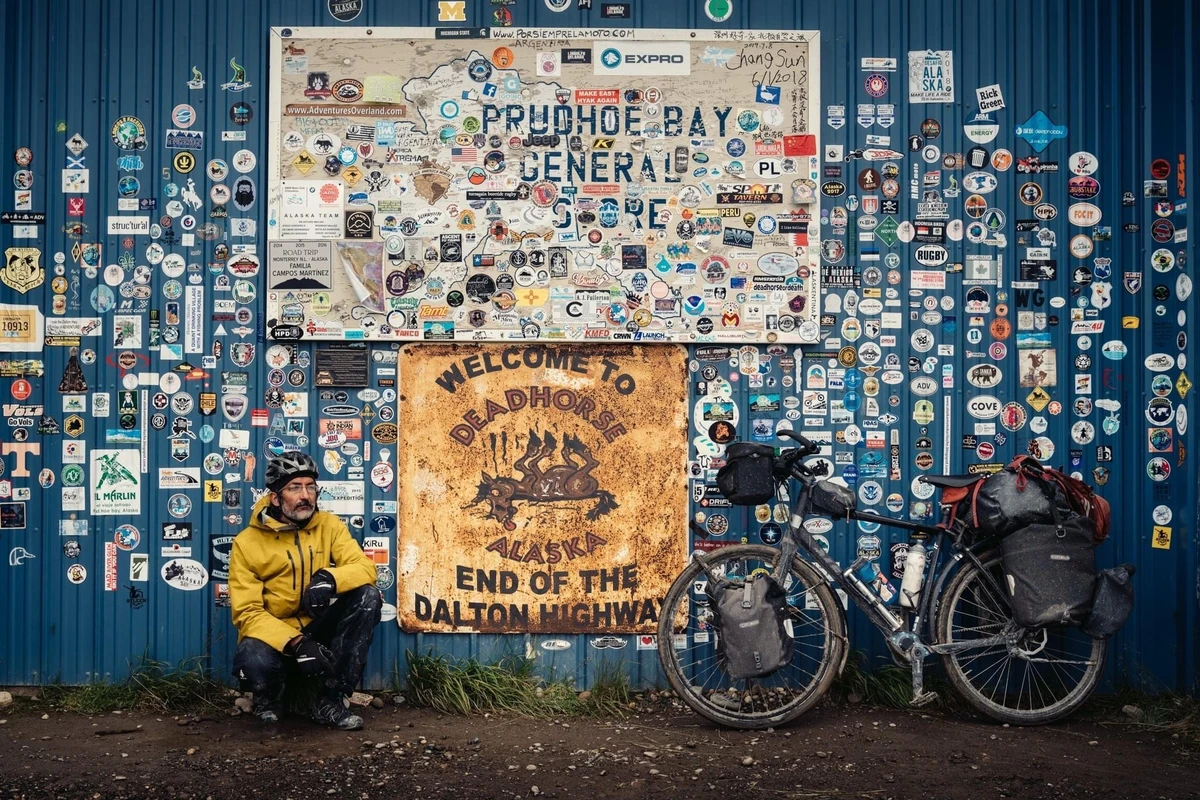
Kamran Ali, a Pakistani adventurer who travels internationally on his bicycle, upon reaching his destination in Alaska in 2019. Ali began the journey from Argentina four years ago. (Photo courtesy: Kamran Ali)
Short Url
Updated 16 January 2023
Follow

Pakistani adventurist reaches UAE after exploring 45 countries on a bicycle

  • Kamran Ali has covered about 50,000 kilometers on his trusted two-wheeler, is currently on his way to South Africa
  • Ali left his job as a software developer in Germany and decided to follow his passion to travel around the world on his bike

DUBAI: A Pakistani traveler and adventurer, Kamran Ali, entered the United Arab Emirates from Oman last week after exploring 45 countries across four continents on a bicycle in the last five years.

Born in Layyah, which is located in Punjab province, Ali has covered about 50,000 kilometers on his trusted two-wheeler and is currently on his way to South Africa.

Speaking to Arab News on Sunday, he said that his dream being up close with nature, people and diverse cultures took 13 years to come true.

“I used to bike my way to neighboring cities and my parents used to get furious,” he laughed while recalling his passion for cycling at an early age.



Kamran Ali, a Pakistani adventurer who travels internationally on his bicycle, is passing through Monument Valley in the United States in 2016 during his trip from Argentina to Alaska (Photo courtesy: Kamran Ali)

Ali finished his postgraduate studies in 2002 before deciding to go to Germany for higher education.

“I was on a plane from Islamabad to Frankfurt, and we must be flying over Eastern Turkiye, when the beauty of the landscape struck,” he recalled. “That’s when I made a secret pledge to myself to see all such places in the world from close by.”
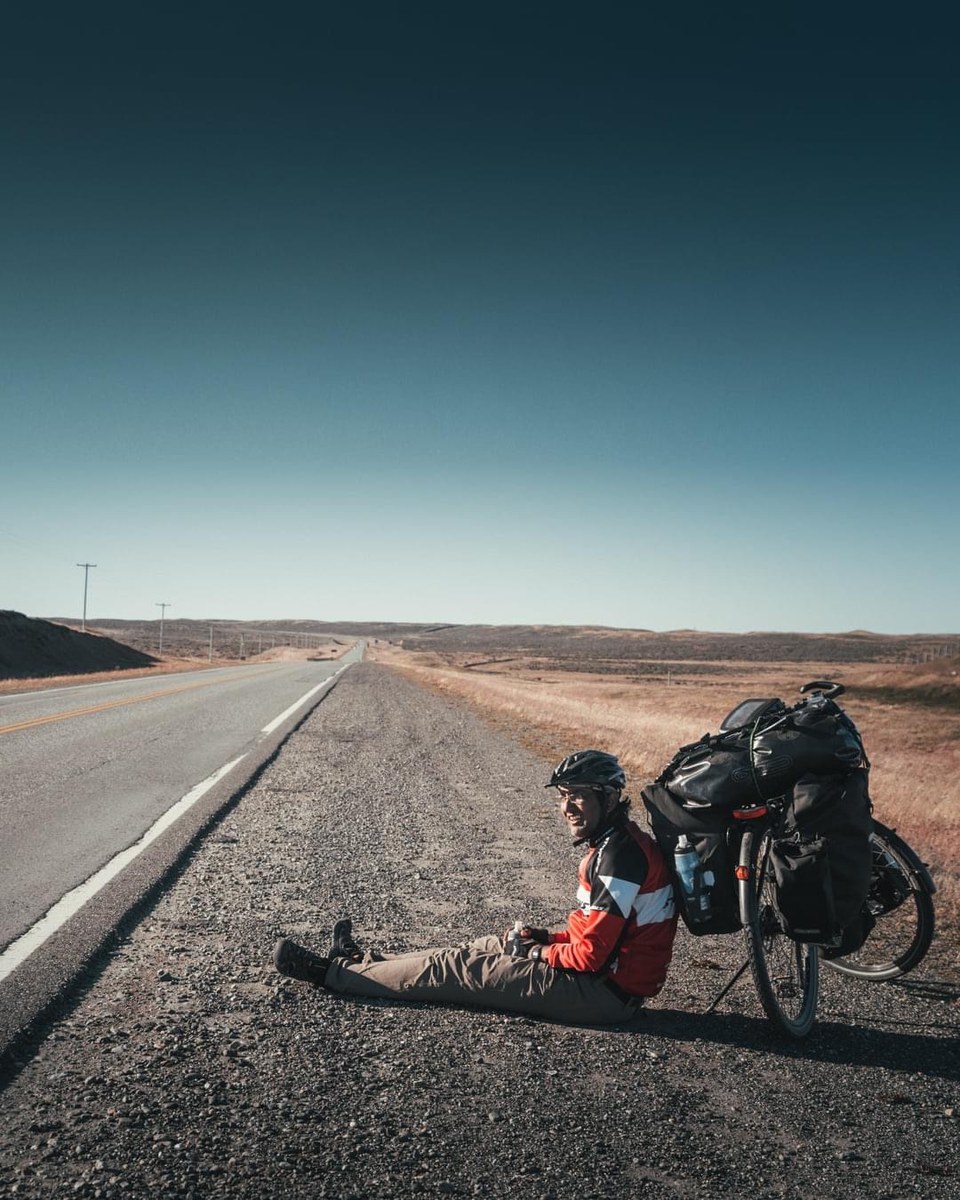


Kamran Ali, a Pakistani adventurer who travels internationally on his bicycle, while taking a breather in the initial days of his four-year-long journey from Argentina to Alaska. (Photo courtesy: Kamran Ali)

Years later, in 2011, he left his job in Germany as a software developer after doctorate and started the international bike tour to Pakistan from Rostock. However, he had to abandon the adventure trip within six months due to the tragic death of his mother.

In March 2015, Ali resumed his tour from where he had left off in Sivas, Turkiye, and covered 10,000 kilometers to reached Layyah in August that year.

“I still wanted to go on,” he said. “So I planned the longest trip ever from the tip of South America to the North Pole.”
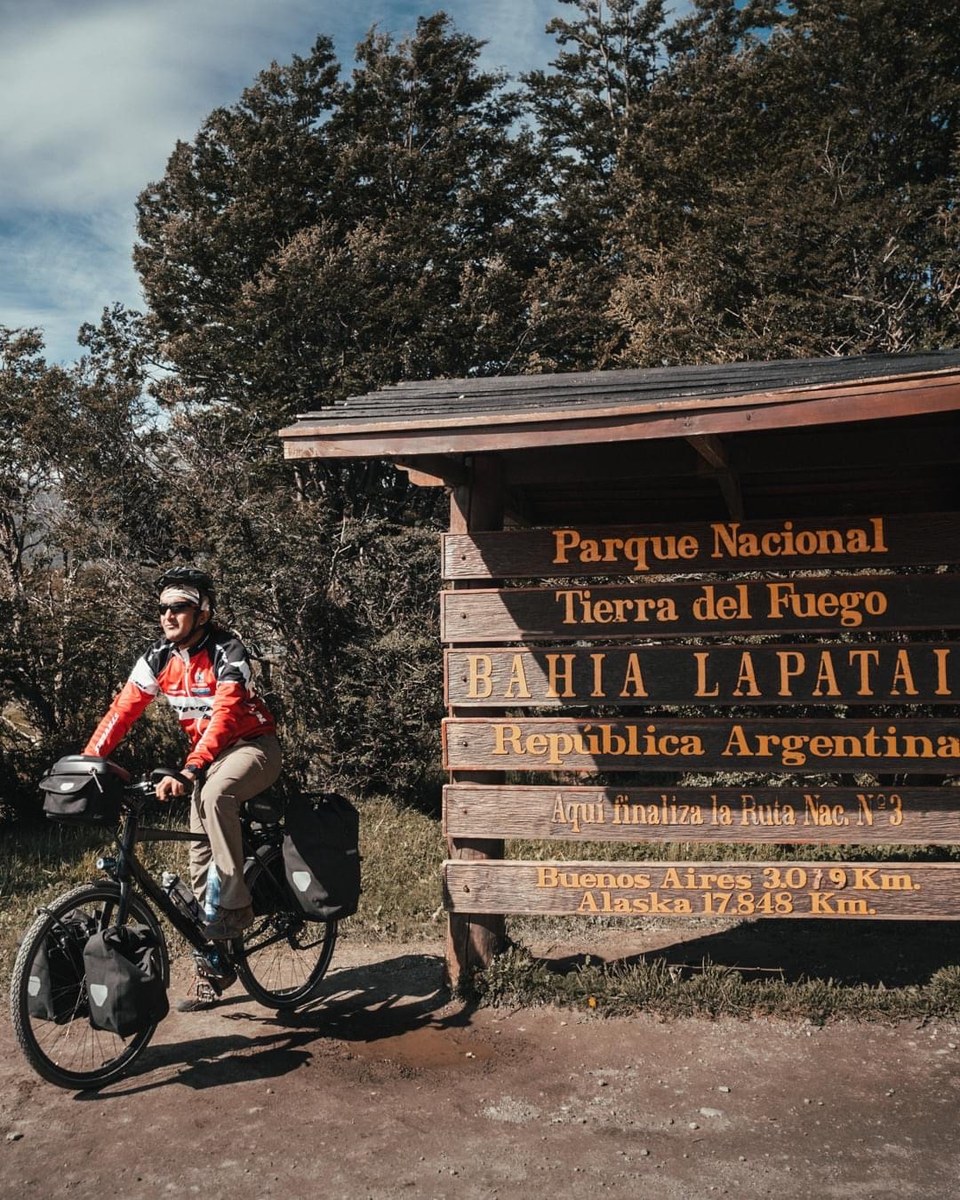


Kamran Ali, a Pakistani adventurer who travels internationally on his bicycle, at the start of his four-year-long trip from Argentina in South America to Alaska in 2016 (Photo courtesy: Kamran Ali)

He added he was the only Pakistani who had traveled the entire length of Americas on a bicycle. Ali said it took him four years to cover 33,100 kilometers from Ushuaia, Argentina, to Alaska in 2016.

A couple of weeks ago, the Pakistani adventurer started another tour – this time from the Middle East to South Africa. He started his journey from Muscat, Oman, in the beginning of January and reached Dubai in two weeks.

He now plans to go to Saudi Arabia, take a ferry to Sudan, and begin his journey through Ethiopia, Kenya, and Tanzania to reach South Africa.

“Cycling for me is no longer a hobby or sport or even an adventure,” Ali said. “It’s a way of life. My bicycle travels have taught me that the world could be a better place if people knew about each other a little more. Realizing that we are one can help us become more compassionate.”
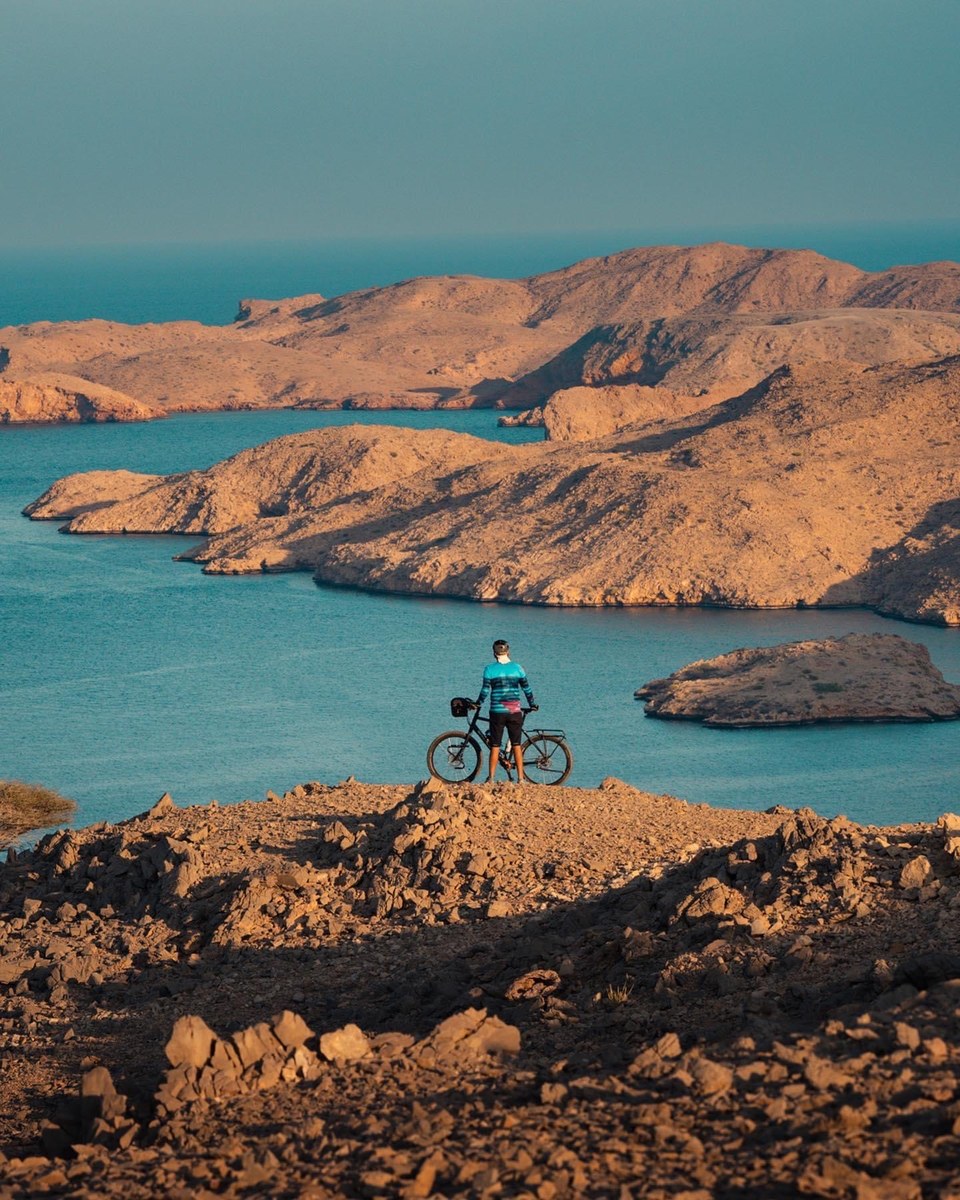


Kamran Ali, a Pakistani adventurer who travels internationally on his bicycle, can his seen in Muscat, Oman, earlier this year while beginning his tour to South Africa via Dubai (Photo courtesy: Kamran Ali)

Imbued with the spirit to travel to every corner of the world, he initially embarked on his international tours by using his savings. Things changed since then and now Ali tries to secure sponsorships by telling stories from around the world with colorful pictures, videos and writings.

As an avid photographer, he also displayed his photos at some local exhibitions.

“I’m pursuing my dream for a deeper satisfaction by connecting with places, listening to stories, and learning lessons while being on the road,” he said. “I have no intention of stopping until I’m forced to.”
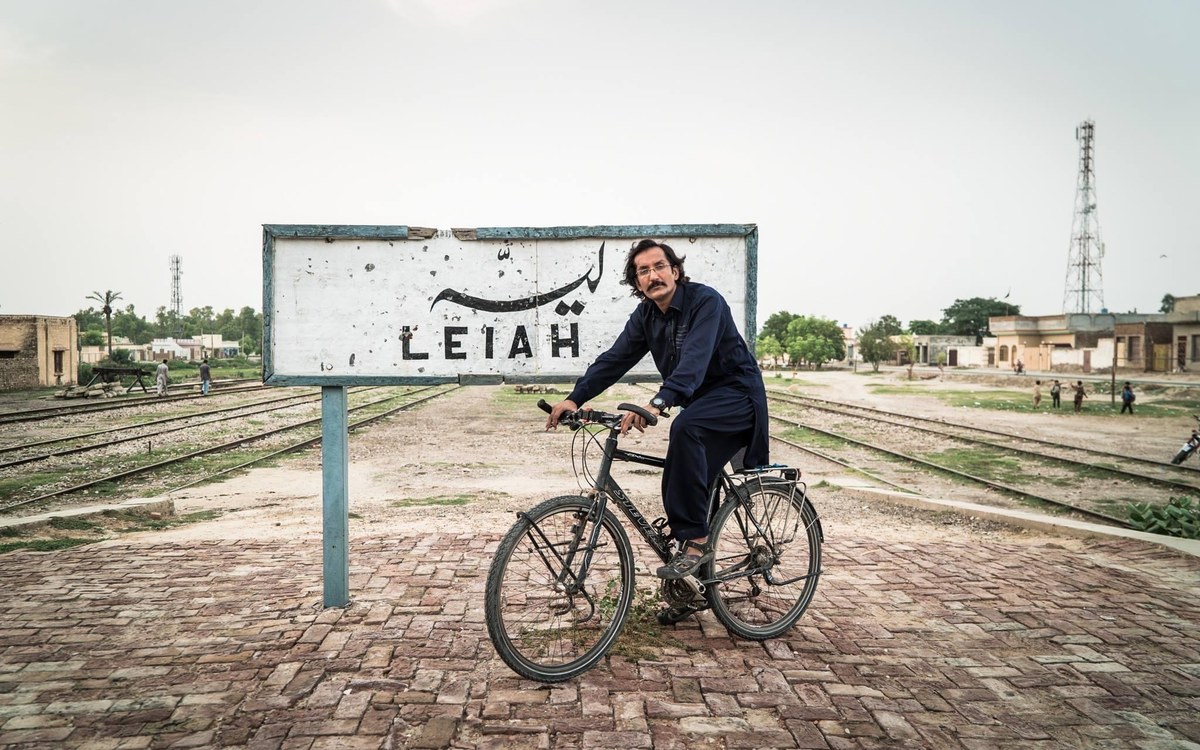

Kamran Ali, a Pakistani adventurer who travels internationally on his bicycle, can be seen at the railway station of his hometown, Layyah, in Pakistan in 2016. (Photo courtesy: Kamran Ali)


Pakistan, global crypto exchange discuss modernizing digital payments, creating job prospects 

Updated 05 December 2025
Follow

Pakistan, global crypto exchange discuss modernizing digital payments, creating job prospects 

  • Pakistani officials, Binance team discuss coordination between Islamabad, local banks and global exchanges
  • Pakistan has attempted to tap into growing crypto market to curb illicit transactions, improve oversight

ISLAMABAD: Pakistan’s finance officials and the team of a global cryptocurrency exchange on Friday held discussions aimed at modernizing the country’s digital payments system and building local talent pipelines to meet rising demand for blockchain and Web3 skills, the finance ministry said.

The development took place during a high-level meeting between Finance Minister Muhammad Aurangzeb, Pakistan Virtual Assets Regulatory Authority (PVARA) Chairman Bilal bin Saqib, domestic bank presidents and a Binance team led by Global CEO Richard Teng. The meeting was held to advance work on Pakistan’s National Digital Asset Framework, a regulatory setup to govern Pakistan’s digital assets.

Pakistan has been moving to regulate its fast-growing crypto and digital assets market by bringing virtual asset service providers (VASPs) under a formal licensing regime. Officials say the push is aimed at curbing illicit transactions, improving oversight, and encouraging innovation in blockchain-based financial services.

“Participants reviewed opportunities to modernize Pakistan’s digital payments landscape, noting that blockchain-based systems could significantly reduce costs from the country’s $38 billion annual remittance flows,” the finance ministry said in a statement. 

“Discussions also emphasized building local talent pipelines to meet rising global demand for blockchain and Web3 skills, creating high-value employment prospects for Pakistani youth.”

Blockchain is a type of digital database that is shared, transparent and tamper-resistant. Instead of being stored on one computer, the data is kept on a distributed network of computers, making it very hard to alter or hack.

Web3 refers to the next generation of the Internet built using blockchain, focusing on giving users more control over their data, identity and digital assets rather than big tech companies controlling it.

Participants of the meeting also discussed sovereign debt tokenization, which is the process of converting a country’s debt such as government bonds, into digital tokens on a blockchain, the ministry said. 

Aurangzeb called for close coordination between the government, domestic banks and global exchanges to modernize Pakistan’s payment landscape.

Participants of the meeting also discussed considering a “time-bound amnesty” to encourage users to move assets onto regulated platforms, stressing the need for stronger verifications and a risk-mitigation system.

Pakistan has attempted in recent months to tap into the country’s growing crypto market, crack down on money laundering and terror financing, and promote responsible innovation — a move analysts say could bring an estimated $25 billion in virtual assets into the tax net.

In September, Islamabad invited international crypto exchanges and other VASPs to apply for licenses to operate in the country, a step aimed at formalizing and regulating its fast-growing digital market.