

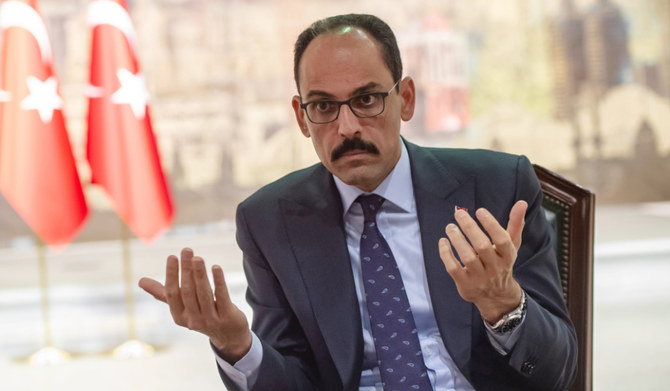

ISTANBUL: Turkiye said on Saturday it was “not in a position” to ratify Sweden’s NATO membership, despite a series of steps taken by Stockholm to meet Ankara’s demands.
“We are not in a position to send a (ratification) law to the parliament,” said President Recep Tayyip Erdogan’s foreign policy adviser Ibrahim Kalin.
Sweden and Finland are unlikely to be able to join NATO before June, said the senior Turkish official.
The Nordic states applied to join the Western military alliance in the wake of Russia’s invasion of Ukraine, but their membership must be approved by all 30 NATO states.
Only Turkiye and Hungary have yet to approve the deal, with Ankara linking accession to stricter counterterrorism measures.
“It really depends on how fast they move and how wide and deep they move on these issues,” said Kalin.
“What they’re telling us is the new laws will be fully effective and completed by June, but maybe there are some things they can do before,” Kalin said.
Turkiye has demanded that Sweden and Finland tighten laws to rein in the activities of supporters of the Kurdistan Workers’ Party, or PKK, and a group it blames for a 2016 coup attempt.
“In principle we would like to see them (Sweden and Finland) in NATO,” Kalin said in Istanbul.
“What they say is that they need a little bit more time. We told them ‘You have to meet these conditions,’ meaning that they have to send a serious message to the PKK.”
Ankara recognizes the Swedish and Finnish commitment to changing anti-terror laws in accordance with an agreement signed between the three countries at last June’s NATO summit, he added.
“Stockholm is fully committed to implementing the agreement that was signed last year in Madrid, but the country needs six more months to write new laws that would allow the judicial system to implement the new definitions of terrorism.”
The timetable for presidential and parliamentary elections in Turkiye could also play a role, Kalin said.
The polls are currently scheduled for June 18, but the timing of a religious holiday could see them brought forward a month. Any NATO deal must be ratified by parliament, which is likely to go into recess before the elections.
Officials from Turkiye, Sweden and Finland will meet in Brussels in February, but Kalin warned that incidents such as the hanging of an effigy of Erdogan in Stockholm on Wednesday could have a negative impact on negotiations.
“We believe in this process and we want to make progress, but if these incidents continue, it’s not going to look good on them and it will certainly affect the process — it will slow down progress,” he said.
Kalin also spoke about the war in Ukraine, and Turkiye’s rapprochement with Syria.
He defended Ankara’s decision not to join Western sanctions on Russia, pointing to the grain deal and prisoner exchanges as successes for its role as an intermediary.
Such “localized moments of de-escalation” would help bring an end to the war.
“If the goal (of sanctions) was to change Russian behavior and end the war, I don’t think that’s been achieved,” he said.
Referring to talks to normalize relations between Ankara and Damascus, Kalin said the initial meeting between the neighbors’ defense ministers at the end of December could be extended, with foreign ministers possibly meeting in February.
“We will see how these meetings go, what kind of outcomes they produce and then, depending on that, we will talk about a possible meeting at the level of the president,” he said.
Erdogan has been a bitter critic of Syrian President Bashar Assad since the outbreak of the civil war 11 years ago and has thrown his support behind opposition groups fighting for Assad’s overthrow.
The Turkish president, however, is under intense pressure at home to return Syrian refugees amid an economic crisis.


