

At Karachi food festival, an eatery from rival Lahore relishes visitors' taste buds

Customers wait for Tawa Chicken meal at Karachi Eat Festival on January 8, 2023. (AN photo)
Short Url
Updated 08 January 2023
Follow

At Karachi food festival, an eatery from rival Lahore relishes visitors' taste buds

  • Arif Chatkhara House has been offering 'tawa chicken' to foodies in Lahore for the last five decades
  • The eatery enticed large number of foodies at this year's Karachi Eat, who were all praise for its taste

KARACHI: While the response to this year's Karachi Eat was eminent, one particular food stall offering 'tawa chicken' remained the most favorite of foodies at the country’s biggest, three-day food festival. More importantly, the stall was set up by a famous eatery from the eastern city of Lahore, which has an age-old food rivalry with the southern port city.  

Karachi Eat is an annual food festival that has been taking place in the 'City of Lights' every year in January since 2014. The three-day festival features hundreds of eateries and offers a variety of cuisines to visitors. 

Zedan Baig, manager of the Lahore-based Arif Chatkhara House, said the eatery was offering scrumptious food to customers in Lahore for the last fifty years and received a huge response when they participated in Karachi Eat last year. 

“You’ll see more people at this stall than any other,” Abdullah Arif, a student standing in a queue in front of the Arif Chatkhara House stall, told Arab News.  

"Karachiites say that Karachi food is scrumptious, but it looks like the entire Karachi has come to this stall." 
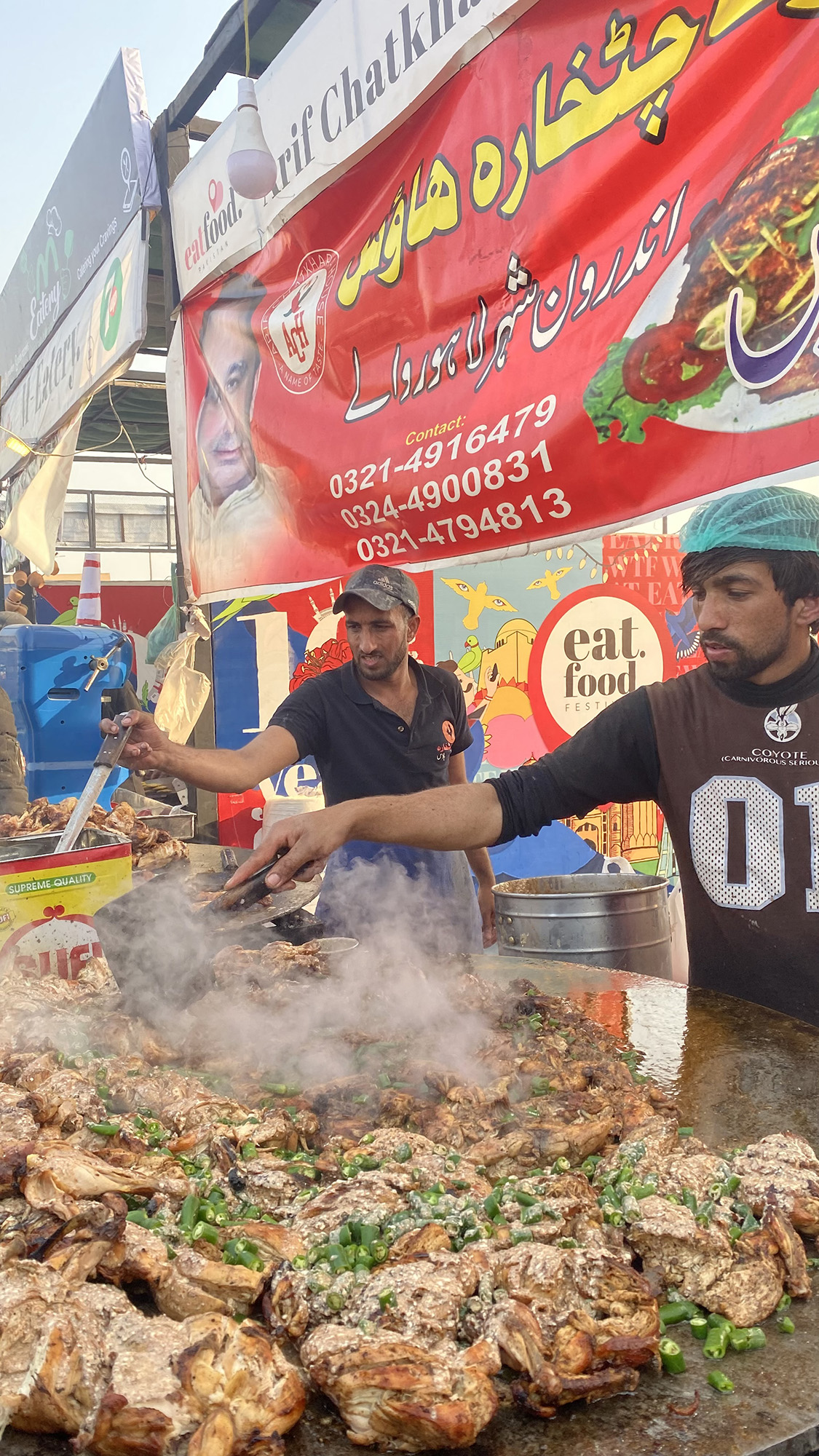


Chefs prepare Tawa Chicken at Arif Chatkhara House at Karachi Eat festival on January 8, 2023. (AN photo) 

Asma Waqar Ali, another visitor, believed the addition of green chilies gave a "very unique taste" to 'tawa chicken.'  

"And it was not overly spicy so you could taste all ingredients, they should open in Karachi," she told Arab News. 

When the festival was first launched almost a decade ago, most of the participants were restaurants, cafes and food joints from Karachi, which is known for its cultural and food diversity.  
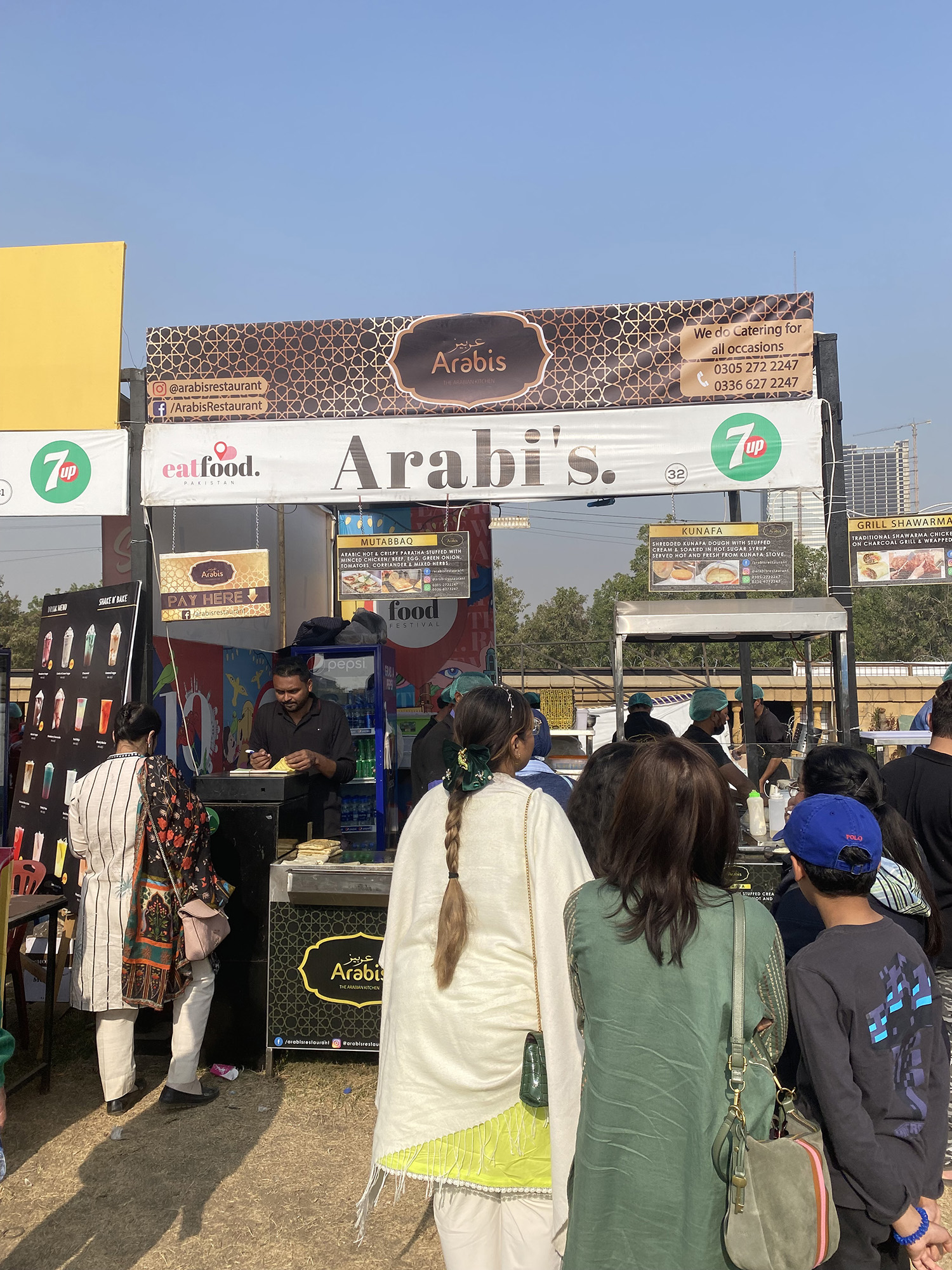


Customers wait for their meal at Arabi’s, a food stall offering Middle Eastern food at Karachi Eat festival on January 8, 2023. (AN photo)

This year, some of around 128 stalls offered few unique cuisines, such as a fisherwoman offering seafood at Mahigeer, Arabi’s Middle Eastern cuisines, while others boasting ‘chapli kebab’ and some South Indian delicacies.  

Arif Chatkhara House, however, had long queues of food lovers in front of it.  

“We have got customers with a background from Lahore, but majority are Karachiites and they like it,” Baig told Arab News. 
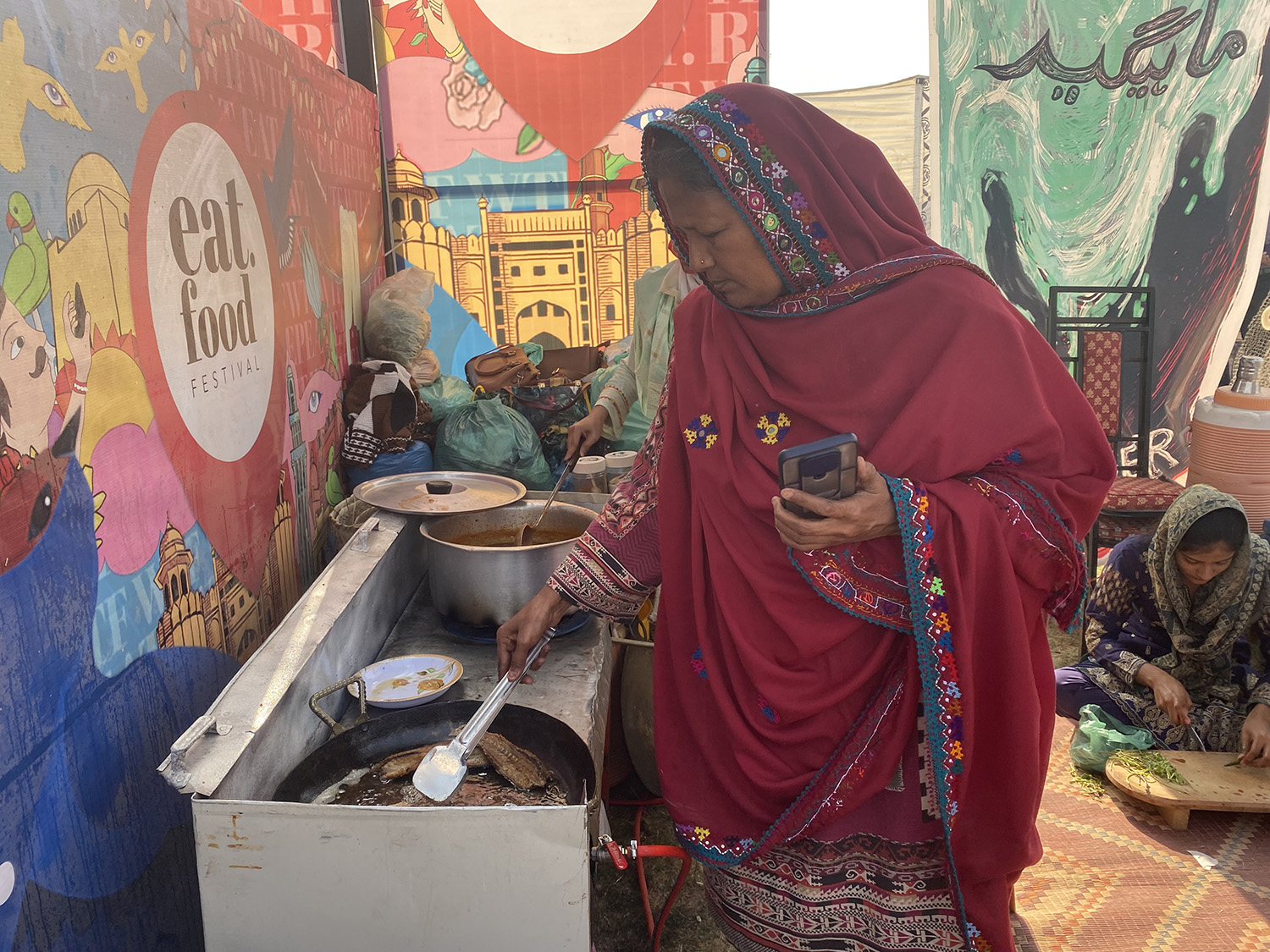


Fatima Majeed, a fisherwoman cooks fish and Prawn Karahi at her stall called Mahigeer (meaning FisherFolk) at Karachi Eat festival on January 8, 2023. (AN photo) 

Uzma Abid, a foodie from Karachi, said the quality of food offered by the Lahore eatery attracted her.  

“Extremely juicy, tender with the right kind of flavorful spices that are not overwhelming,” she said as she finished her meal.  

"Would love to have it in Karachi." 
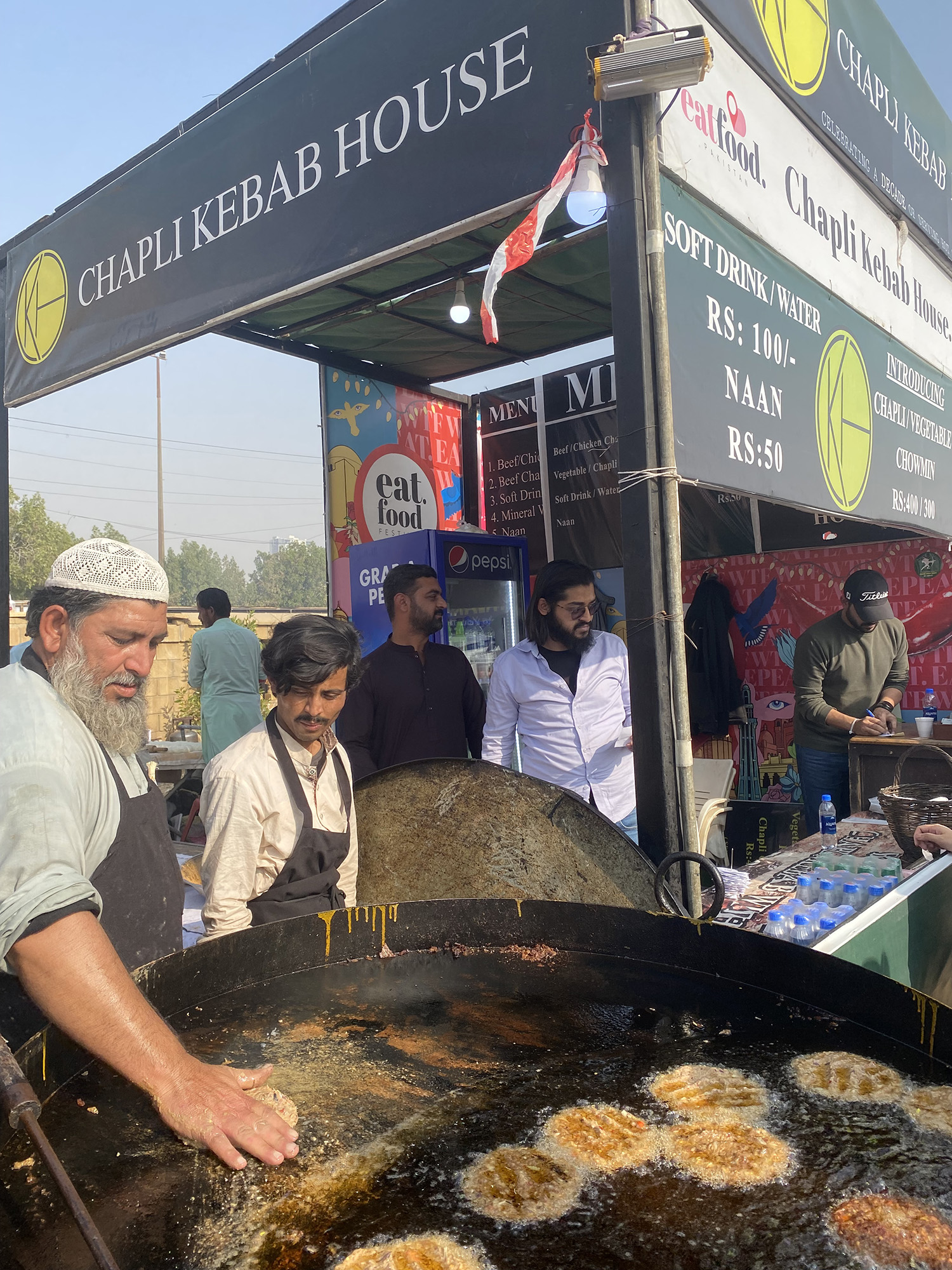


Chef makes Chapali Kabab at a stall at Karachi Eat festival on January 8, 2023. (AN photo) 

Sunil Kumar, a believer of Karachi’s supremacy in food, said he came to the stall after seeing long queues of visitors.  

“We are trying it for the first time. Let’s see if they satisfy our taste,” he said.  
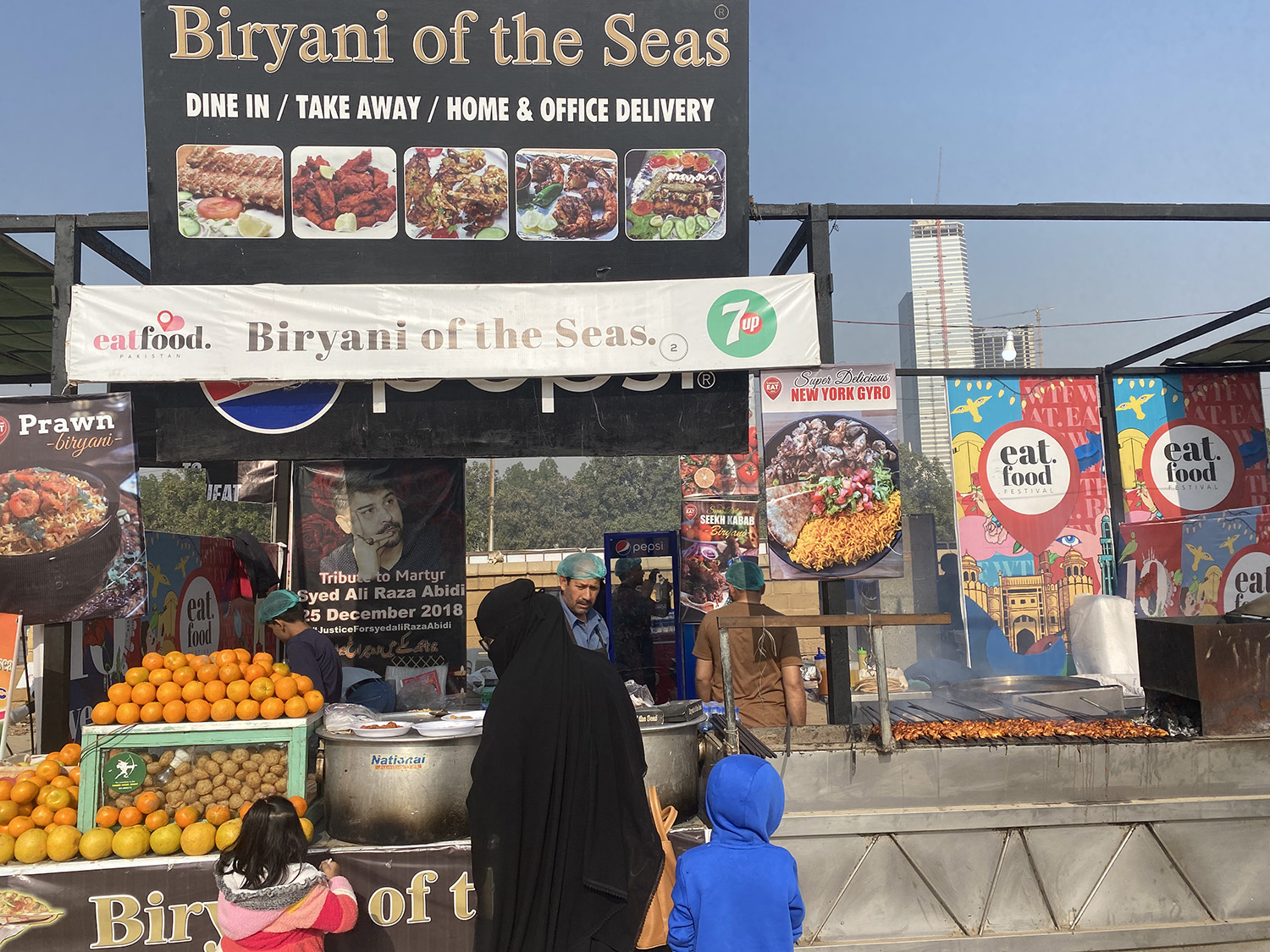


A stall offering Biryani at Karachi Eat festival on January 8, 2023. (AN photo)

Ahmer Naqvi, a culture and food writer, said the absence of local cuisines at the festival was offering a chance to food outlets from across the country to create a space for them.  

“Karachi Eat is a really unique festival because it celebrates what is good about Karachi, which is food, but it also creates a space for all these kinds of different new places to make a name for themselves,” he said.  

"Even places from other parts of the country are doing well because they are offering the kind of desi food, which some of the vendors may not be offering." 


Islamabad says surge in aircraft orders after India standoff could end IMF reliance

Updated 22 min 17 sec ago
Follow

Islamabad says surge in aircraft orders after India standoff could end IMF reliance

  • Pakistani jets came into the limelight after Islamabad claimed to have shot down six Indian aircraft during a standoff in May last year
  • Many countries have since stepped up engagement with Pakistan, while others have proposed learning from PAF’s multi-domain capabilities

ISLAMABAD: Defense Minister Khawaja Asif on Tuesday said Pakistan has witnessed a surge in aircraft orders after a four-day military standoff with India last year and, if materialized, they could end the country’s reliance on the International Monetary Fund (IMF).

The statement came hours after a high-level Bangladeshi defense delegation met Pakistan’s Air Chief Marshal Zaheer Ahmed Baber Sidhu to discuss a potential sale of JF-17 Thunder aircraft, a multi-role fighter jointly developed by China and Pakistan that has become the backbone of the Pakistan Air Force (PAF) over the past decade.

Fighter jets used by Pakistan came into the limelight after Islamabad claimed to have shot down six Indian aircraft, including French-made Rafale jets, during the military conflict with India in May last year. India acknowledged losses in the aerial combat but did not specify a number.

Many countries have since stepped up defense engagement with Pakistan, while delegations from multiple other nations have proposed learning from Pakistan Air Force’s multi-domain air warfare capabilities that successfully advanced Chinese military technology performs against Western hardware.

“Right now, the number of orders we are receiving after reaching this point is significant because our aircraft have been tested,” Defense Minister Asif told a Pakistan’s Geo News channel.

“We are receiving those orders, and it is possible that after six months we may not even need the IMF.”

Pakistan markets the Chinese co-developed JF-17 as a lower-cost multi-role fighter and has positioned itself as a supplier able to offer aircraft, training and maintenance outside Western supply chains.

“I am saying this to you with full confidence,” Asif continued. “If, after six months, all these orders materialize, we will not need the IMF.”

Pakistan has repeatedly turned to the IMF for financial assistance to stabilize its economy. These loans come with strict conditions including fiscal reforms, subsidy cuts and measures to increase revenue that Pakistan must implement to secure disbursements.

In Sept. 2024, the IMF approved a $7 billion bailout for Pakistan under its Extended Fund Facility (EFF) program and a separate $1.4 billion loan under its climate resilience fund in May 2025, aimed at strengthening the country’s economic and climate resilience.

Pakistan has long been striving to expand defense exports by leveraging its decades of counter-insurgency experience and a domestic industry that produces aircraft, armored vehicles, munitions and other equipment.

The South Asian country reached a deal worth over $4 billion to sell military equipment to the Libyan National Army, Reuters report last month, citing Pakistani officials. The deal, one of Pakistan’s largest-ever weapons sales, included the sale of 16 JF-17 fighter jets and 12 Super Mushak trainer aircraft for basic pilot training.