


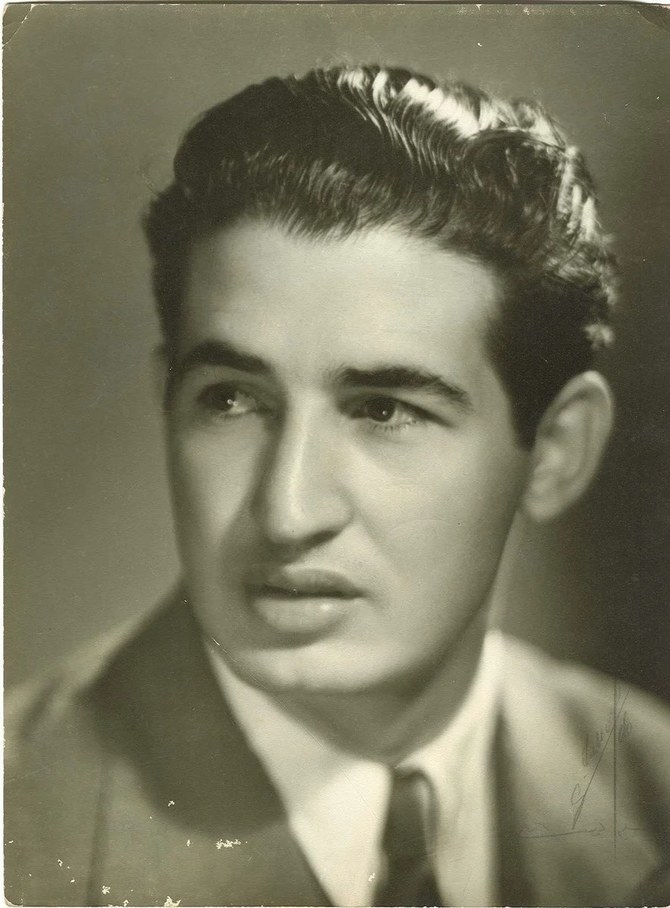

DUBAI: Google Doodle marked the life of Egyptian journalist and author, Ihsan Abdel Kouddous on Wednesday.
Falling days after his birthday, the doodle marks the first anniversary of the publication the first widespread English translation of Koddous’ book, I Do Not Sleep.
A popular Arabic publication which appealed to the massed across the globe when he wrote it in the 1950s, it wasn’t translated into English until much later because literary critics dismissed his simple, direct style.
Born in Cairo, Egypt, on Jan. 1, 1919, Kouddous developed a love for reading as a young child and began writing short stories and poems at age 11.
After graduating from law school, he worked as an apprentice lawyer while trying out a journalism career at a magazine founded by his mother, Rose Al-Yousef.
It was at the magazine that Kouddous realized his passion for journalism.
Kouddous covered a variety of news events as a journalist and in his popular column A Cafe on Politics Street, he wrote about social issues.
He even courted controversy, being jailed several times for his often controversial stance.
He worked his way up in his career to become an editor for Egypt’s daily Al-Akhbar newspaper and editor-in-chief for news outlet Al-Ahram.
Kouddous also wrote more than 60 novels and short stories, which carried common themes including love, politics, psychology of social behavior, spirituality, and religion.
He won several awards for his work including an Order of Merit of the First Class from the president, and shortly after his death in 1990, an Order of the Republic of the First Class.
His work was also known regularly featuring strong female characters that were central to many of his works suchas “I Am Free advocating for women’s equality and independence”.
Kouddous’ grandson, Sharif, described the author as a man remained as a “definitional presence” in his life.
“I remember his voice, his broad infectious smile, his undeniable charisma which infused any room he entered,” Sharif wrote in a family statement published on Google.
“As a journalist, essayist, and novelist,” he added.
“His impact is difficult to overstate. Anywhere I travel across the Arab world, from Egypt to Palestine, Iraq to Yemen, I am unfailingly greeted with warm embraces and open-eyes expressions of esteem when I am found to be related to THE Ihsan Abdel Kouddous.”
“He remains a towering figure in Egypt’s political, journalistic and literary history, one with a particular flair for the memorable quote. Among my favorites: ‘Culture represents a kind of will, the will of rebellion.’”
Kouddous died on Jan. 12, 1990, in Cairo, he was 71-years-old.


