Saudi private sector to drive water industry growth as Kingdom ups desalination capacity 

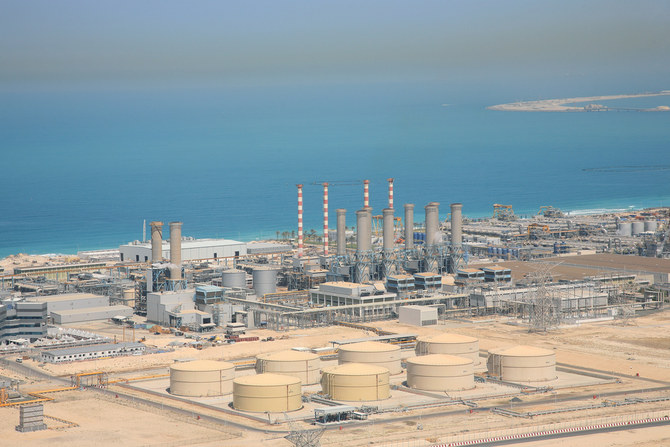
The Kingdom is investing greatly in wastewater treatment infrastructure to allow the recycling and reuse of water. (Shutterstock)
Short Url
Updated 03 January 2023
Follow

Saudi private sector to drive water industry growth as Kingdom ups desalination capacity 

RIYADH: Saud Arabia has been recognized as a water sector growth hotspot on the back of its considerable private sector opportunities, according to a report released ahead of the World Future Energy Summit, to be held from Jan. 16-18 in Abu Dhabi. 

With a focus on the Kingdom, the business event for future energy and sustainability is set to discuss desalination, wastewater treatment and digitization as key growth opportunities for the Middle East’s water sector.   

As Saudi Arabia is addressing the increasing water demand caused by economic diversification, population growth and urbanization, the report highlights the Kingdom’s potential to drive private sector growth in the water sector.  

The Kingdom is investing greatly in wastewater treatment infrastructure to allow the recycling and reuse of water.   

Desalination capacity is expected to increase to 7.5 million cubic meters per day by 2027 in the Kingdom, up from its current capacity of just over 3 million cubic meters daily.   

The Saudi government is also investing in 147 sewage treatment plants all around the country, as well as almost 15,000 km of wastewater collection networks.  

The World Future Energy Summit report also highlighted the UAE and Türkiye for effectively reusing water.   

The report identifies the UAE’s strong water sector project pipeline and its support of the country’s long-term growth.   

Investments worth $2.8 billion are expected to take place in the desalination segment as the region advances to achieve treated water reuse to 95 percent, the report added.   

As for Türkiye, its struggle with water stress from ineffective water usage is expected to drive demand for water and wastewater treatment products and systems forward.   

“Demand for recycling systems based on ZLD and RO technologies is predicted to meet the country’s development plan target of boosting wastewater reuse to 5 percent by the end of 2023,” stated the report.   

With Vision 2030 at the heart of its growth, Saudi Arabia is targeting to increase the private sector’s contribution to the gross domestic product from 40 percent to 65 percent by 2030.   

The operating revenues of the business sector in Saudi Arabia during 2022 alone surpassed SR4 trillion ($1 trillion), according to official data released by the General Authority for Statistics.   

GASTAT data further revealed that the highest revenue-generating activities were registered in manufacturing, mining and quarrying, as well as wholesale and retail trade.   

Compared to 2021, operating revenues of business establishments rose substantially, supported by an increase in many economic activities, reaching 26 percent.  


KAIA records busiest week with new operational records

Updated 7 sec ago
Follow

KAIA records busiest week with new operational records

JEDDAH: King Abdulaziz International Airport started 2026 on a strong note, handling 5.45 million passengers in January, a 7.3 percent increase over the same month last year.

Flight movements reached 29,200, up 11 percent, while total baggage throughput rose 8 percent to 6.6 million items.

The airport recorded its busiest operational week from Jan. 11 to 17, serving 1.28 million travelers.

Passenger numbers peaked on Jan. 17, marking the airport’s busiest day ever with 195,300 travelers and 1,089 flights, underscoring the efficiency of its operations and the capacity of its infrastructure to accommodate growing travel demand.

These results reflect Jeddah Airports Co.’s ongoing efforts to enhance the passenger experience, expand travel options, and manage rising air traffic in line with the National Aviation Program and Saudi Vision 2030.

Since its establishment in 2022, the company, known as JEDCO, has overseen the management and operations of KAIA, driving the implementation of the Aviation Program under the National Transport and Logistics Strategy.

In 2025, the airport reached a historic milestone, welcoming 53.4 million passengers, the highest annual total ever recorded at a Saudi airport, placing it among the world’s mega airports in terms of traffic.

The airport handled a total of 310,000 flights and 60.4 million bags, representing a 12 percent increase compared to 2024. It also handled 9.57 million Zamzam water containers and 2,968 cargo flights.

This achievement reflects the airport’s qualitative transformation and its position as a regional hub and national gateway connecting the Kingdom to the world. It also highlights its role in facilitating the movement of visitors and pilgrims, promoting tourism in line with the goals of Vision 2030, diversifying the economy, and providing a distinguished travel experience.

The January milestone at KAIA is part of a broader success story for Saudi airports, with 2025 statistics showing unprecedented growth in the Kingdom’s air traffic, surpassing regional averages and cementing Saudi Arabia’s status as one of the world’s fastest-growing and most advanced aviation markets.

Passenger numbers rose 9.6 percent, fueled by tourism, international events, and expanding global connectivity.

This growth reflected both increased capacity and enhanced connectivity, with Saudi airports handling approximately 140.9 million passengers, 76 million international and 65 million domestic passengers. Flight movements rose 8.3 percent to around 980,400, highlighting the sector’s sustained recovery.

KAIA accounted for 38 percent of total passenger traffic, averaging 146,000 passengers daily and operating at 107 percent of capacity. King Khalid International Airport handled 29 percent of passengers, with a daily average of 112,000. Madinah and Dammam airports also recorded historic surges, operating at 137 percent and 112 percent of capacity, respectively.