

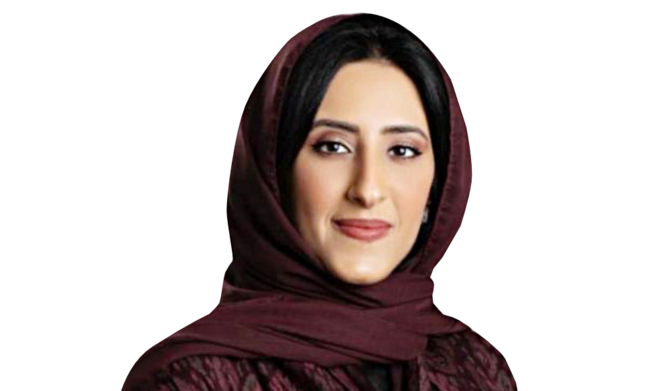
Who’s Who: Muneera Al-Dossary, head of asset management at ANB Capital

Muneera Al-Dossary
Short Url
Updated 02 January 2023
Follow

Who’s Who: Muneera Al-Dossary, head of asset management at ANB Capital

Muneera Al-Dossary has been the head of asset management at ANB Capital since June 2022.

She is also the chairperson of the Capital Market Institutions Committee, and a board member of the Tadawul-listed Saudi Industrial Services Co.

With more than 18 years of experience in the banking and investment industry, she specializes in asset management. She managed more than SR30 billion in assets under management and discretionary portfolio management for many clients, including sovereign wealth funds locally and internationally with a diverse product range in public and private equity, and real estate investments.

From April 2021 to May 2022, she was head of asset management and chief investment officer at HSBC.

Prior to that she held the position of chief executive officer at Mulkia Investment, a Saudi closed joint stock company headquartered in Riyadh with a share capital of SR65 million ($17.3 million).

Al-Dossary worked as head of equities at financial services provider Saudi Fransi Capital from January 2017 to January 2018. SFC is the investment arm of Banque Saudi Fransi, trademarked with a paid-up capital of SR500 million and licensed by the Capital Market Authority.

She first joined SFC as manager of Saudi equity funds in April 2011, staying in the post until January 2018. She was an assistant fund manager at Credit Agricole Asset Management in January 2008 and assistant fund manager at Banque Saudi Fransi in 2007.

Al-Dossary gained a bachelor’s degree in business from the Arab Open University, and a banking diploma from the Institute of Public Administration.


Hail’s Madafa guesthouses open doors to friends and strangers throughout Ramadan

Updated 20 sec ago
Follow

Hail’s Madafa guesthouses open doors to friends and strangers throughout Ramadan

  • There are many madafas in Hail, which is the home of Hatem Al-Tai, the historical ruler of the area whose name has become a byword in Arabic for generosity
  • Events held during the month include group iftar dinners, guest speakers who talk about Ramadan values, prayer sessions, and various charitable initiatives

RIYADH: Madafas, or guesthouses, in the northern Saudi city of Hail begin to welcome visitors of all ages and walks of life after Isha prayer during Ramadan.

Many of them may not even be invited, yet they attend knowing that the host’s doors are open to everyone.

There are many madafas in Hail, which is the home of Hatem Al-Tai, the historical ruler of the area whose name has become a byword in Arabic for generosity.

Among the most prominent of them are the madafas of Al-Na’am and Al-Ebedah.

The gate of the madafa is typically large and remains open most hours of the day, except during Ramadan when it opens just before the Maghrib afternoon prayer and remains open until the Fajr prayer in the early hours of the morning.

Supervisor Mohammed Al-Na’am spoke to Arab News about his preparations for hosting guests during the holy month.

He has set up soft lighting and a special corner for the Qur’an and Dhikr (remembrance) so that the madafa is perfectly prepared to offer comfort and tranquility, welcoming guests into a distinctive Ramadan atmosphere.

He believes that the madafa contributes to promoting a spirit of solidarity by being open to everyone without discrimination and encouraging simple initiatives such as donating, helping those in need or adopting a collective charitable cause.

Events held during the month include group iftar dinners, guest speakers who talk about Ramadan values, prayer sessions, and various charitable initiatives.

When the weather is mild, guests sit in the courtyard around the fire on wooden chairs adorned with traditional cotton-stuffed fabric.

In cases of extreme cold or hot weather, guests sit on floor cushions inside a richly-decorated majlis or a large tent.

The guest usually eats one or two dates, after which the coffee server approaches, offering a cup of coffee filled enough for about three sips.

It is considered rude for a guest to refuse coffee, and it is socially unacceptable to stop after just one cup.

Guests must drink at least two cups, and when they have finished, they shake the cup to indicate that they have had enough.

If the visitor is a stranger to the host’s family, the host will insist that they drink more coffee, and the guest has the choice to accept or decline.

The coffee maker then returns to his secluded spot at the end of the majlis behind several coffee pots, teapots, and at least one plate of dates.

He then returns carrying the teapot and an empty teacup until he approaches the guest, allowing the guest to refuse the tea or remain silent, indicating his agreement to drink the tea.

The walls of the madafa are usually decorated with pictures of the host’s ancestors, and the hall is usually decorated with motifs reflecting the local Hail character.

Those present make sure that the guest, especially a stranger, sits next to the marka or armrest so he may recline comfortably.

During Ramadan, it is customary for the conversation to focus on spiritual topics, charity, and stories of patience and concern for the poor, the needy and those who are struggling to pay their debts.