

UK ‘red tape’ is putting former British Council staff in Afghanistan at risk: British MPs

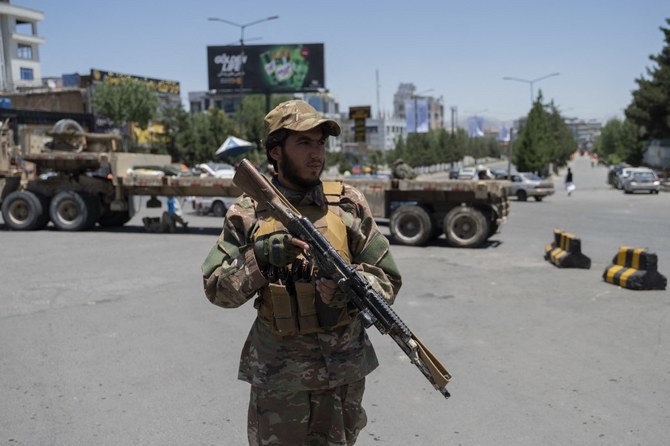
A Taliban fighter stands guard along a blocked street ahead of the council meeting of tribal and religious leaders in Kabul. (File/AFP)
Short Url
Updated 26 December 2022
Follow

UK ‘red tape’ is putting former British Council staff in Afghanistan at risk: British MPs

  • Referring to the Afghan Citizens Resettlement Scheme, Baron claimed that “not a single contractor has been assisted out of Afghanistan via this scheme”

LONDON: A cross-party group of British MPs warned on Monday that former British Council staff and their families in Afghanistan are at risk because of a “blockage of red tape” preventing them from returning to the UK.

Conservative MP John Baron spearheaded the appeal to British Foreign Secretary James Cleverly to ensure the country repays the “debt of gratitude and honor” to the 200 British Council contractors and their families. 

“People’s lives are at risk,” said Baron. “For more than 16 months since Operation Pitting and the fall of Kabul, there remain around 200 British Council contractors and their families stuck in Afghanistan.”

Referring to the Afghan Citizens Resettlement Scheme, Baron claimed that “not a single contractor has been assisted out of Afghanistan via this scheme.”

ACRS is one of two resettlement plans available to Afghan citizens who worked for the British government. The second one is known as the Afghan Relocation and Assistance Policy. 

In a letter signed by more than two dozen MPs and peers, Cleverly was told that GardaWorld contractors who offered protection to the British Embassy in Kabul were treated similarly. 

“Until this blockage of red tape is solved, the contractors and their families will remain in danger,” the letter reads. 

“No one questions that security checks are necessary, but they must be urgently completed so that the work of getting the contractors, to whom we owe a debt of gratitude and honor, can begin the active work of leaving Afghanistan and traveling to the UK.”

In response to the letter, a British government spokesperson said: “We have brought around 23,000 people to safety, including over 6,300 vulnerable Afghan nationals through the first pathway of the Afghan Citizens Resettlement Scheme, and a further 1,500 eligible people are due to be offered resettlement places under pathway 3.

“Supporting the resettlement of eligible Afghans remains a top priority and we continue to work with like-minded partners and countries neighboring Afghanistan to support their safe passage.”


UK upper house approves social media ban for under-16s

Updated 4 sec ago
Follow

UK upper house approves social media ban for under-16s

LONDON: Britain’s upper house of parliament voted Wednesday in favor of banning under?16s from using social media, raising pressure on the government to match a similar ban passed in Australia.
Prime Minister Keir Starmer said Monday he was not ruling out any options and pledged action to protect children, but his government wants to wait for the results of a consultation due this summer before legislating.
Calls have risen across the opposition and within the governing Labour party for the UK to follow Australia, where under-16s have been barred from social media applications since December 10.
The amendment from opposition Conservative lawmaker John Nash passed with 261 votes to 150 in the House of Lords, co?sponsored by a Labour and a Liberal Democrat peer.
“Tonight, peers put our children’s future first,” Nash said. “This vote begins the process of stopping the catastrophic harm that social media is inflicting on a generation.”
Before the vote, Downing Street said the government would not accept the amendment, which now goes to the Labour-controlled lower House of Commons. More than 60 Labour MPs have urged Starmer to back a ban.
Public figures including actor Hugh Grant urged the government to back the proposal, saying parents alone cannot counter social media harms.
Some child-protection groups warn a ban would create a false sense of security.
A YouGov poll in December found 74 percent of Britons supported a ban. The Online Safety Act requires secure age?verification for harmful content.