Second batch of new Saudi oil derivatives grant arrives in Yemen’s Al-Mahra

1 / 5
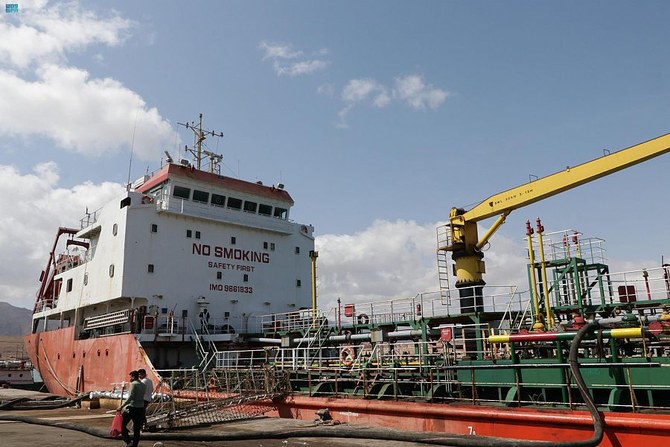
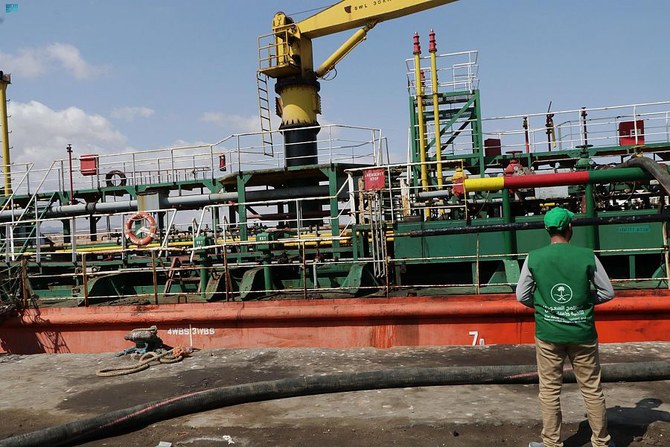
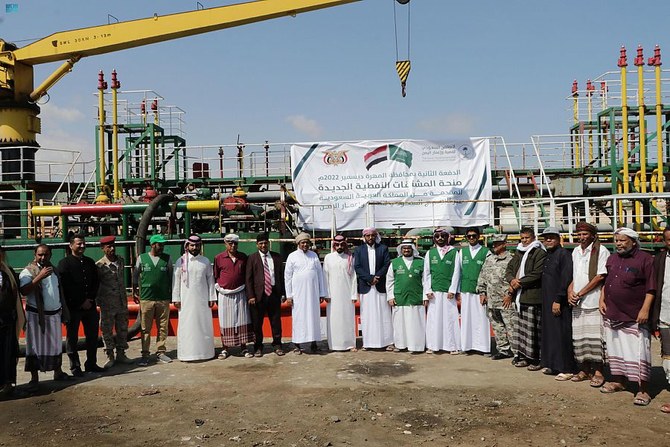
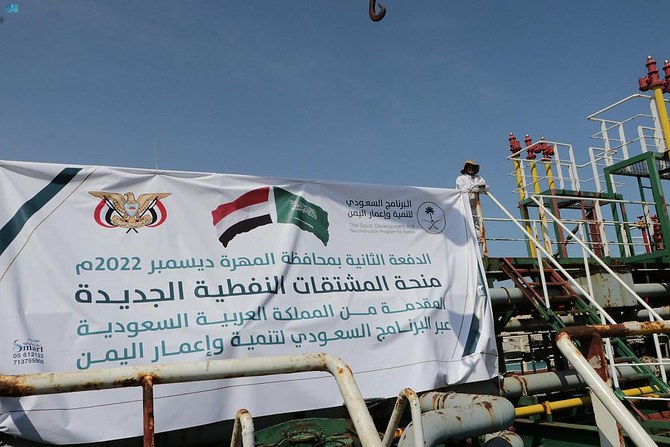
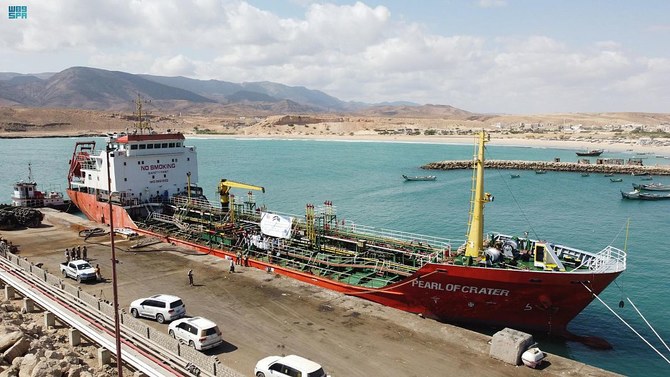
The Saudi Development and Reconstruction Program for Yemen delivers new batch of oil derivatives to Al-Mahra. (SPA)
2 / 5
The Saudi Development and Reconstruction Program for Yemen delivers new batch of oil derivatives to Al-Mahra. (SPA)
3 / 5
The Saudi Development and Reconstruction Program for Yemen delivers new batch of oil derivatives to Al-Mahra. (SPA)
4 / 5
The Saudi Development and Reconstruction Program for Yemen delivers new batch of oil derivatives to Al-Mahra. (SPA)
5 / 5
The Saudi Development and Reconstruction Program for Yemen delivers new batch of oil derivatives to Al-Mahra. (SPA)
Short Url
Updated 25 December 2022
Follow

Second batch of new Saudi oil derivatives grant arrives in Yemen’s Al-Mahra

RIYADH: The second batch of a new Saudi oil derivatives grant has been delivered to Al-Mahra in Yemen, the Saudi Development and Reconstruction Program for Yemen announced on Saturday.

The grant, which included 4,491,000 liters of diesel, comes as part of the Kingdom’s support for the Yemeni people, under the directives of King Salman and Crown Prince Mohammed bin Salman, to help provide oil derivatives to operate more than 70 power plants, the official Saudi Press Agency reported.

“It also comes as an affirmation of the Kingdom’s keenness to achieve security, stability and development for the Yemeni people, the latest of which was a grant of $422 million and was completed over a full year,” the SPA statement said.

That contributed toward economic stability, strengthening the Yemeni government’s budget, raising the purchasing power of citizens, improving the security situation and the service sector, and increasing the average daily operational hours of power stations.

The previous oil derivatives grant provided by the SDRPY contributed to doubling the production capacity and reaching the 3,119 gigawatt-hours target during the stations’ operating periods.

It also helped cover the needs of power stations in Yemen, and increased the percentage of electric power sales by 20 percent compared to previous years, while the total increase in collection amounted to 41 percent compared to previous years.

It also contributed to limiting the depletion of the Central Bank of Yemen in foreign currency reserves to purchase oil derivatives to generate electricity from global markets, by reducing fuel selling prices from international prices for electricity generation by 79 percent for diesel fuel, and 94 percent for kerosene.

Moreover, the previous oil derivatives grant provided electric power to the 760,000 subscribers of the General Electricity Corp., with an average consumption of 37 kilowatt-hours per subscriber, benefiting 9,800,000 people.

The new Saudi oil derivatives grant will contribute to operating 70 power plants that directly operate hospitals, medical centers, roads, schools, government facilities, airports and ports.

It will also enhance commercial and economic movement, which contributes to improving all aspects of life throughout Yemen.

The Saudi oil derivatives grant is part of the support provided by the SDRPY, which has offered 224 development projects and initiatives across Yemeni governorates to serve citizens in seven main sectors, including education, health, water, energy, transport, agriculture and fishing.

It also aims to build the capacity of government institutions, in addition to helping aid other development programs.


Klija Festival in Buraidah empowers small businesses

Updated 24 January 2026
Follow

Klija Festival in Buraidah empowers small businesses

  • Half a million attend 15-day celebration of heritage; event creates 1,500 seasonal jobs

RIYADH: The 17th Klija Festival in Buraidah drew more than half a million visitors during its 15-day run, celebrating the region’s heritage and entrepreneurial spirit.

Organized by the Qassim Chamber of Commerce, the event highlighted small businesses, providing a platform for entrepreneurs to showcase local products.

More than 340 sales outlets, marketing corners and points of sale welcomed attendees, while the festival provided 1,500 seasonal job opportunities, the Saudi Press Agency reported.

The small business pavilions featured families in the cottage industry, artisans and startups presenting traditional foods, and handicrafts and heritage items that reflect the region’s identity.

Participants said that the festival was a key marketing platform, boosting sales, increasing brand awareness, facilitating knowledge exchange and fostering connections with organizations supporting SMEs.

Mohammed Al-Hanaya, Qassim Chamber secretary-general and festival supervisor, said that the event brought together families, artisans, SMEs, companies and institutions, stimulating commercial activity, opening direct marketing channels and enhancing economic returns.

He added that the festival provided seasonal jobs for more than 1,500 young men and women across operations, marketing and services, supporting the labor market, empowering national talent, and connecting youth to the events and creative economy.

Klija, a traditional cookie made from wheat flour, dates or sugar, date syrup and natural ingredients such as cardamom and lemon, is a rich source of energy, carbohydrates, dietary fiber and natural proteins.

A cultural icon rooted in Qassim’s traditions, the cookie has gained international exposure through the festival, expanding the availability of packaged products.

Starting next year, the festival will be renamed the International Klija Festival, a rebranding approved by Qassim Gov. Prince Faisal bin Mishaal, who described it as a “successful model for turning local initiatives into global economic engines.”

This year’s festival, held at the King Khalid Cultural Center, included international participants from Egypt, Turkiye and Morocco, marking its evolution into a cross-cultural platform.