Saudi library exhibits ancient Islamic coins, manuscripts in Morocco

1 / 4
The exhibition contains around 50 rare coins from across the islamic world, including gold and silver coins. (Supplied)
2 / 4
The exhibition contains around 50 rare coins from across the islamic world, including gold and silver coins. (Supplied)
3 / 4
The exhibition contains around 50 rare coins from across the islamic world, including gold and silver coins. (Supplied)
4 / 4
The exhibition contains around 50 rare coins from across the islamic world, including gold and silver coins. (Supplied)
Short Url
Updated 23 December 2022
Follow

Saudi library exhibits ancient Islamic coins, manuscripts in Morocco

  • The exhibition contains around 50 rare coins from across the Islamic world, including gold, silver, and bronze coins that date back to the Umayyad, Abbasid, Andalusian, Fatimid, Ayyubid, Atabeg, Seljuk, and Mamluk eras

JEDDAH: Saudi Arabia’s King Abdulaziz Public Library (KAPL) launched a four-day exhibition of Islamic coins and manuscripts on Wednesday, on the sidelines of a ministerial meeting of the Islamic World Educational, Scientific, and Cultural Organization in the Moroccan capital of Rabat.

The exhibition is being staged in partnership with the Saudi Libraries Authority, the National Committee for Education, Science and Culture, and ICESCO.  

The exhibition, patronized by Saudi Minister of Culture and NCESC chairman Prince Badr bin Abdullah bin Farhan, was inaugurated by Dr. Salem bin Mohammed Al-Malik, ICESCO director general. The ceremony was attended by 58 heads of delegations from Islamic countries participating in the ICESCO meeting.

KAPL director Dr. Bandar Al-Mubarak said that the library is exhibiting its “most important manuscripts and coins, revealing aspects of the ancient history of many Islamic countries.”  

HIGHLIGHT

Two of the most notable exhibits are a gold dinar produced during the reign of Caliph Abdul Malik bin Marwan in the late 7th century CE and a Makkah dinar — one of the earliest examples of an Arab-produced currency.

The exhibition contains around 50 rare coins from across the Islamic world, including gold, silver, and bronze coins that date back to the Umayyad, Abbasid, Andalusian, Fatimid, Ayyubid, Atabeg, Seljuk, and Mamluk eras.

Two of the most notable exhibits are a gold dinar produced during the reign of Caliph Abdul Malik bin Marwan in the late 7th century CE and a Makkah dinar — one of the earliest examples of an Arab-produced currency.

In addition to the KAPL exhibition, there was also an event highlighting Saudi Coffee — as part of the ongoing Saudi Year of Coffee.

The aim of the ministerial meeting in Rabat is to discuss ways of improving the performance of Islamic countries in the Global Knowledge Index and related indicators, and to share ideas about education, scientific research, technology, and innovation.


Pioneering electric bus service takes to the road in Makkah

Updated 44 min 21 sec ago
Follow

Pioneering electric bus service takes to the road in Makkah

  • The bus rapid transit project, a system designed to have higher capacity and reliability than conventional bus services, is said to be the first of its kind in the Kingdom
  • The vehicles operate in dedicated bus lanes within a network that includes two main bus stations and 11 stops along the route connecting them

MAKKAH: A pioneering electric bus service took to the road in Makkah this week.

Electromin, the developer and operator of the service in partnership with Umm Al-Qura for Development and Construction, said it is expected to serve more than 125 million passengers over the next 15 years, while cutting carbon dioxide emissions by more than 31,500 tonnes compared with traditional vehicles.

The bus rapid transit project, a system designed to have higher capacity and reliability than conventional bus services, is said to be one of the first of its kind in the Kingdom. It was inaugurated on Wednesday by Amr Al-Dabbagh, chairperson of Al-Dabbagh Group; Samir Nawar, managing director of Petromin; and Yasser Abu Ateeq, CEO of Umm Al-Qura.

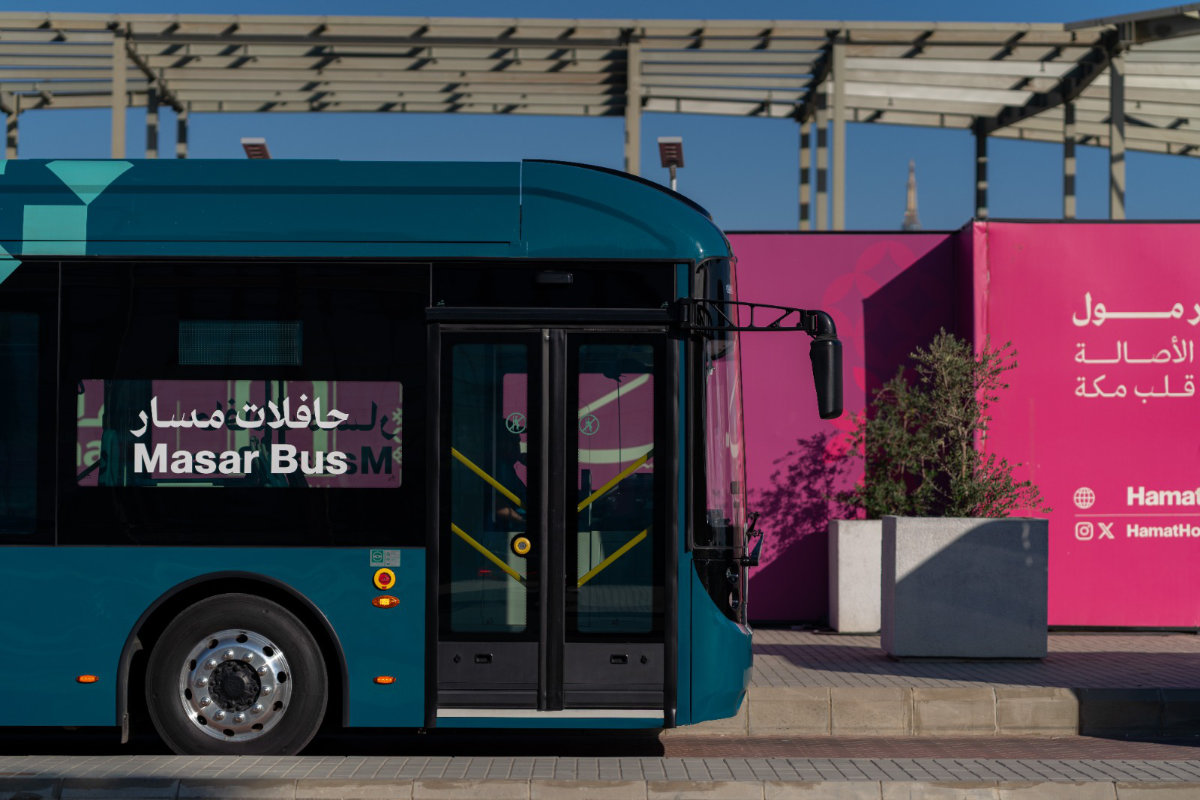
The bus rapid transit project is designed to have higher capacity and reliability than conventional bus services. (Supplied)

Electromin, a subsidiary of Petromin specializing in energy and mobility solutions, said the new service, which forms part of the Masar Destination mixed-use real estate development project in Makkah, is one the first transport networks of its kind in the country, and represents a significant shift toward a cleaner, more efficient urban transport model.

It operates in dedicated bus lanes, connecting key hubs within Masar and providing safe, reliable and environmentally friendly transportation for residents and visitors, the company added. The network includes two main bus stations and 11 stops along the route connecting them. It has been designed to serve more than 5 million visitors and pilgrims annually, and to be easily accessible to all users.

Operators say the service is designed as a foundation for Makkah’s future transportation system, through its integration with the broader Masar project, which includes pedestrian walkways, more than 5,000 parking spaces, metro services and other urban infrastructure.