

Winter at Tantora cultural festival begins

1 / 2
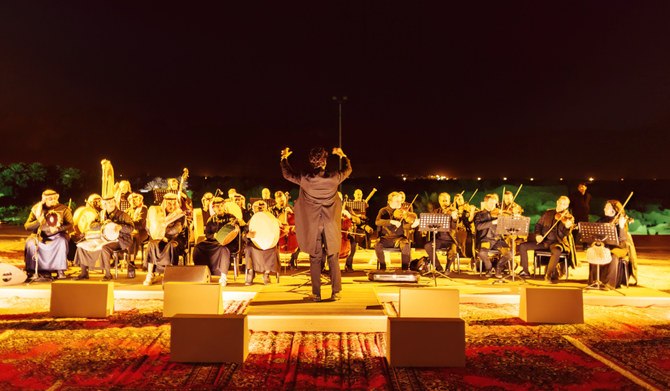
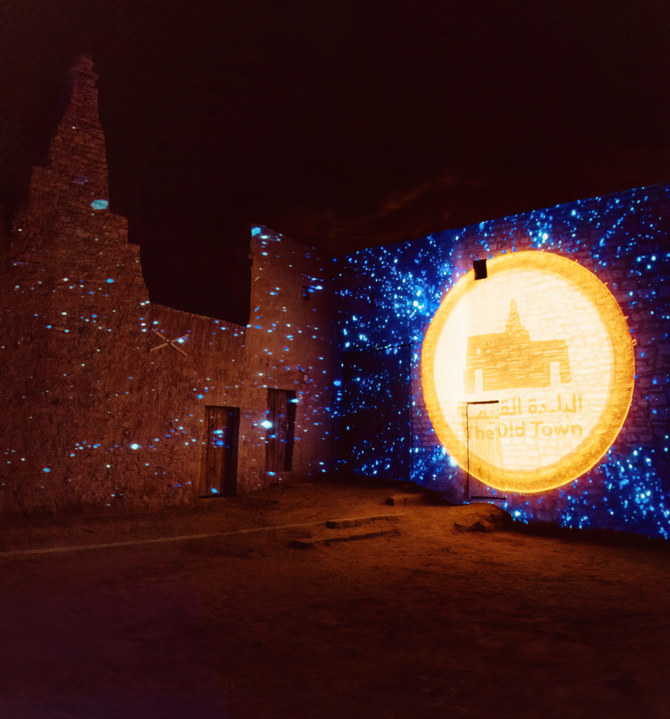
The opening day events included traditional folkloric performances and a multimedia exhibition of Tantora history displayed on the walls of old buildings. (Supplied)
2 / 2
Part of the immersive show of Tantora historic story. (Supplied)
Short Url
Updated 24 December 2022
Follow

Winter at Tantora cultural festival begins

  • The celebrations are part of Saudi Arabia’s tradition and heritage

ALULA: The fourth annual Winter at Tantora Festival opened on Thursday, with visitors from all over the world witnessing a live vocal performance by more than 200 performers to mark the beginning of planting season in AlUla.

Winter at Tantora has its roots in a generations-old annual cultural event to mark the start of the season. ‘Tantora’ refers to a sundial in the form of an obelisk located in the southeastern part of AlUla, the main function of which is to determine the beginning of the seasons, and to enable regulation of the distribution of spring water to farms.
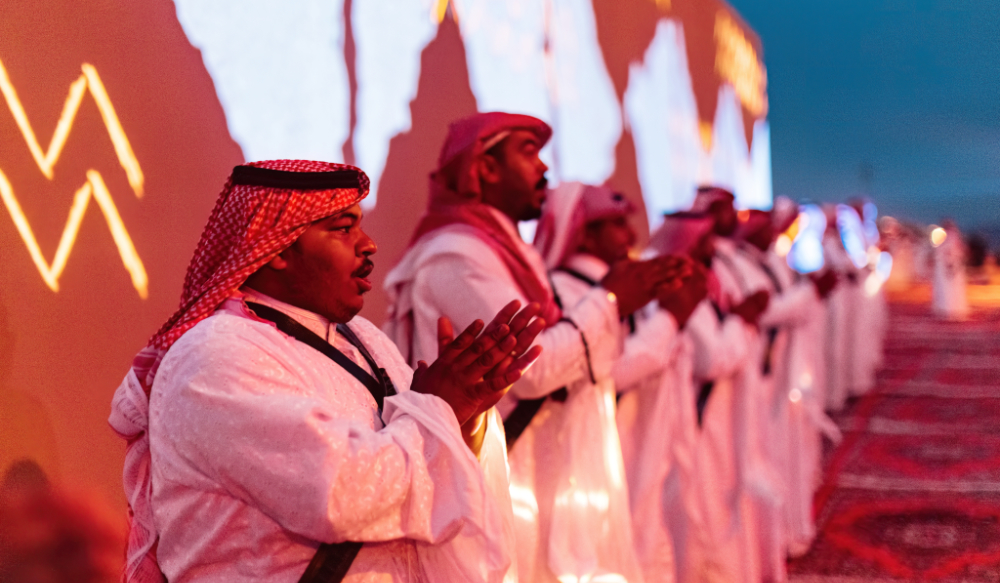


The annual Winter at Tantora music and cultural festival Kicks off on Dec.22. (Supplied)

AlUla native Ruqayyah Muhammad Musa said that Tantora celebrations are part of local cultural heritage.

“We have inherited it from our ancestors and we will pass it to generation after generation,” he said.

HIGHLIGHTS

• Locally harvested produce was available and the celebration also included a live orchestra performing a blend of local and regional music.

• The smell of Saudi coffee permeated the area, as dozens of traditional Saudi coffee pots decorated the entrance, partly to mark the Saudi Year of Coffee.

The opening-day events included traditional folkloric performances and a multimedia exhibition of Tantora history displayed on the walls of old buildings and narrated in Arabic and English.
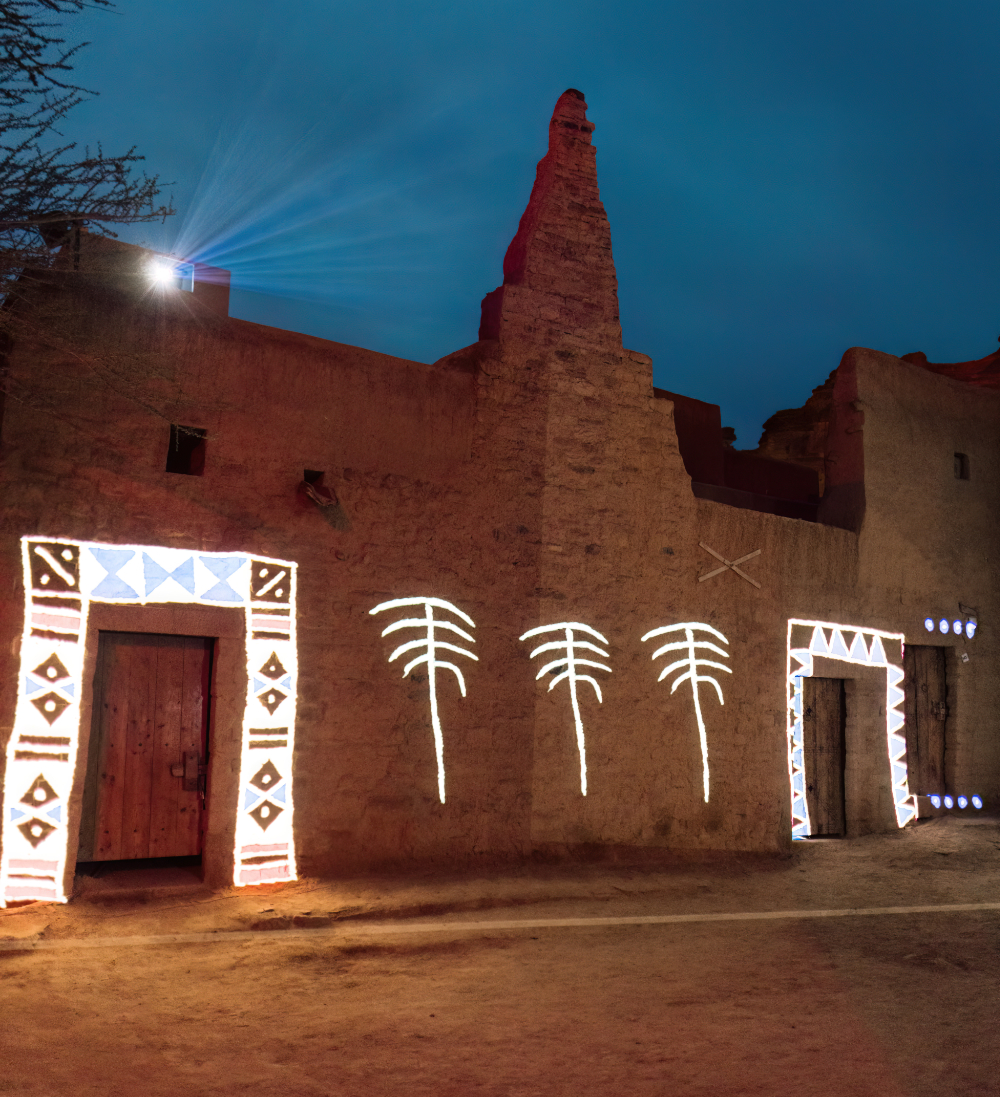


Tantora is a sundial that features a hierarchical stone structure characterized by its geometric accuracy, and it has a stone that is measured according to the sun’s inclination to determine seasons and times of the year. (Supplied)

Locally harvested produce was available and the celebration also included a live orchestra performing a blend of local and regional music.

The smell of Saudi coffee permeated the area, as dozens of traditional Saudi coffee pots decorated the entrance, partly to mark the Saudi Year of Coffee.

Katie Johnson, who came over from Los Angeles for the festival in AlUla, told Arab News, “I saw it on Instagram two years ago, and as soon as I saw it, I knew it was somewhere that I needed to visit. It’s so stunning. I think it’s just one of the most mesmerizing places I have ever seen: the landscape, the nature, the desert. It’s just truly beautiful.”
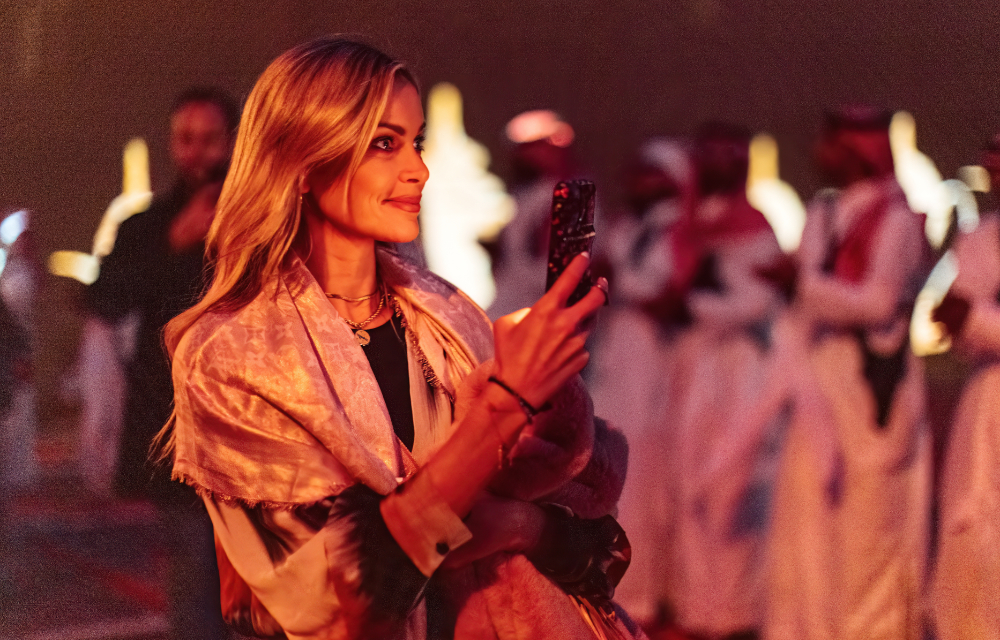


One of the visitors, Katie Johnson, a US traveler who came all the from Los Angeles to enjoy the beauty of AlUla. (Supplied)

Johnson continued: “I’m excited to see some of the rocks, the carvings, and the Hegra. I’m excited that Saudi has opened up for tourism and that people are going to see the beauty that’s in this country.”

The festival’s opening night concluded with an outdoor performance of “Shurfat AlJadidah” by the Saudi National Music Band, which included members of the Saudi Choir singing cover versions of songs by Saudi music legends of the Nineties and a selection of other classic Arabic songs, as well as some operatic numbers.

Emad Zarea, the conductor of the Saudi National Band, told Arab News, “Today’s performance was a new idea that we presented for the first time, in cooperation with the Royal Commission for AlUla and the Music Commission.”

Zarea added, “We presented 10 music pieces resampling Saudi heritage. We added three songs from different Arab countries, to offer diversity to the listeners.”

Winter at Tantora runs until Jan. 21.


US consulate supports Saudi musicians for Jazz in Jeddah Festival

Updated 7 sec ago
Follow

US consulate supports Saudi musicians for Jazz in Jeddah Festival

  • Songs created from inspiring process, say local artists
  • David Malatesta, professional bassist, led the program

JEDDAH: The US Consulate in Jeddah marked a milestone in cultural exchange with the completion of its first English Language Specialist program, “Creative Writing for Musicians and Songwriters,” on Jan. 14.

The program, which combined advanced English-language instruction with professional music training, culminated in a showcase where participants presented versions of their original jazz compositions.

The initiative was funded by the US Department of State’s Bureau of Educational and Cultural Affairs, through its English-language programs, and administered by Georgetown University.

The US partnered with the Call of Culture organization, and the Jazz in Jeddah festival, to support emerging Saudi talent. The program aimed to merge American expertise in storytelling, songwriting, and jazz with the voices of Saudi musicians, and prepare them for international stages.

Stephen Ibelli, head of the Public Diplomacy Section at the consulate, said the initiative “demonstrates how American expertise in education, storytelling, and the creative industries can contribute to Saudi Arabia’s growing cultural sector.

“By partnering with leading Saudi cultural organizations, we are investing in people, creativity, and long-term cultural exchange that strengthen the US–Saudi relationship.”

David Malatesta, an English-language specialist and professional jazz musician who led the program, reflected on his experience with the students.

“I was a bassist and an educator, and what drew me to Saudi Arabia was the chance to make music with Saudi musicians, share ideas, improvise together, and explore jazz as a global language.

“I led the lyrics section of the program, and the students wrote original jazz songs in English. I helped them improvise lyrics and develop creative ideas, combining their creativity with mine.

“We went through the whole process together, using a variety of activities to spark inspiration. I also brought my experience as a linguist and my work with the State Department to the sessions, blending language and musical training.”

He added: “The students were fearless and inventive. They took risks, experimented, and blended Saudi traditions with modern beats. We also explored blues, which is indigenous to the US, and drew parallels with the students’ experiences here.

“The program opened my ears and made me rethink how jazz could integrate with local rhythms and storytelling. It was a two-way process, I learned how to incorporate Saudi scales, rhythms, and traditions into jazz, which is an improvisational language.”

Malatesta highlighted that what stood out most was the students’ sense of rhythm and melody, bringing a fresh, bold voice to jazz. They were open to learning about jazz history while creating their own musical vocabularies.

Non-Western scales, different rhythmic patterns, and storytelling approaches were woven into jazz grooves, creating a dialogue between Western jazz and Saudi tradition, producing music that could only exist in that moment with these artists.

“Looking ahead to the Jazz in Jeddah Festival in April, I hoped audiences would feel the musicians’ curiosity and playfulness, experience jazz as a conversation across cultures, and enjoy the improvisation and connection we created during the program, which will stay with me and the students long after it ended.”

The participants echoed Malatesta’s views on the transformative impact of the program.

Donia Ahed, a university student and singer-songwriter, said: “I joined because my professor recommended it, and I’ve always loved writing songs. The online sessions were really nice, and David was very passionate and patient.

“In the in-person sessions, we learned jazz, blues, and pop, and got guidance on how to structure songs. I created my own song, ‘My Way,’ and also performed a song by another participant. It was amazing working with my teammates, sharing ideas, and being creative together.

“This program helped me improve my writing and musical skills and even sparked a deeper interest in jazz. I can’t wait to perform at the festival in April. I’m excited but a bit nervous, of course.”

Abrar Niyazi, who wrote “Bend Not Break,” described her journey: “Singing has been my passion since I was a kid, but I never thought of writing lyrics. This program gave me the tools to express myself.

“It simplified the process and allowed me to turn my feelings, stories, or imagery into lyrics. It was challenging to put my emotions on paper and focus on them, but with David’s support, I was able to write a heartfelt song.

“It was empowering and taught me that I can improve my skills, write more, and eventually record my own songs. I’m really excited to perform for the first time at the Jazz in Jeddah Festival and to hear audience feedback.”

Loulwa Alshareef, an established singer and songwriter, said “magic” was a way to describe the program. “I’ve been performing since 2014, mostly covers, and writing my own songs was always a struggle.

“David made it easy by helping me connect with my feelings and write simply but meaningfully. I wrote a song about women, and it was an incredible process.

“I now feel inspired to create more original songs and share them at the Jazz in Jeddah festival with other Saudi artists. Opportunities like this, getting mentorship and guidance, help artists step out of their comfort zones and grow.

“I would advise young artists to be themselves, put their ideas out there, and embrace creativity without waiting for perfection.”

Eng. Mohammed Bakhrieba, the founder of Call of Culture, emphasized the program’s historical significance during his opening remarks at the closing ceremony.

“Jazz in Jeddah has roots going back to the late 1950s and 1960s with American artists. This initiative continues that legacy and allows local artists to build on it, creating a bridge between generations and cultures while fostering cross-cultural collaboration,” he said.

The program highlights the growing collaboration between Saudi Arabia and the US in the creative industries, providing young musicians with professional guidance, international exposure, and a platform to contribute to a global musical dialogue.