TOKYO: Japan’s reputation as a neutral actor in the Middle East peace process continues to suffer as it tries to forge a close defense relationship with Israel. Diplomats say Tokyo is taking a visibly softer stance with regard to aggressive Israeli policies and the annexation of Arab lands by force.
The perceived policy shift by the key Asian economic power is understandably causing concern among not only Palestinians, but also people across the entire Arab world. Veteran Likud politician Benjamin Netanyahu has less than two days to tell President Isaac Herzog he is ready to put together Israel’s 37th government.
In the new Israeli coalition government, Itamar Ben-Gvir, a far-right politician, is tipped to head a Police Ministry with expanded powers in the occupied West Bank. Ben-Gvir’s expected role as national security minister has sparked controversy in Israel itself owing to his past support for Meir Kahane, an extremist rabbi, one of whose followers carried out a terror attack in 1994 at the Ibrahimi Mosque in Hebron, killing 29 Palestinians and wounding 150 others.
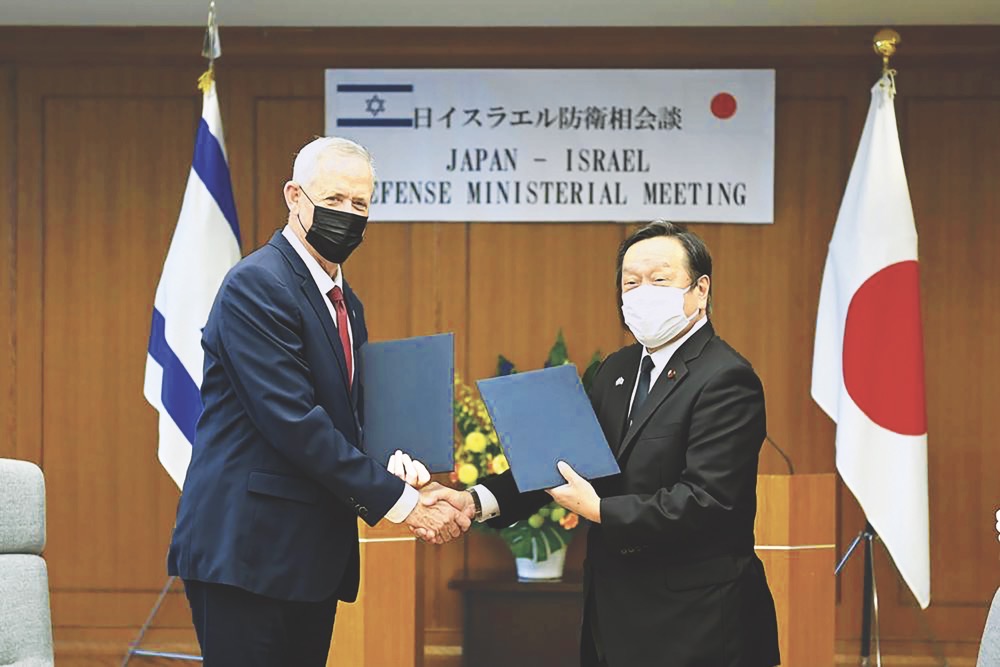
Israeli Defense Minister Benny Gantz and his Japanese counterpart Yasukazu Hamada agree to step up defense cooperation at a meeting in Tokyo. (AFP)
Against this backdrop, Waleed Siam, the Palestinian ambassador to Japan, cautions that there are potential downsides to Tokyo’s is eagerness to boost bilateral cooperation with Israel.
“Of course, Japan is free to do whatever it wants, but such a policy only rewards the Israelis and does not discourage its hostile acts against the Palestinians,” he told Arab News Japan.
Referring to Ben-Gvir, Siam said it is shocking that “one of Israel’s (expected) Cabinet ministers belongs to the infamous Kahane organization, which killed Palestinians who were praying in the Ibrahimi Mosque and in surrounding areas in Hebron.”
This shows that “Israel has no intention of making peace with Palestinians, regardless of its Abraham Accord agreement with other countries, and it has no intention of honoring its two-state solution (pledge),” he said.
Siam describes Netanyahu’s imminent return to power as “devastating news.”
He told Arab News Japan: “We heard Netanyahu say ‘no’ (to establishing a Palestinian state) during his first and second terms as prime minister, and now it is his third term heading an Israeli government, and he is still saying ‘no.’
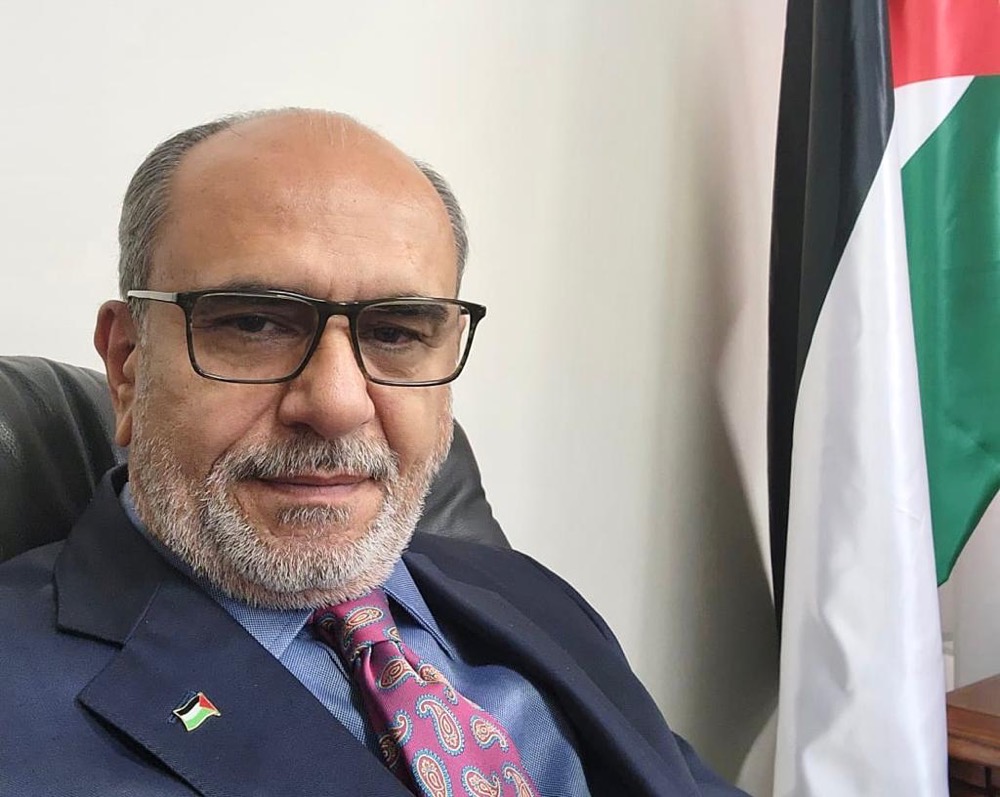
Waleed Siam, Palestinian ambassador to Japan. (AFP)
“The Palestinian leadership has long agreed to the two-state solution with Israel, thus showing great willingness over the years to compromise.
“However, Israel’s expansion of illegal settlements and continued annexation of Palestinian land means that we, the Palestinians, are living under an apartheid military regime that has been systematically oppressing, brutalizing and discriminating against us.”
Siam said that by allowing Jewish settlers to inflict violence on Palestinians, evicting Palestinians and demolishing their houses, as well as annexing Palestinian neighborhoods, Israel has demonstrated that it “does not respect international law or UN resolutions.”
As long as the “world rewards Israel, cooperates with Israel and opens its markets to Israel, Israelis will have no incentive to do anything about the two-state solution,” Siam added. “Based on that, I believe the international community must be considered responsible for enabling Israel’s daily illegal acts against Palestinians.”
FASTFACTS
• Japan has long been perceived as an impartial broker of a future deal between Israel and Palestine.
• A joint Arab News Japan-YouGov survey in 2019 found that 50% of Arabs view Japan as the most credible potential candidate to act as a Middle East peace mediator.
In Siam’s opinion, the fault lies with the international community for failing to enforce relevant UN resolutions. “We hope and appeal, in the strongest possible terms, that they reflect on appropriate measures to bring the Israelis into compliance,” he told Arab News.
Mohammad Shtayyeh, the Palestinian prime minister, recently played down the significance of the election loss seven weeks ago of Israel’s big-tent government to Netanyahu’s right-religious bloc.
“The difference between the Israeli parties is the same as the difference between Pepsi and Coke,” Shtayyeh was quoted as saying by Palestinian media. “We were under no illusions that the Israeli election would produce a partner for peace.”
He said that gains by far-right Israeli religious parties in the national election were “a natural result of the growing manifestations of extremism and racism in Israeli society.”
On Tuesday, Yoshimasa Hayashi, Japan’s foreign minister, said: “We’re strongly asking the Israeli government to refrain from acts to change the status quo unilaterally.
“Generally speaking, under international law, territory occupied by force and unilaterally annexed is not permitted. From this perspective, Japan has maintained its position not to recognize the Israeli annexation of the Golan Heights. That’s been a consistent position of Japan. So, concerning the Israeli-Palestine conflict, it should be a two-state solution that the parties involved (should aim to achieve) through negotiations.”
Incidentally, Japan established the “Corridor for Peace and Prosperity” initiative, aimed at facilitating the economic self-reliance of Palestine through regional cooperation with Japan, Israel and Jordan.
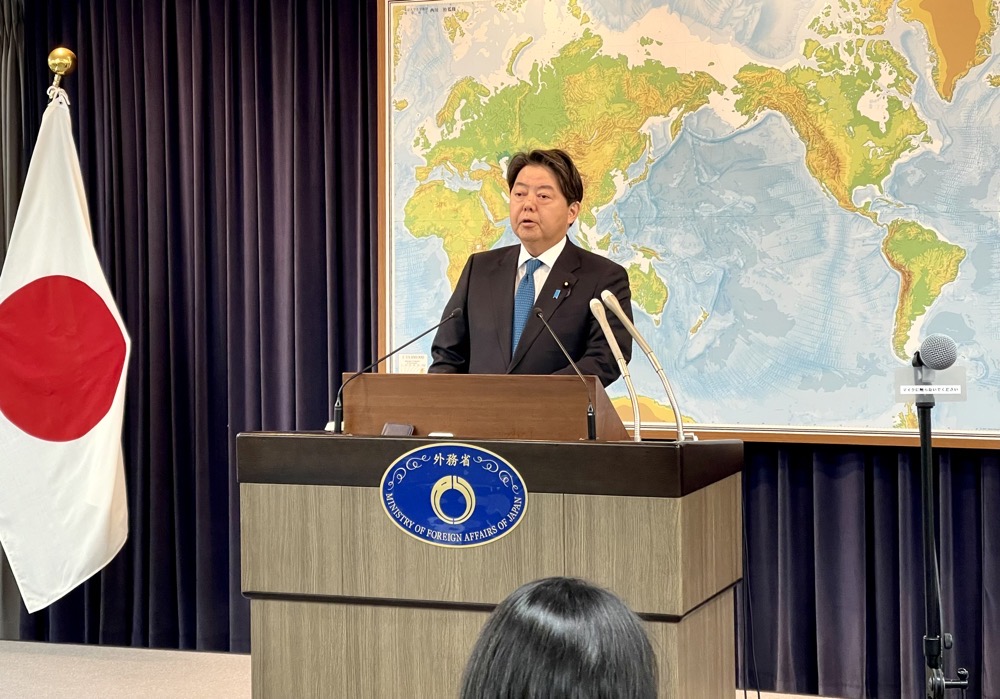
Japanese Foreign Minister Hayashi Yoshimasa. (ANJP Photo)
Japan has extended assistance to Palestinians based on three principles: First, a political approach to the two sides; second, assistance for Palestinian state-building efforts; and third, confidence-building measures between the two sides.
As of June 2022, Japan’s assistance amounted to $2.21 billion since 1993, including assistance to Palestine refugees and aid in response to the situation in the Gaza Strip.
Japan has separately provided $23 million in humanitarian support and reconstruction assistance to Gaza.
By 2021, 18 Palestinian private companies were operating in the flagship Jericho Agro-Industrial Park project. In addition, Japan is mobilizing the resources and economic development knowledge of East Asian countries to support Palestinian nation-building through the Conference on Cooperation among East Asian countries for Palestinian Development.
While the basic elements of the Japanese approach to the Middle East peace process may not have changed, there are recent signs of an increasing admiration for Israel in Tokyo driven by self-interest.
“Israel excels in developing advanced technology and innovation, and (it) holds importance for the Japanese economy and the stability of the Middle East,” the Japanese Foreign Ministry in Tokyo said in its 2022 foreign policy report.
It added: “Israel attracted worldwide attention in 2021 as a leading country in COVID-19 vaccinations. The country became the first in the world to begin offering a third dose of vaccinations to the general public.”
The foreign ministers of Japan and Israel kicked off the Tohoku-Israel Startup Global Challenge Program in July 2021, while Benny Gantz, the former Israeli defense minister, held a meeting with his Japanese counterpart earlier this year and agreed on new military and security cooperation.
Observers say that by supporting the Abraham Accords, which are bringing some Arab states closer to Israel, the Japanese government is portraying itself as a guarantor of the region’s stability and beyond. But not all experts agree on this point.
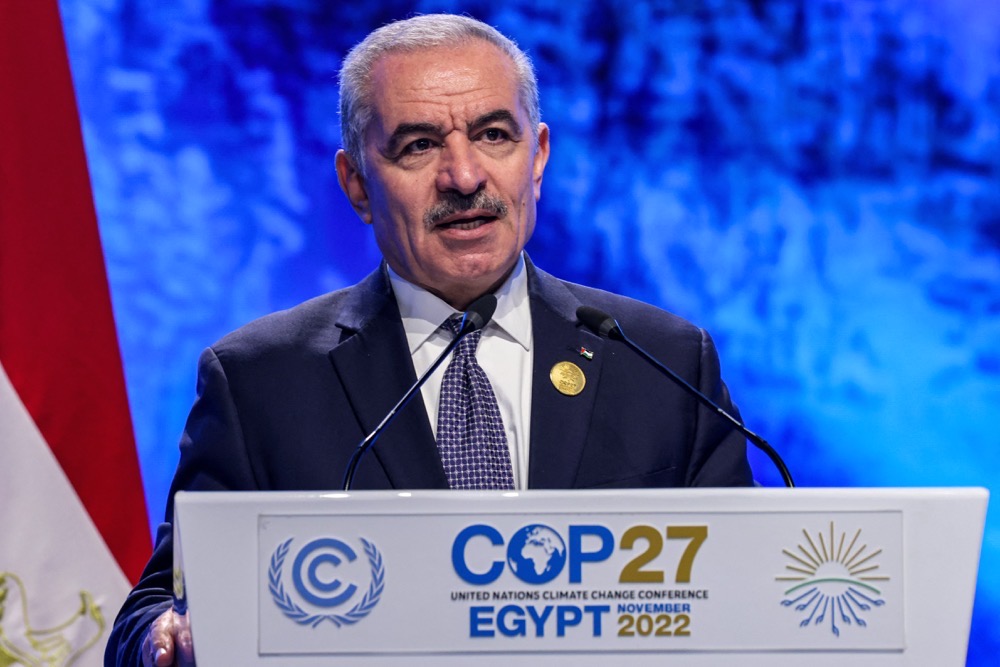
Mohammad Shtayyeh, the Palestinian prime minister, recently played down the significance of the election loss seven weeks ago of Israel’s big-tent government to Netanyahu’s right-religious bloc. (AFP)
“The Japanese government is not considering supporting the current trend (the Abraham accords) because it would jeopardize its impartiality,” a Japanese expert in Middle East issues told Arab News Japan.
“However, one school of opinion does hold that such an approach is in line with Tokyo’s aim of achieving reconciliation between Arabs and Israelis.”
According to another expert on Japan-Israeli relations, Japan is moving closer to Israel’s side as security and self-defense grows in importance for Tokyo.
“Palestinians can’t help Japan with its security requirements but Israel can,” he told Arab News Japan.
A reception hosted by the Israeli Embassy in Tokyo to celebrate the 70th anniversary of bilateral ties “was full of staff from Japan’s Ministry of Defense,” he added.