


LONDON: The family of an Iranian man who died in police custody said an examination carried out after his body was exhumed found signs of severe torture.
Hamed Salahshoor, 23, was declared dead on Nov. 26, four days after he was detained by authorities for allegedly taking part in protests. His family was told he had suffered a heart attack. They said his body showed signs of severe head trauma and that he might have undergone surgery.
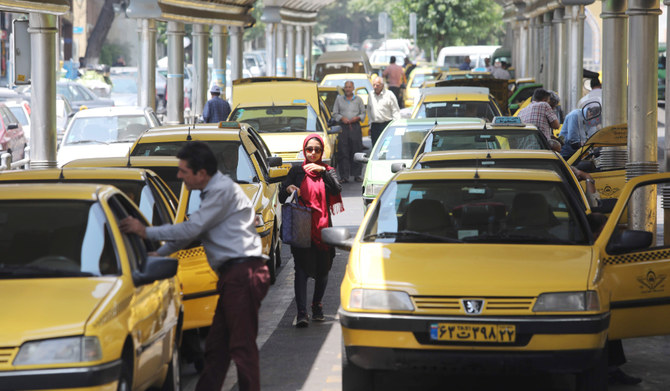
Salahshoor, who worked as a taxi driver, had reportedly received “good news” shortly before his death about a successful job application.
A source close to the family told BBC Persian: “A few hours before his arrest, Hamed received the good news that he had got a job at the Ministry of Oil.”
He called his mother to tell her but later that day his taxi was stopped by authorities between the cities of Izeh and Isfahan, and he was detained.
On Nov. 30, his father was forced to sign a document saying his son had died of a heart attack, Salahshoor’s cousins told the BBC. They added that security forces had threatened other members of the family and they were forbidden from holding a public funeral.
The cousins said that the funeral took place at night, 18 miles from Izeh, with only Salahshoor’s parents present. The family had the body exhumed the following day.
The source told the BBC: “His face was smashed. His nose, jaw and chin were broken. His torso, from his neck to his navel and over his kidneys, was stitched up.
“They buried Hamed with his clothes and shoes on. His body was not straight. And they claim they are Muslims.”
Salahshoor is just one of at least 502 people believed to have died at the hands of the regime since widespread public protests began in September, following the death of 22-year-old Kurdish woman Mahsa Amini. She died in police custody three days after she was detained by the country’s morality police for improperly wearing her hijab.
As many as 18,450 people have been arrested. A small number have already been executed and many more face the death penalty for their parts in the protests. Torture and other forms of ill-treatment of the detained reportedly are commonplace.
“I’d never been beaten this much in the 19 years of my life but to the last minute I did not express remorse and I did not cry,” said 19-year-old Yalda Aghafazli, who was detained in October, following her release the following month. She was found dead at her home on Nov. 18. The cause of death has yet to be confirmed.
Another young protester, 16-year-old Arshia Emamgholizadeh, committed suicide six days after being released in November. A source told the BBC he was tortured and given pills by authorities while in detention.
Seyed Mohammed Hosseini, a prisoner on death row, has also been severely tortured, according to his lawyer.
“He was beaten while tied up and blindfolded, he was tasered and beaten on the soles of his feet with a metal rod,” Ali Sharifzadeh Ardakani said on Monday.


