HOUSTON: The United States has become a global crude oil exporting power over the last few years, but exports have not exceeded its imports since World War II. That could change next year.
Sales of US crude to other nations are now a record 3.4 million barrels per day (bpd), with exports of about 3 million bpd of refined products like gasoline and diesel fuel. The United States is also the leading liquefied natural gas (LNG) exporter, where growth is expected to soar in coming years.
But the United States consumes 20 million barrels of crude a day, the most in the world, and its output has never exceeded 13 million bpd. Until recently, the idea that it would be anything but a big crude importer was folly.
Last month, US government data showed net US crude oil imports fell to 1.1 million barrels per day (bpd), the lowest since record keeping began in 2001. That is down sharply from five years ago, when the United States imported more than 7 million barrels per day.
Factors changing that equation this year include sanctions hurting Russia’s exports of oil and natural gas following its invasion of Ukraine, and Washington’s massive release of oil from emergency reserves to combat spiking gasoline prices.
“Russia’s invasion of Ukraine has spurred new demand for US energy and should push oil exports above imports late next year assuming shale output accelerates,” said Rohit Rathod, market analyst at energy researcher Vortexa.
To become a net exporter of crude, the United States needs either to boost production or curtail consumption. US petroleum demand is expected to rise 0.7 percent to 20.51 million bpd next year, so that means production would have to rise.
The United States already produces more oil than any other country in the world including Saudi Arabia and Russia. US shale fields are aging and production growth this year has been sluggish. Overall output should reach a record 12.34 million bpd next year — but only if prices are lucrative enough to encourage oil drillers to pump more.
European refiners have snapped up US grades to offset the loss of Russian oil, and with US crude’s deeper discounts to global benchmarks, Asian refiners have stepped up purchases to 1.75 million barrels per day, data analytics firm Kpler said.
Export terminal operators are rushing to boost their capacity to better service the giant tankers that can carry more than 2 million barrels of oil.
“Russia has proven to be an unreliable supplier,” said Sean Strawbridge, chief executive of the largest US oil export facility, Port of Corpus Christi. “That really creates a wonderful opportunity for American producers and American energy.”
Corpus Christi could see a 100,000 bpd increase in exports next year, Strawbridge said, on top of the record third quarter shipments of 2.2 million bpd in the most recent quarter.
Analysts said net exports could taper off if numerous countries worldwide fall into a recession, hampering demand, and if further relaxation of sanctions on Venezuelan crude oil boosts that country’s shipments.
LNG HITS RECORD
The United States became the world’s largest exporter of liquefied natural gas during the first half of 2022, surpassing Qatar and Australia, on the back of demand from Europe and surging prices.
LNG exports likely will continue to rise into 2023 as Europe scrambles to refill storage depleted this winter, said Matt Smith, analyst at Kpler.
Refining products exports have dropped due to plant closings and lower consumer demand. The US exported an average of 3.1 million bpd of fuels through September this year, EIA data showed, down from the 3.2 million bpd in the same period in 2019.
One exception to that was diesel, where exports rose to a three-year high in July of 1.3 million bpd, Kpler data showed. Europe’s upcoming ban on Russian fuel has driven diesel shipments to Europe to average 330,000 bpd in the first 15 days of December, more than five times its monthly average so far this year.


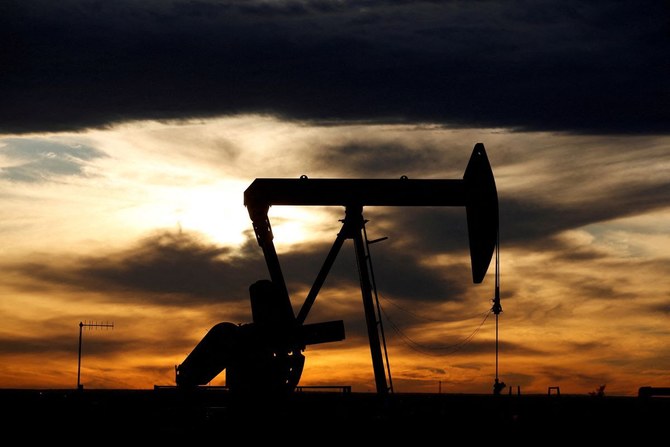
US poised to become net exporter of crude oil in 2023
https://arab.news/48pvm
US poised to become net exporter of crude oil in 2023

- Sales of U.S. crude to other nations are now a record 3.4 million barrels per day
- Export terminal operators are rushing to boost their capacity


King Abdulaziz Airport among world’s busiest after record-breaking 2025
RIYADH: King Abdulaziz International Airport has achieved a new historical milestone, reaching 53.4 million passengers in a single year.
This is the highest number ever recorded at a Saudi airport since the beginning of air travel in the Kingdom, placing it among the world’s mega airports in terms of passenger traffic, according to the Saudi Press Agency.
The airport handled a total of 310,000 flights and 60.4 million bags, representing a 12 percent increase compared to 2024. It also handled 9.57 million Zamzam water containers and 2,968 cargo flights.
This achievement reflects the airport’s qualitative transformation and its position as a regional hub and national gateway connecting the Kingdom to the world. It also highlights its role in facilitating the movement of visitors and pilgrims, promoting tourism in line with the goals of Vision 2030, diversifying the economy, and providing a distinguished travel experience.
For his part, CEO of Jeddah Airports Co. Mazen Johar, affirmed that reaching 53.4 million passengers confirms the airport’s high operational readiness and represents a pivotal milestone for moving to the next phase, in preparation for doubling this number, God willing, in the coming years.
He pointed out that this national achievement would not have been possible without the grace of God Almighty, followed by the directives of the wise leadership and the continuous follow-up from the minister of transport and logistics, the president of the General Authority of Civil Aviation, and the CEO of Airports Holding Co.
He explained that King Abdulaziz International Airport is strengthening its position as a major aviation hub in the region through expansions, increased capacity, and improved services, supporting the objectives of the aviation program and aligning with the goals of the Kingdom’s Vision 2030.
The CEO of Jeddah Airports Co. expressed his gratitude to the partners in success from various government and private sectors for their fruitful cooperation through a collaborative work system that contributed to providing the best services.


