

Jazan on the scent of success with sandalwood

1 / 3
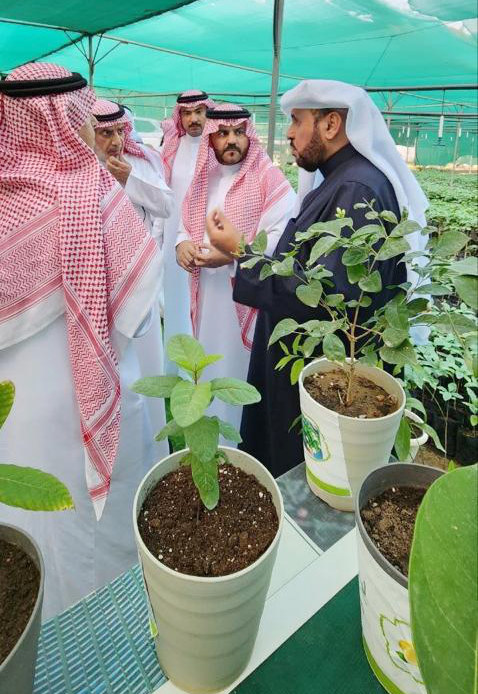
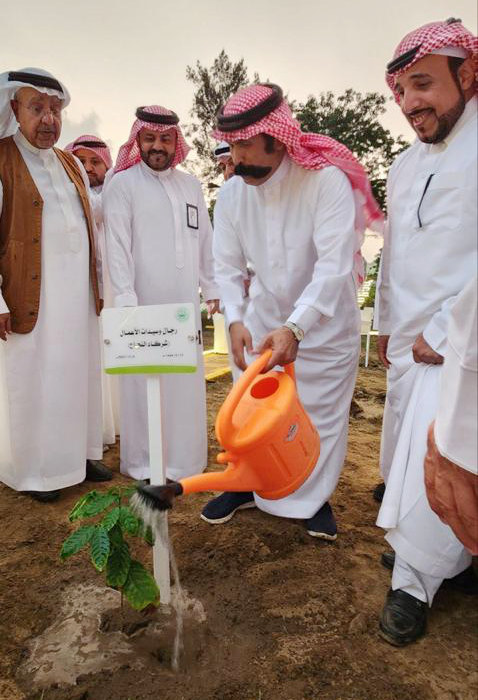
In order to see the region's agricultural potential, a number of businessmen and businesswomen toured the region. (Supplied)
2 / 3
In order to see the region's agricultural potential, a number of businessmen and businesswomen toured the region. (Supplied)
3 / 3
In order to see the region's agricultural potential, a number of businessmen and businesswomen toured the region. (Supplied)
Short Url
Updated 14 December 2022
Follow

Jazan on the scent of success with sandalwood

  • Dhafer bin Ayed Al-Fahad, director general of the authority, told Arab News about the “successful and encouraging experience” with sandalwood trees

MAKKAH: Sandalwood farming is reaping sweet rewards for farmers in Jazan two years after its launch in Saudi Arabia.
The project was conducted in partnership with a research team comprising the Development and Reconstruction of Jazan Mountainous Regions Authority, Jazan University, King Abdulaziz University, and the Ministry of Environment, Water and Agriculture.
Dhafer bin Ayed Al-Fahad, director general of the authority, told Arab News about the “successful and encouraging experience” with sandalwood trees.
A number of businessmen and businesswomen were invited to tour the region to see the region’s agricultural potential.
Al-Fahad highlighted the importance of the strategic partnerships between the authority and private sector to attract investment for cultivation projects, such as coffee, sandalwood and agarwood, that will help in creating job opportunities for locals and yield high returns.
Jazan farmers have also made great strides in expanding their production of tropical fruit for local and international markets.
Coffee production is another important economic sector in the region, and enjoys special care by the Kingdom’s leadership. It is part of the Jazan region’s heritage, and is a crucial source of income for the residents of the mountainous areas, which are the homeland of the Khawlani coffee beans.  With such initiatives, as part of Saudi Vision 2030, the Kingdom’s southwestern region has reintroduced itself as a key player on the country’s agricultural development map.


Celestial spectacle in KSA’s north on first day of Ramadan

Updated 19 February 2026
Follow

Celestial spectacle in KSA’s north on first day of Ramadan

  • Venus-crescent moon alignment visible in Northern Borders
  • Meteorology center issuing swift weather alerts for pilgrims

ARAR/JEDDAH: The holy month of Ramadan has commenced in the Kingdom with a striking astronomical display in the Northern Borders Region, setting a serene tone for the month, the Saudi Press Agency reported.

In addition, the National Center for Meteorology has confirmed its readiness to support pilgrims in Makkah and Madinah.

On Tuesday evening in Arar there was a rare alignment of the planet Venus with the slender crescent moon marking the first day of Ramadan.

Appearing shortly after sunset, the crescent shimmered low on the western horizon above Venus — one of the brightest celestial bodies — in a display enhanced by clear skies.

While the conjunction is a recurring astronomical phenomenon caused by the apparent proximity of the two bodies as viewed from Earth, its coincidence with the start of the holy month added a special aesthetic and spiritual dimension to the atmosphere in the north, the SPA said.

The plan includes heightened performance levels at observatories in the Kingdom’s airports to manage increased flight traffic and aviation safety. (SPA)

Meanwhile, as the faithful began fasting, the NMC announced the readiness of its observatories at the Kingdom’s airports to manage increased flight traffic and ensure aviation safety.

The NCM’s CEO Dr. Ayman bin Salem Ghulam said there would be round-the-clock weather monitoring for Makkah, Madinah, and the roads leading to the two holy mosques.

To ensure pilgrims have real-time access to information, the NCM has integrated its data with the Nusuk and Tawakkalna smart applications. Ten-day forecasts and alerts will also be available via the Anwaa app and on guidance boards along highways.

The center has 14 media platforms to deliver swift weather alerts, ensuring high standards of security and logistical support throughout the season, the SPA reported.