

Global experts discuss economic, social impact of Saudi coffee in Jazan forum

1 / 2
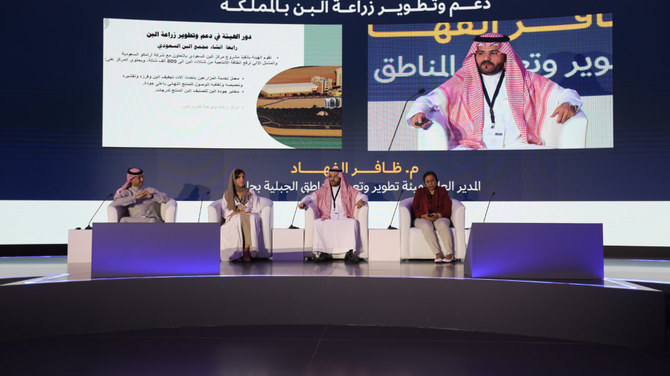
Experts from around the world have gathered in Jazan for the Saudi Coffee Sustainability Forum, which got underway on Saturday. (Supplied)
2 / 2
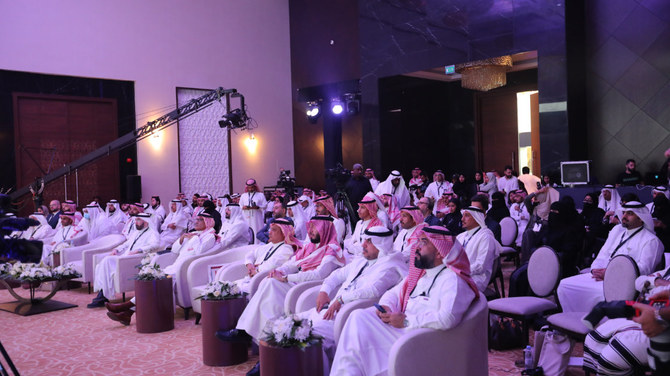
Experts from around the world have gathered in Jazan for the Saudi Coffee Sustainability Forum, which got underway on Saturday. (Supplied)
Short Url
Updated 02 October 2022
Follow

Global experts discuss economic, social impact of Saudi coffee in Jazan forum

  • Experts gather to discuss industry’s economic, social and environmental impact
  • Culture Ministry launches grant to support research into coffee sector

JAZAN: Experts from around the world have gathered in Jazan for the Saudi Coffee Sustainability Forum, which got underway on Saturday.

Organized by the Ministry of Culture and held at the Grand Millennium Jazan, the two-day event will discuss the value chain of Saudi coffee and its economic, social and environmental impact.

Among the speakers and guests are Dr. Bandar Al-Rabiah, who heads the development impact department at the Agricultural Development Fund, Dhafer bin Ayedh Al-Fahad, director of the Jazan Mountain Development Authority, and Keren Kellard, a consultant at the National Center for Social Studies in Riyadh.

Al-Rabiah said at the opening session: “The idea isn’t just to increase productivity, we want to help the farmer to benefit from his plantation and to allow tourists to visit the farm and in effect generate a larger income for them.”

One of the highlights of the opening day was the launch by the Ministry of Culture of the Saudi Coffee Research Grant. Organized in partnership with Saudi Coffee Co. and the Public Investment Fund it aims to encourage local researchers to produce scientific papers related to Saudi coffee in three areas.

The first is the history of coffee in the Arabian Peninsula, covering everything from ancient trade routes to the events that led to its spread in Saudi Arabia.

The second relates to coffee culture, including the social practices, rituals and festive traditions within the Kingdom.

The third relates to cultural research into developing Saudi coffee through government procurement in order to promote a sustainable economy and preserve its heritage.

Mayada Badr, CEO of the Culinary Arts Commission, said: “The Ministry of Culture aims to strengthen the position of Saudi coffee. It aims to guide the community to the culture associated with coffee, to be proud of its distinctive identity, and to thank farmers and community members for preserving our culture.”

During the forum’s first session, Al-Fahad highlighted the efforts his team have made in cultivating the coffee industry in the Kingdom over the past 40 years, most notably with the establishment of an experimental facility that seeks to find the best agricultural crops for growing in the mountainous ranges in Jazan. He added that 900,000 coffee seedlings would be distributed for research use in the coming years.

Al-Fahad concluded his speech by saying the Culinary Arts Commission intended to establish the Saudi Coffee Museum in partnership with the Ministry of Culture and that the Kingdom had joined the World Coffee Organization.

The second session of the day discussed investment opportunities in coffee production and looked at sustainable methods of economic growth.

Karl Weinhold, a researcher in rural development and the coffee economy, said: “Most of my work revolves around how these people (farmers) can wrestle around with the institutions that they have been subjected to in order to achieve some sense of prosperity.”

Hassan Hajooj, a professor of economics at the College of Business Administration at King Faisal University, said that the coffee sector accounted for about 0.86 percent of Saudi Arabia’s gross domestic product in 2020 and that that figure was set to rise to 6.18 percent over the next five years.

The Kingdom, which had 22,000 coffee shops in 2021, produces about 300 tons of high-quality Saudi Khawlani coffee a year, which is consumed locally and exported to the Gulf Cooperation Council countries.

The final session on the first day focused on the history and cultural influence of coffee.


Balad Beast brings global beats to historic streets

Updated 31 January 2026
Follow

Balad Beast brings global beats to historic streets

  • ‘MDLBEAST put us on the international map,’ say Saudi electronic duo Dish Dash

JEDDAH: The music festival Balad Beast concluded its fourth edition this weekend, having transformed Jeddah’s UNESCO World Heritage district of Al-Balad into an open-air celebration of music, culture and creativity that attracted thousands of music lovers over two nights.

The festival, organized by Saudi music platform MDLBEAST, featured more than 70 local, regional and international artists across four stages, offering audiences a diverse journey through electronic, hip-hop and global sounds.

French Haitian singer-songwriter Naïka performed on the second night of Balad Beast. (Supplied)

Speaking to Arab News, MDLBEAST chief creative officer Ahmad Al-Ammary, also known as DJ Baloo, described Balad Beast as a “cultural takeover” adding that finding the right spaces for dance floors was a challenge, “but Balad is constantly evolving and we work with that change.”

Addressing the challenges of working in a heritage area, he said: “Balad is sensitive and condensed, so logistics can be complex. In our first year, heavy rain flooded one of the planned squares and we had to relocate the Souq Stage to a much smaller space, but it worked and it has remained there ever since.

HIGHLIGHT

Reggae superstar Shaggy noted that the reality of playing live in Saudi Arabia often surprises those who arrive with preconceptions.

“Yes, the alleys are narrow and the district is old, but they’re full of ideas, patterns, colors and visuals. Everything flows here,” he continued. “As a festival, it’s hard to define Balad, because it gives so much of itself creatively. It’s incredibly generous with its ideas and details, and inspiration comes from everywhere.”

Balad Beast featured more than 70 local, regional and international artists across four stages, offering audiences a diverse journey through electronic, hip-hop and global sounds. (Supplied)

Balad Beast featured performances from international artists including US rapper Playboi Carti, making his first appearance in Saudi Arabia; US rapper Destroy Lonely; Swedish DJ and producer Alesso; and Bosnian-German DJ Solomun on the opening night. The following night saw French-Haitian singer-songwriter Naïka, reggae superstar Shaggy, Dutch DJ Franky Rizardo, British DJ Pawsa, and US rapper Tyga, and more take the stage, while Saudi and regional artists including Cosmicat, TUL8TE, Zeina, Vinyl Mode, Moayed, Dish Dash, Musab, Varoo and HiFi appeared across the festival, offering audiences a mix of global and local talent.

Saudi electronic duo Dish Dash reflected on the festival organizer’s impact for local artists.

As a festival, it’s hard to define Balad, because it gives so much of itself creatively. It’s incredibly generous with its ideas and details, and inspiration comes from everywhere.

Ahmad Al-Ammary, MDLBEAST chief creative officer

“MDLBEAST put us on the international map,” the brothers told Arab News. “It helped us get recognized by festivals, promoters and event organizers abroad. When we travel, people don’t expect this level of talent coming from Saudi Arabia, especially considering we didn’t have this scene before.”

Shaggy, who performed a hit-filled set during the festival, told Arab News: “I’ve been blessed with some incredible songs, and I see music as a gift and a tool for service. When I go on stage, I’m there to entertain people, to make them smile and feel good, but that service also supports many livelihoods from the people working at this festival to those who work with me. These songs have become part of people’s lives, and I don’t take that lightly.”

Balad Beast featured more than 70 local, regional and international artists across four stages, offering audiences a diverse journey through electronic, hip-hop and global sounds. (Supplied)

Shaggy also noted that the reality of playing live in Saudi Arabia often surprises those who arrive with preconceptions.

“I’ve performed in Saudi Arabia more than once, and while there are certain rules that are different, it’s not an issue for me. My focus is always on delivering the hits and giving the audience a great time,” he said.

“There’s a big misconception. People have more freedom than (outsiders) think. Everyone has been extremely nice.”

Asked what advice he would offer to aspiring artists, Shaggy said: “Understand that what you’re given is a gift and a form of service. Stay humble, do the work, and remember why you’re doing it.”

As Al-Ammary noted, there are many such aspiring artists now making a name for themselves in the Kingdom.

“Talent is emerging everywhere, at different levels,” he said. “The scene is still in a mysterious and surprising phase. There’s a rawness to it.”