- Buying of the dollar to send to Afghanistan mainly taking place in the black market
- Exchange rate in black market as low as Rs255, Rs21 below the prevailing selling rate
KARACHI: The emergence of a black market in Pakistan for the sale of the national currency is exerting pressure on legal currency markets, dealers said on Tuesday, blaming smuggling of the greenback to Afghanistan for shortages inside the country.
The Pakistani currency hit a historic low level of Rs239.94 on July 29, 2022, but gained its value by more than 9 percent to Rs217.79 on Sept 1, 2022, after the government decided to appoint Ishaq Dar as the new finance minister, replacing Miftah Ismail.
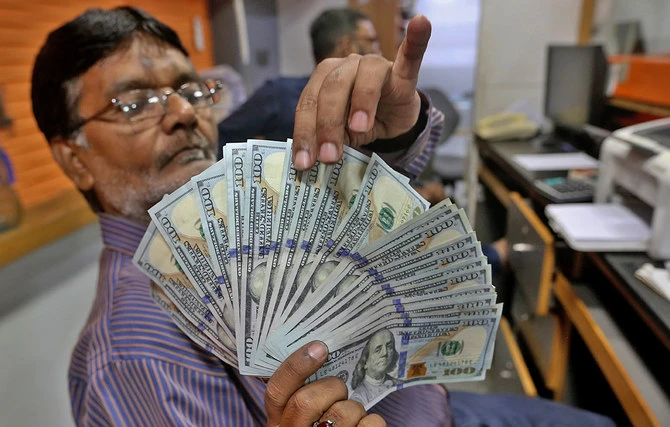
However, the currency could not retain the gaining trajectory and started losing against the USD amid depleting foreign exchange reserves, increasing demand for import payments, and most importantly, the continuing flow of dollars to neighboring Afghanistan, mostly through smuggling.
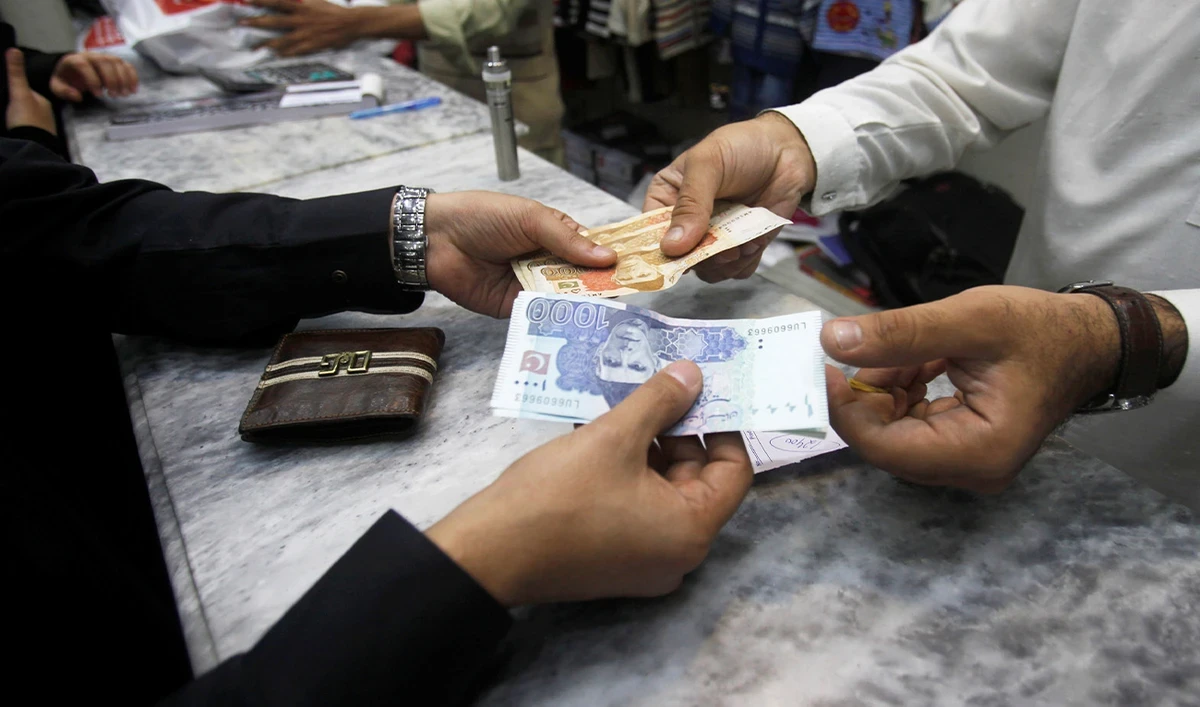
“There is substantial flow of dollar to Afghanistan through smuggling,” Zafar Sultan Paracha, General Secretary of the Exchange Companies Association of Pakistan (ECAP), told Arab News on Tuesday, adding that the buying of the dollar to send to Afghanistan was mainly taking place in the black market where the exchange rate was as low as Rs255, Rs21 below the prevailing selling rate.
The Pakistani rupee closed at Rs234 in the open market on Tuesday while the currency in the interbank market closed at Rs224.70 against the US dollar.
Responding to a question about restricted selling activities of dollars in the open market due to which people were unable to buy dollars, Paracha said: “Measures have been taken to discourage some elements who were buying dollars to sell in the black market.”
Since the fall of Kabul to the Taliban in August 2021, the flow of international aid in dollars to Afghanistan has almost stopped, exerting pressure on Pakistan’s currency market.
“Pakistan needs dollars to not only meet its own demand for import payment but to cater to the needs of Afghanistan which is dependent on Pakistan for its dollar requirements,” Samiullah Tariq, Director Research at Pakistan Kuwait Investment Company, told Arab News.
In recent months, the government of Pakistan has taken steps to curb the outflow of dollars from the country, including by banning the import of luxury goods. However, the gradual relaxation of import restrictions has again led to a spike in the demand for the dollar.
“The measures taken by the government had substantial impact on the exchange rate, otherwise the rupee would have been much depreciated against the greenback,” Tariq said, adding that strong demand for the dollar currently existed since the government had relaxed import curbs.
On Thursday, Governor central bank Jameel Ahmed conceded that “less than 10 percent of the country’s imports are currently subject to administrative controls. All such restrictions are temporary and will be withdrawn gradually.”
Pakistan’s official forex reserves have declined to $7.9 billion after the receipt of $500 million from the Asian Infrastructure Investment Bank (AIIB). During the week, the central bank retired $1 billion against maturing Pakistan International Sukuk and some other external debt repayments.
Dar meanwhile has vowed to bring the national currency down to Rs200 against the greenback but financial experts are not hopeful.
“There is no room for the government to dictate the dollar,” business editor Khurram Hussain told Arab News. “To achieve that level, you need the foreign exchange reserves which are (currently) declining in Pakistan.”
With the IMF’s ninth review pending since September, Pakistan has desperately been scrambling to secure financing to meet external payment obligations for the current financial year.
Ahead of the review, Pakistan has been trying to approach allies to seek financial support, and Dar has said that he would expect to get $3 billion from a friendly country.